
AI search for law firms means AI-powered search tools are deciding which firms get mentioned, summarized, cited, or skipped when someone asks a legal question online. That matters right now because potential clients aren’t just scrolling blue links anymore, they’re asking full questions and expecting one fast answer. Hit this guide in one sitting, and you’ll know what changed, what still matters, and what a marketing agency should actually be doing for your firm this week.
Hit the definition in 30 seconds: What AI search for law firms actually means
Start with the plain-English version. AI search for law firms is the new layer of search where tools like Google AI Overviews, ChatGPT, Bing Copilot, Perplexity, and legal-focused AI systems answer questions directly instead of just listing websites.
That sounds small, but it’s a big shift. Your firm isn’t only competing for rankings anymore. Your firm is also competing to be the source an AI system trusts enough to mention in the answer.
Think of old-school search like a phone book with better design. Type a phrase, get a list. AI search works more like a research assistant. Someone asks, “Who handles wrongful death cases near Phoenix?” and the system tries to pull together an answer from multiple sources, then names firms, cites pages, or summarizes options.
That means the game is bigger than Google rankings alone. If your agency only talks about position tracking and blog output, that’s yesterday’s playbook.
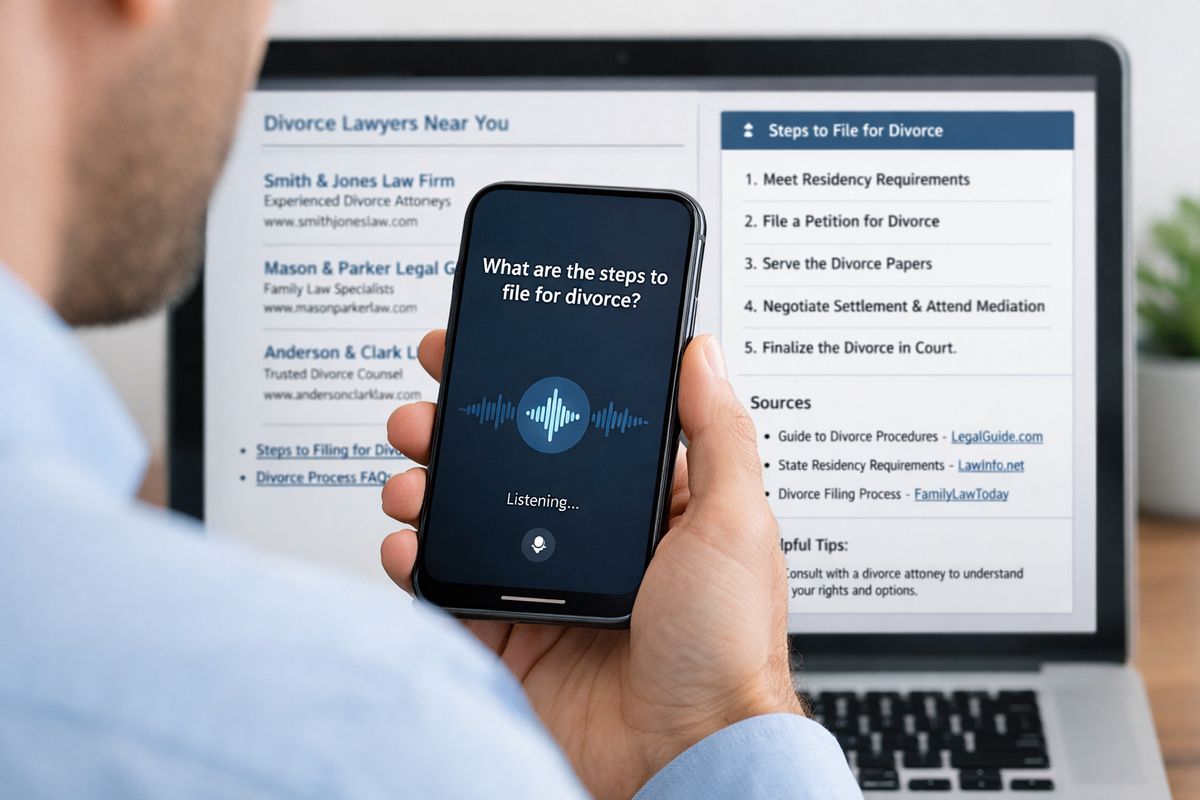
Start with the big shift: How AI search changes the way clients find a lawyer
Hit this takeaway: search is moving from link lists to answer engines.
Potential clients now type or speak full questions the way they’d ask a friend. “What kind of lawyer do I need after a truck accident?” “How long do I have to file in Texas?” “Who handles child custody cases near me?” AI systems are built for that kind of language. Instead of returning ten links and making somebody sort it out, the tool often gives a synthesized answer first.
For your firm, that changes visibility, intake, and lead quality. Visibility changes because being ranked number four matters less if the AI answer names three other firms and never mentions yours. Intake changes because prospects may arrive more informed, more specific, and sometimes already comparing you against a summarized shortlist. Lead quality changes because the questions that trigger AI answers often come from people further down the path, especially on local and practice-specific searches.
If you’re hiring an agency, this is the shift to understand. The job is no longer just “get traffic.” The job is get trusted, get cited, and get found where decisions are actually happening.
Log the old playbook vs the new one
Classic SEO focused heavily on rankings, clicks, and keyword matching. AI search adds a second layer: mentions, citations, topic understanding, and entity trust.
In the old model, success often meant pushing a page from position eight to position three. In the new model, success can also mean your firm gets referenced inside an AI-generated answer even if the click never happens right away. Rankings still matter, but mentions matter too. Keywords still matter, but topical depth matters more. Individual pages still matter, but your broader reputation across the web matters a lot more.
That’s why the gap between standard search and AI search deserves its own look. If you want the side-by-side version, this breakdown of the old search model versus AI-driven answers makes the difference easier to spot.
Track the real impact on law firm marketing
Start with what actually moves signed cases. Some searches will send fewer clicks because the answer appears right on the search page. That part is real. But the value of authority goes up because firms that get cited, mentioned, or summarized gain trust before the prospect even lands on the site.
Clean local signals matter more. Direct answers matter more. Strong brand recognition matters more. Thin content matters less. Vanity traffic matters less.
The best metric is not “Did a blog post get impressions?” The better question is “Did your digital footprint make your firm more likely to be named when somebody asked for legal help?”
Ship the core mechanics: How AI search decides which law firms show up
Hit this truth fast: there is no single AI ranking factor.
AI systems pull from different indexes, models, sources, and rules. Some lean heavily on search engine results. Some rely on trusted web pages and third-party sources. Some use citation behavior that changes by query. So nobody honest can promise a one-switch fix.
Still, patterns show up. AI systems tend to favor content that is relevant, trustworthy, easy to understand, and supported by consistent signals across the web.
Start with relevance, authority, and trust
Start with the basics. If someone asks about a motorcycle accident lawyer in Tampa, the system wants content that actually answers that question, from a source that appears credible.
For a law firm, credibility is not abstract. It shows up in attorney bios, clear practice-area pages, real office information, bar memberships, review signals, case experience, speaking appearances, and references from other trusted sites. Search quality concepts often get packaged as E-E-A-T, but the plain version is simpler: does your site look like it was written by a real firm with real experience, and can the rest of the web back that up?
This is also why strong lawyer profile pages matter so much in AI-era visibility. If your bios are thin, generic, or outdated, your trust signals are weak before the race even starts.
Hit the entity signals that help your firm get recognized
Log this term: entity. An entity is a thing the web can recognize as real and connected. Your firm is an entity. Your attorneys are entities. Your office locations, practice areas, awards, and published cases can all become connected facts.
AI systems use those connections to decide whether your firm is established or fuzzy. If your website says one office name, your Google Business Profile shows another variation, a legal directory lists an old phone number, and reviews mention a different attorney name, your signals get muddy.
Consistency helps machines connect the dots. Same firm name. Same attorneys. Same practice areas. Same locations. Same contact data. Same story across your site, business listings, directories, and mentions.
Log the sources AI systems pull from
Your website matters, but it’s not the whole field.
AI answers may pull from your site, Google Business Profile, legal directories, review platforms, bar listings, local news coverage, legal publications, and other third-party sources. That’s why an agency that only wants to “publish more blogs” is missing half the job.
A better approach looks at your whole footprint. Site content, local listings, reviews, citations, third-party mentions, and authority-building all work together. If you want a deeper look at how source selection works inside one major tool, this explanation of why certain legal pages get pulled into AI answers is worth the rep.
Run the local playbook: Why AI search matters even more for firms serving a city or state
Hit the local angle hard. Legal marketing is local by default.
Most firms do not need national visibility for broad legal terms. Your target searches are usually geography plus practice area: “divorce lawyer in Columbus,” “car accident attorney near me,” “probate lawyer Sarasota.” AI systems know that, so local data often gets blended into the answer.
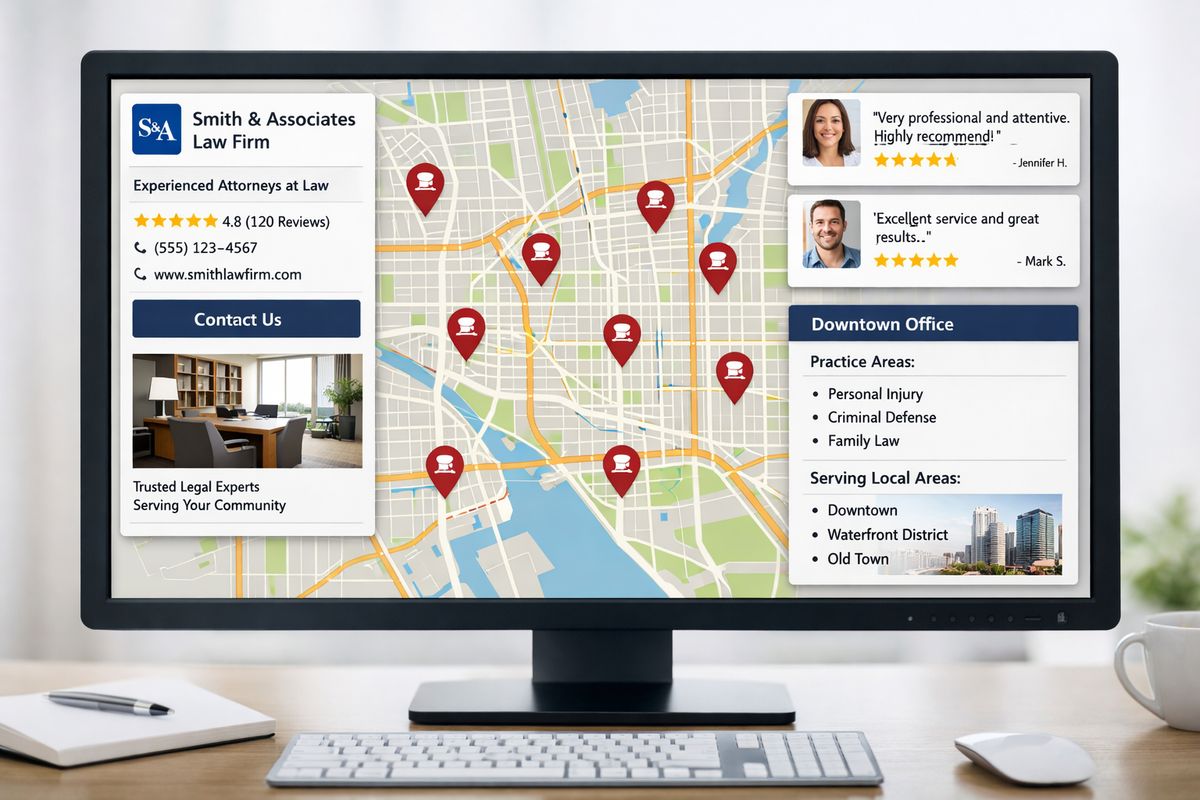
That blend can include map information, review sentiment, office proximity, business details, practice-area relevance, and organic content from your site. In other words, local SEO is not old news. It’s part of the new stack.
Start with Google Business Profile and local trust signals
Start here because it still pulls weight. Your Google Business Profile helps validate your location, services, categories, hours, reviews, photos, and activity. Those signals support visibility in standard local results and can also shape what AI systems understand about your firm.
Outdated categories, weak review volume, mismatched office details, or neglected profiles create drag. A healthy profile does the opposite. It gives machines and prospects the same message: this firm is active, real, and relevant in this market.
If your agency treats local work like a side task, that’s a miss. This local visibility guide built around AI-era legal search shows why location signals still do a lot of the heavy lifting.
Hit location pages that answer real client questions
Ship location pages that do more than swap city names.
A good city or state page explains what kinds of cases you handle there, what local clients usually ask, what the legal process looks like in that area, and what somebody should do next. A weak page reads like a template stuffed with place names. AI systems are getting better at spotting the difference.
Better location pages also improve intake. Somebody landing on a page for “personal injury lawyer in Fort Worth” should quickly understand whether you handle that case type, whether you actually serve that area, and what happens after contact.
Break down the content that wins mentions: What your firm needs to publish
Hit the target: publish fewer filler posts and more answer-driven pages.
AI systems tend to favor content that directly answers real questions in plain language. That doesn’t mean writing like a chatbot. It means structuring your pages so the answer is easy to extract, easy to trust, and easy to connect back to your firm.
Ship practice-area pages with direct answers
Your main service pages should do a lot of work. Spell out who you help, what cases fit, what deadlines matter, how fees work, what evidence helps, and what somebody should do after reading.
This is not the place for vague “trusted advocates” language. Direct beats fluffy. Clear beats clever. The stronger your service pages are, the easier it is for search engines and AI systems to understand what your firm actually does.
That’s also why pages built around actual legal services often carry more AI visibility than generic blog content.
Start FAQ content built around real search questions
AI prompts sound like questions because that’s how people think. Your content should meet that format head-on.
Create FAQ sections and standalone Q&A pages around the questions your intake team hears every week. “What happens if the other driver was uninsured?” “Do I need a lawyer for a first DUI?” “How is child support calculated in Illinois?” One page, one question, one clean answer.
That style of content lines up well with AI search behavior. It also supports topical depth, internal linking, and better lead routing. For a stronger content model, this guide on writing in a way AI tools can actually use fills in the gaps.
Log proof content: bios, results, reviews, and citations
Proof content is the credibility rep. Without it, your answers are just words.
Attorney bios show experience. Representative matters show relevance. Reviews show real-world trust. Bar memberships, speaking, publications, and legal citations show professional standing. Even small details matter, especially in YMYL topics like legal advice, where trust standards are high.
This is where a lot of firms underperform. Nice-looking sites with weak proof rarely become the source AI systems want to cite.
Track the tech layer in 15 minutes: Site signals that help AI and search engines understand you
Start simple. Your technical setup does not need to be fancy, but it does need to work.
AI visibility often rides on search visibility, and search visibility depends on whether your pages can be crawled, indexed, understood, and loaded fast enough to create a decent experience.
Hit structured data and clear page architecture
Structured data is just labeling. It tells machines, “this is a law firm,” “this is an attorney,” “this is an FAQ,” “this is a review,” or “this is a location.”
Add that to clean headings, useful internal links, and logical navigation, and your site becomes much easier to parse. Messy structure forces machines to guess. Clear structure gives your content a better shot at being interpreted correctly.
Start with speed, mobile use, and indexability
Most legal searches happen on phones, often in urgent moments. Slow pages lose trust fast. Broken mobile layouts lose leads even faster. And pages blocked from crawling or indexing have zero shot at showing up anywhere useful.
These are table stakes, not bonus points. Fast, mobile-friendly, indexable pages support visibility and conversion at the same time.
Avoid the common traps: What AI search is not
Hit this section like a filter. Bad agency pitches usually fall apart here.
Don’t confuse AI search with buying an AI tool
Using legal AI software for drafting, intake support, or research is one thing. Getting found inside AI-powered search experiences is another. Both can matter. They solve different problems.
One helps your internal operations. The other helps prospects discover your firm. Don’t let an agency blur that line.
Don’t chase a fake “AI ranking hack”
There is no secret tag, prompt trick, or magic plugin that guarantees AI mentions.
Thin AI-generated articles, mass-produced city pages, and automated junk might create volume, but volume is not trust. AI systems keep getting better at spotting shallow content. Shortcuts can burn budget and weaken your brand at the same time.
If somebody promises instant domination, move on. For a more grounded framework, this plain-English breakdown of what actually matters in AI-era optimization is the kind of answer you want from an agency.
Don’t drop traditional SEO
Log this one clearly: AI search did not replace SEO. It expanded it.
Your firm still needs technical SEO, local SEO, reviews, authority signals, strong pages, and a credible website. AI search sits on top of those foundations. If the base is weak, the shiny new layer won’t save it.
Use a simple scorecard: How to tell whether your firm is showing up in AI search
Track what can be tracked. AI visibility is messier than old rank reports, but it is not unmeasurable.
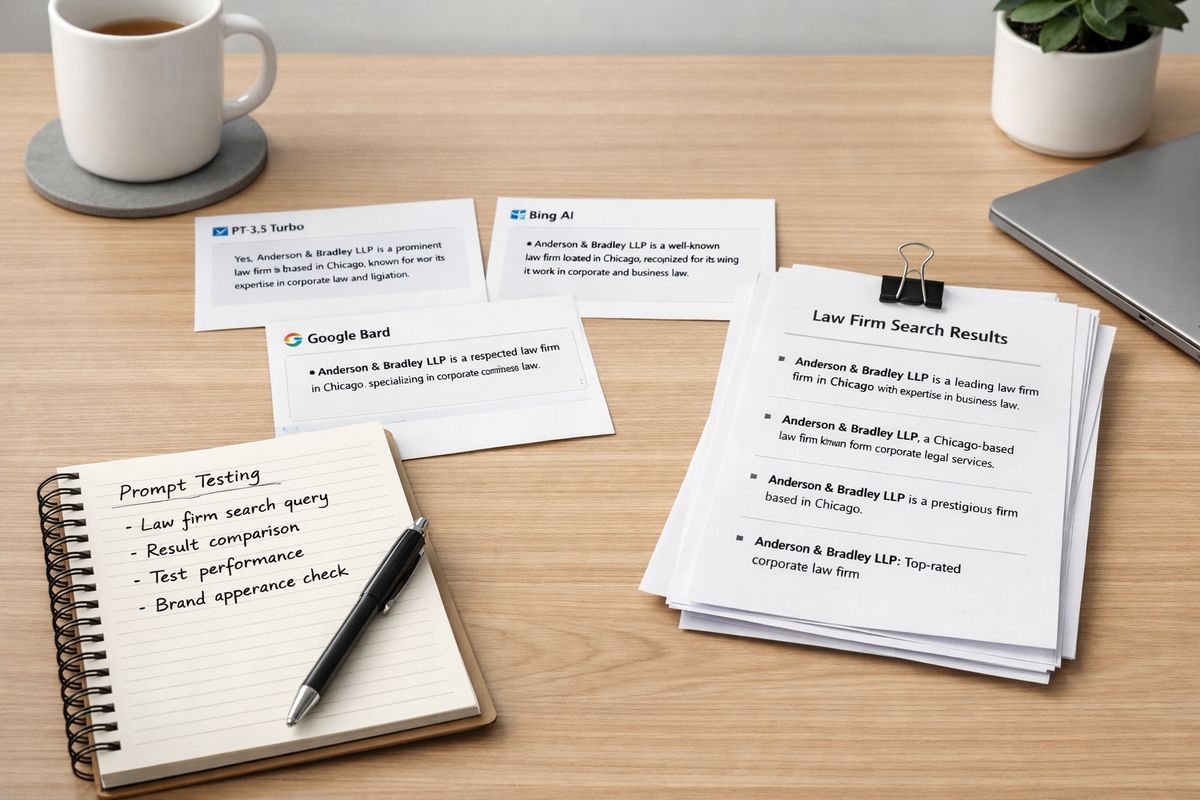
A solid agency should report prompt testing, mentions, citations, branded search growth, assisted traffic, lead quality, and page-level engagement tied to legal service intent.
Log branded prompts and practice-area prompts
Run monthly checks in major AI tools using your firm name, attorney names, core practice areas, and city-plus-service searches. Also test the real questions prospects ask before calling.
Look for four things: whether your firm is mentioned, whether the summary is accurate, whether your site or third-party sources are cited, and whether competitors dominate the answer. That pattern tells you far more than a generic “AI score.”
Track citations, assisted traffic, and lead quality
Some AI traffic will show up directly in analytics, some won’t. Still, you can watch patterns. Track referral traffic from AI tools where available. Track branded search growth. Track organic leads from informational pages. Track engagement on service pages connected to AI-friendly content. Track intake notes that mention ChatGPT, Google AI answers, or similar tools.
That reporting discipline matters. If you want a cleaner measurement framework, this visibility-tracking approach for AI-driven legal discovery shows what a monthly scorecard should include.
Hire the right coach: What to ask a digital marketing agency about AI search
Start with one goal: filter out firms selling recycled SEO with new labels.
A good agency should explain how AI search affects law firm discovery, how local visibility fits in, what content gets prioritized, how authority gets built, and how success is measured in leads, not fluff.
Start with the 5-question agency check
Ask five direct questions. How do you measure AI search visibility? How do you strengthen entity authority for a law firm? How do you handle local SEO for multi-office or single-office firms? What content gets built first and why? How do you report leads and intake quality instead of just traffic?
Strong answers are specific. Weak answers are vague, tool-heavy, or full of promises with no reporting plan.
Hit the red flags by Friday
Watch for guaranteed AI rankings, vague dashboards, no law firm experience, no local SEO process, weak content governance, no review strategy, and no authority-building plan beyond publishing articles.
If an agency cannot explain how AI search connects to signed cases, keep moving. Your shortlist should only include teams that understand legal marketing, local trust, and the difference between getting indexed and getting chosen.
Start this week: A 30-day AI search action plan for your law firm
Start today, not someday. A simple 30-day sprint will tell you where your firm stands and where the biggest gains are.
Week 1: Log your baseline
Audit branded prompts, practice-area prompts, local visibility, Google Business Profile, reviews, top-performing pages, attorney bios, and third-party citations. Capture screenshots. Log whether your firm appears, how it appears, and where competitors outrank or out-mention you.
This is your starting score. Without it, every future claim is guesswork.
Week 2: Ship the highest-impact fixes
Update your strongest practice-area pages first. Tighten attorney bios. Improve local pages. Fix inconsistent listings. Add FAQ sections based on real intake questions. Clean up thin or outdated copy.
Go after the highest-leverage reps, not the biggest pile of tasks.
Week 3 and Week 4: Repeat, track, and expand
Publish targeted Q&A content. Earn trusted mentions from relevant legal and local sources. Monitor prompt results weekly. Compare lead quality from answer-style content versus generic blog traffic.
By Friday, your first scorecard should be done. By the end of 30 days, your firm should know exactly where the gaps are, what an agency needs to fix, and what progress actually looks like.
Frequently Asked Questions
Is AI search for law firms just about ChatGPT?
No. ChatGPT gets most of the attention, but AI search also includes Google AI Overviews, Bing Copilot, Perplexity, and other systems that summarize answers and choose sources. If your strategy only focuses on one tool, your coverage is too narrow.
Can your firm rank in Google but still get ignored in AI answers?
Yes. A strong Google ranking helps, but it does not guarantee mentions in AI responses. AI systems also look at clarity, trust signals, entity consistency, local relevance, and third-party support across the web.
Do reviews help your firm show up in AI search?
Yes, especially for local legal searches. Reviews support trust, reinforce practice-area relevance, and strengthen local signals when combined with a solid Google Business Profile and consistent listings.
Does AI-generated content help law firms get more visibility?
Only if it’s edited into something accurate, useful, and credible. Raw AI content that sounds generic or shallow usually underperforms. For legal topics, trust matters too much to publish filler.
What should a law firm ask an agency about AI search first?
Ask how success is measured. If the answer is vague, traffic-only, or built around guaranteed rankings, that’s a red flag. A strong answer connects visibility to mentions, local authority, lead quality, and signed-case potential.
AI search is already shaping how legal prospects narrow choices before the first call. Start the audit today, get your first scorecard done by Friday, and if you want a sharper plan, schedule a call with Attorney Visibility ai for more information.