Rain tapped against the glass on the twenty-third floor while Dana Reyes, marketing director at a mid-sized litigation firm in Chicago, watched a ChatGPT window glow blue against a darkened conference room. One prompt asked for “top business litigation firms in Chicago,” and the answer arrived in seconds, clean and confident, with other firms named first and her own absent. That is what a ChatGPT visibility audit is for: turning that uneasy silence into a measured, repeatable record of where a law firm appears, where it disappears, and why.
Before the first prompt: what the firm needs on the desk
The audit starts before a single query is typed. A clean process matters because ChatGPT visibility shifts with prompt wording, session history, location cues, and source availability. Without a defined setup, the team ends up chasing fog.
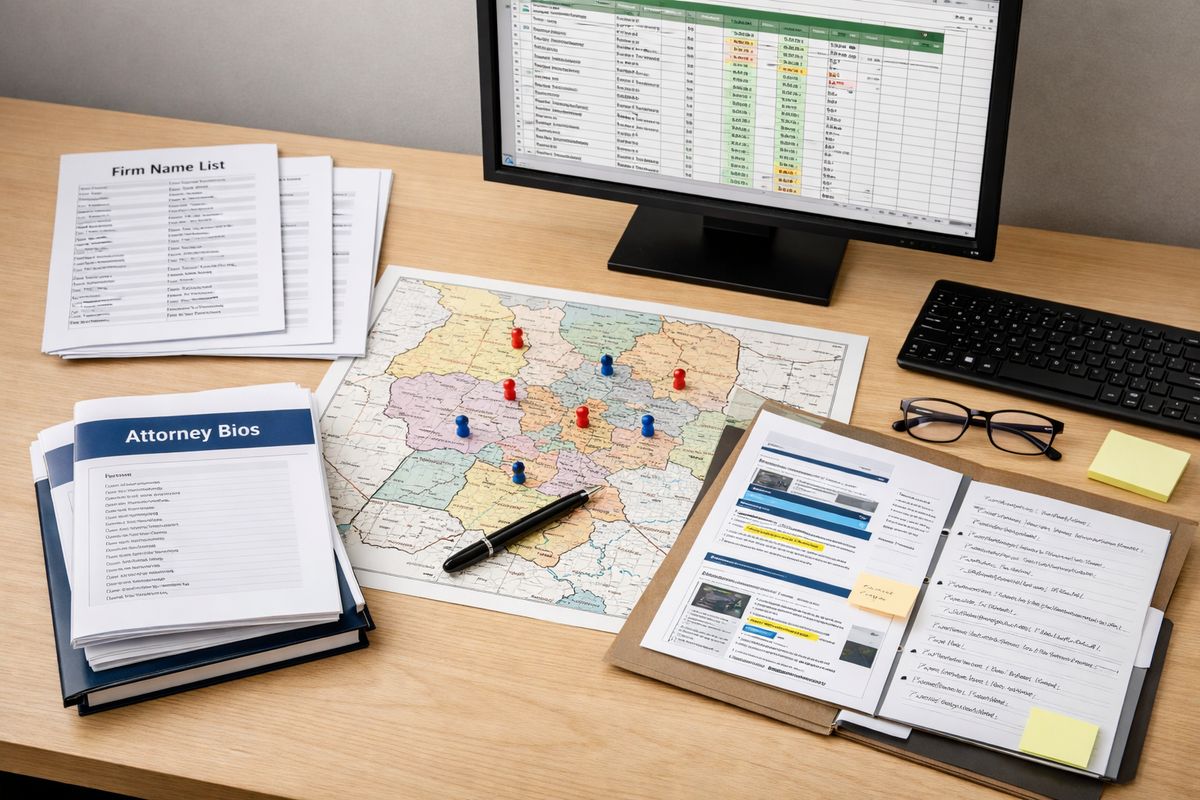
Required inputs: brand terms, practice areas, and office locations
The team gathers every term the market uses to identify the firm. That includes the formal firm name, common short versions, old brand names, attorney surnames, signature verdict terms, and the practice areas that drive revenue. For a firm handling personal injury and employment law in Illinois, inputs should include both broad and narrow services, plus city and county modifiers such as Chicago, Naperville, Cook County, and DuPage County.
Attorney names matter more than many firms expect. ChatGPT often connects legal authority to named professionals, especially when bios, articles, directory listings, and press mentions repeat those names consistently. Firms that need a wider map of where AI systems surface legal brands should review why some firms keep appearing in AI answers.
Required tools: ChatGPT, spreadsheet, browser, and citation log
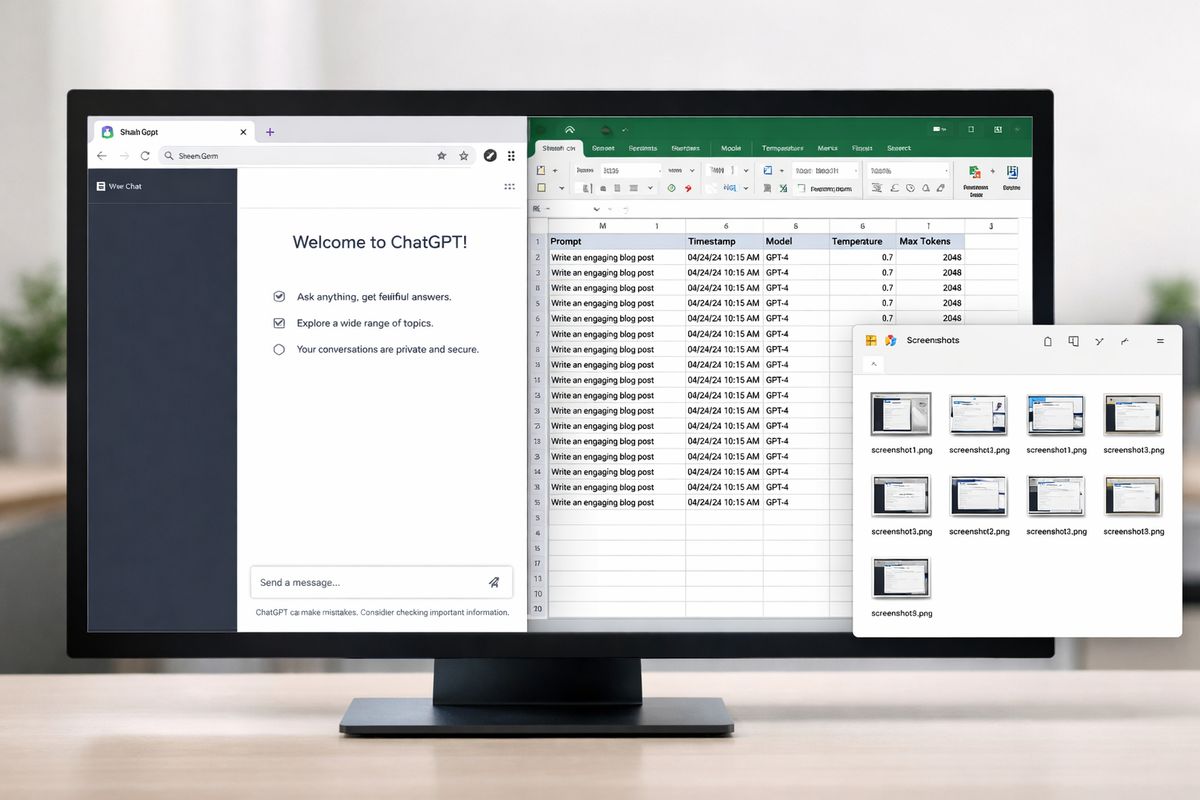
The working stack stays simple: ChatGPT, a browser, a spreadsheet, a screenshot folder, and a citation log. The spreadsheet should track prompt text, date, time, model used, whether browsing was active, whether the firm appeared, where it appeared, how it was described, and which sources were cited.
The citation log deserves its own tab. Once citations begin to shimmer in the response pane, patterns emerge fast: directories repeating, local news surfacing, practice pages missing, review sites carrying more weight than expected. Those source patterns often explain the result more clearly than the answer itself.
Audit roles: who handles prompts, scoring, and review
One person should own prompting, one should score outputs, and one should review findings. That separation keeps the process honest. The prompt operator preserves consistency, the analyst scores mentions without rewriting the prompt on impulse, and the decision-maker reads the final pattern in business terms.
Step 1: Define the visibility questions that matter to the firm
Under cool office light and the soft click of keys, the team has to decide what “visible” means. A branded mention is not the same as a recommendation. A recommendation in one practice area does not mean market-wide strength.
- Write three to five audit questions before testing starts.
- Tie each question to a business outcome.
- Use those questions to approve or reject every prompt in the library.
A strong set of questions sounds like this: Is the firm recognized by name? Does ChatGPT recommend the firm for priority practice areas? Does the firm appear in local legal comparisons? Which competitors dominate those answers?
Separate branded visibility from non-branded discovery
Branded visibility tests direct recognition. Prompts mention the firm name, an attorney name, or a unique brand marker. Non-branded discovery tests whether ChatGPT surfaces the firm when no branded cue is provided. That second category matters more because it reflects how prospective clients begin.
If a firm appears only when named directly, ChatGPT visibility is weak. The brand exists, but discovery does not. That distinction sits at the center of checking AI answers about a law firm in a structured way.
Map visibility to practice area intent
Each prompt should mirror an actual legal need: car accident representation, probate disputes, child custody, white-collar defense, shareholder litigation. Intent shapes visibility. A firm with strong employment law content may vanish on general litigation prompts but surface when the issue narrows to wage claims or retaliation cases.
Define the competitive set
The benchmark should include five to ten firms competing for the same matters in the same markets. That usually means local leaders, regional brands, and at least one directory-heavy rival that dominates citations. The comparison set must be fixed before the first run, or the audit drifts.
Step 2: Build a prompt library that reflects real client behavior
Outside, sirens faded into the avenue while the analyst drafted prompts that sounded like actual people under pressure, not marketers in a planning meeting. That difference matters. ChatGPT visibility shows up through natural language.
- Create 20 to 40 prompts.
- Group them by intent type.
- Keep wording plain and realistic.
- Save the final library before testing begins.
Create informational prompts
Informational prompts capture early-stage discovery. Examples include questions about filing deadlines, comparative fault, custody standards, business disputes, or whether a claim is worth pursuing. These prompts reveal whether the firm’s educational content influences citations and summaries.
Firms investing in content that answers legal questions in natural language usually perform better here because ChatGPT favors pages it can summarize cleanly.
Create comparison and recommendation prompts
These prompts ask for lists, comparisons, or direct recommendations. They are the sharpest test of competitive presence because they force the model to choose. Prompts should include city, practice area, and quality cues such as experience, reputation, trial strength, or business focus.
Create local intent prompts
Local prompts test city, suburb, county, and metro relevance. “Best estate planning lawyer in Oak Brook” and “top personal injury firms near downtown Chicago” are not interchangeable. Geography changes the answer set, and the audit has to reflect that.
Create authority and trust prompts
These prompts test whether ChatGPT connects the firm to credibility signals such as awards, case results, speaking engagements, attorney tenure, review quality, and bar activity. When these signals are weak or scattered, visibility usually flickers.
Step 3: Run the prompts in a controlled testing environment
Morning light stretched across the desk as the first formal run began. The goal here is not perfect scientific certainty. The goal is enough control to separate pattern from noise.
- Use the same ChatGPT account for the full audit.
- Record the model and whether browsing is enabled.
- Run each prompt in a fresh chat.
- Repeat prompts at least three times across separate sessions.
Standardize account, model, and search settings
The team should use one model version for the main audit and note any changes. If browsing is active, that setting must stay consistent. Session memory and prior thread context should be excluded by starting fresh chats.
Test across fresh sessions and repeated runs
Repeated runs expose stability. If a firm appears once and disappears twice, that is not visibility. That is noise. Stable appearance across repeated clean sessions is the threshold that matters.
Record exact outputs, timestamps, and screenshots
Copy the full response into the spreadsheet, capture screenshots, and log the timestamp. Those details become the evidence trail later when leadership asks why one competitor outranked the firm. Teams working through how source selection shapes legal AI answers usually find that screenshots reveal more than summaries.
Step 4: Measure whether the firm appears, how often, and in what position
By the fourth hour, the room grows quiet except for the scrape of a chair and the hum of the HVAC. Now the raw output becomes a scoring system.
- Mark whether the firm appears.
- Note position in the answer.
- Score recommendation strength.
- Count how many topic clusters include the firm.
Track presence: mentioned or absent
Start with the simplest signal. The firm is either in the answer or it is not. This binary field keeps the audit grounded. Fancy interpretation comes later.
Track prominence: first mention, list position, and depth
Position changes the business value of a mention. First mention carries more weight than fourth. A firm tucked into the last line of a long answer has technical visibility but weak practical impact.
Track recommendation strength and sentiment
A plain mention is different from favorable framing. Strong responses use language that signals trust, relevance, or fit for the legal issue. Weak responses name the firm without support or place it beside stronger competitors.
Track query coverage across topics and locations
Coverage matters more than isolated wins. A firm that appears for one downtown corporate prompt but disappears across family law, personal injury, and suburban geography has a narrow footprint. That pattern often traces back to uneven local market signals across office pages and profiles.
Step 5: Analyze the sources ChatGPT relies on
A browser tab opens, and the real trail begins. ChatGPT visibility is usually a source problem wearing a recommendation problem as a coat.
- List every cited domain.
- Count how often each domain appears.
- Classify each source as owned, earned, or third-party.
- Review whether the source describes the firm accurately.
Identify cited domains and recurring publishers
The recurring publishers usually include the firm site, legal directories, association profiles, local business listings, news coverage, and review platforms. Repetition matters. If one directory appears across several recommendation prompts, it is influencing the model’s confidence.
Compare owned, earned, and third-party sources
Owned sources include practice pages, attorney bios, FAQs, and office pages. Earned sources include press coverage, interviews, bar mentions, and citations from respected publishers. Third-party sources include directories and review sites. Strong ChatGPT visibility usually rests on all three, not one alone.
Check citation accuracy and message alignment
A citation is not useful if it carries the wrong story. Outdated office addresses, generic bios, thin service pages, and stale directory summaries create message drift. Firms with stronger attorney profile pages that clearly define experience and focus usually show cleaner alignment in AI responses.
Flag missing or weak source coverage
When a practice area never appears in cited materials, visibility suffers. The same happens when a suburban office exists on the firm website but not across external sources. Missing support leaves the model with little to build from.
Step 6: Benchmark the firm against competing law firms
By late afternoon, the spreadsheet fills with names from the same skyline and the same courthouse corridors. Benchmarking exposes the gap without sentiment or excuse.
- Run the identical prompt set for all selected competitors.
- Score them using the same fields.
- Compare mention rate, prominence, and citation support.
- Highlight where rivals dominate by topic or geography.
Compare mention rate across the same prompt set
Mention rate is the cleanest comparative metric. If one competitor appears in 62 percent of prompts and the firm appears in 18 percent, the market picture is already plain.
Compare citation share and source quality
Not all citations are equal. A competitor backed by bar publications, news coverage, strong reviews, and dense practice content holds a stronger AI footprint than one relying only on directory pages.
Compare positioning by practice area and geography
This is where opportunity appears. One rival may own family law in the city core while another dominates personal injury in suburban prompts. Firms evaluating broader AI search positioning against standard SEO priorities often find the map is uneven, not hopeless.
Step 7: Diagnose why the firm is invisible, weak, or inconsistent
The pattern breaks open here. Some firms repeat. Some vanish. Some appear only when the prompt narrows to a single lawyer or office.
- Review scoring patterns.
- Match each weakness to a likely digital cause.
- Rank causes by business impact.
Weak entity signals and inconsistent firm data
Inconsistent naming, merged office records, missing attorney associations, and conflicting phone or address data confuse AI systems. Entity clarity is not glamorous, but without it the firm remains blurry.
Thin practice area authority
Shallow service pages and thin FAQs produce weak evidence. If a competitor has ten dense pages on trucking accidents and the firm has one short page on personal injury, the outcome is predictable.
Poor third-party validation
Weak reviews, limited directory depth, sparse press, and few independent mentions reduce trust signals. Firms curious about off-site influence should examine how review quality affects AI recommendations for lawyers.
Local relevance gaps
A firm serving a city is not the same as being recognized as relevant to that city. Thin location pages, weak local citations, and limited community mentions suppress local prompt performance.
Step 8: Turn the audit into an action plan for stronger ChatGPT visibility
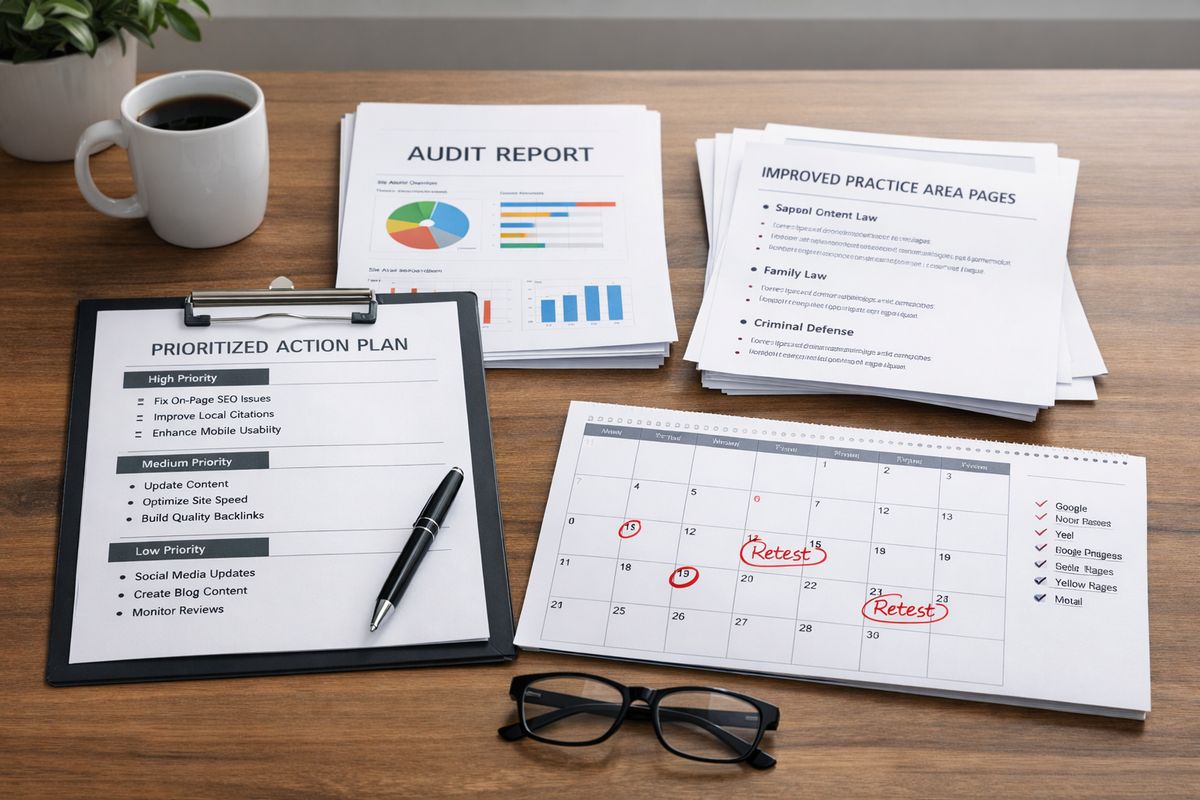
Evening settles against the windows, and the spreadsheet stops being a diagnostic tool and becomes a work plan. The fixes should be ranked by speed, impact, and dependence.
- Fix source clarity first.
- Expand practice authority second.
- Strengthen off-site validation third.
- Set a retesting schedule.
Prioritize fixes that improve source discoverability
Start with page titles, attorney profile depth, office page clarity, internal linking, and structured data. A firm cannot be cited well if its own site presents a foggy outline.
Strengthen practice area and FAQ content
Practice pages should answer real legal questions in plain language, define jurisdiction, name common case types, and show attorney experience. That is the kind of material AI systems can summarize and trust.
Expand authority through directories, media, and citations
The firm should improve major legal directory listings, earn local media mentions, maintain association profiles, and pursue coverage tied to verdicts, commentary, and community relevance.
Set a recheck cadence and reporting format
Monthly retesting works during active optimization. Quarterly works once the footprint stabilizes. The report should track mention rate, position, source mix, and competitive shifts over time.
Step 9: Document findings in a report a law firm can act on
The final report should land with the weight of proof. Not theory. Not trend talk. Proof.
- Open with a one-page verdict.
- Show the scoring summary.
- Include screenshots and cited sources.
- End with a ranked action plan tied to business impact.
Build an executive summary with clear verdicts
The summary should state whether the firm is visible, partially visible, or effectively absent in ChatGPT discovery. It should also state whether the problem is source weakness, local weakness, practice authority weakness, or competitive displacement.
Present evidence with examples and screenshots
Use side-by-side prompt and response examples. Show where the firm was absent, where competitors appeared, and which sources supported those results.
Tie findings to pipeline and market opportunity
If the firm is absent from recommendation-style prompts in its highest-value services, the issue is not abstract. It is lost discovery, weaker recall, and reduced consideration in live legal markets.
Troubleshooting common issues during a ChatGPT visibility audit
Screens refresh, outputs shift, and the process sometimes lurches off script. That does not invalidate the audit. It just requires discipline.
Results change between sessions
Use repeated runs and clean sessions. Judge patterns by frequency, not by a single striking answer.
ChatGPT gives no citations or limited sourcing
Log the answer anyway, note citation limits, and rerun in the same conditions later. Some prompts reveal recommendation behavior even when visible sourcing is thin.
Competitors appear under unexpected prompt phrasing
Keep the original phrasing and add a nearby variant. Large swings from small wording changes often reveal which query frames the market already owns.
The firm appears for branded prompts but not discovery prompts
That result means recognition exists but recommendation visibility is weak. The remedy usually lies in broader authority, local signals, and comparative source strength, not brand awareness alone.
What success looks like after the audit
The office grows still, the monitor steady in the same blue light that opened the night. A successful ChatGPT visibility audit leaves the firm with a baseline, a competitor benchmark, a source map, and a ranked list of fixes that can actually change the next round of answers.
Immediate deliverables
The concrete outputs are a prompt library, a scoring sheet, a citation map, a screenshot archive, and a competitive comparison report.
Next operational moves
The next moves are technical cleanup, stronger practice content, improved profiles and citations, local authority building, and scheduled retesting. Firms that want a deeper plan for showing up more often in AI-driven legal discovery should move from audit to execution quickly.
Frequently Asked Questions
How often should a law firm check ChatGPT visibility?
A firm running active improvements should test monthly. Once performance stabilizes, quarterly checks are enough to track trend lines and competitor movement.
What counts as strong ChatGPT visibility for a law firm?
Strong visibility means the firm appears consistently in non-branded prompts, shows up high in recommendation lists, and is supported by credible citations across multiple practice areas and locations.
Why does a firm appear in one prompt but disappear in another?
Prompt wording, location modifiers, practice area specificity, and source availability all affect output. That is why a real audit uses repeated runs and prompt clusters instead of one-off checks.
Do website pages alone improve ChatGPT visibility?
No. Strong performance usually requires clear owned content, accurate attorney and location data, credible third-party validation, and earned mentions across the web.
Is ChatGPT visibility the same as Google rankings?
No. The systems overlap in source discovery, but they do not rank or recommend in the same way. A firm can rank well in Google and still perform poorly in ChatGPT recommendations.
How long does it take to improve ChatGPT visibility?
Structural fixes and source cleanup can improve the audit picture quickly. Stronger practice authority, local trust, and third-party validation take longer, but they create the durable gains.
The rain on the glass sounds different once the pattern is visible. For firms that want a decisive audit, a ranked action plan, and expert guidance on improving ChatGPT visibility, the next move is to schedule a call with Attorney Visibility ai for more information.