
If your law firm website still sounds like a brochure, conversational content is probably the missing piece. It helps your pages sound more like the questions people actually ask, which makes your firm easier for ChatGPT to understand, summarize, and surface when someone needs legal help fast.
What conversational content means for a law firm
Conversational content is writing that sounds like a real person talking to another real person. For a law firm, that means swapping stiff, self-congratulatory copy for plain answers that explain a legal issue, what it means for you, and what happens next.
That matters more now because AI tools are built around natural language. ChatGPT does not think like a law school professor reading a brief. It works by recognizing patterns in everyday phrasing, common questions, and clear explanations. If your content sounds like the way people actually talk, your firm has a better chance of being understood correctly.
This is not about making your site casual for the sake of it. It is about making your site useful. And useful content travels farther, both in search and in AI-generated answers.
How conversational content is different from traditional law firm copy
A lot of law firm websites still lead with phrases like “aggressive representation,” “award-winning counsel,” or “full-service legal solutions.” The problem is not that those phrases are false. The problem is that they do not answer anything.
Compare that to a sentence like, “You can lose income after a car crash, and a personal injury claim may help you recover those lost wages.” One sentence gives a prospect a reason to keep reading. The other could sit on almost any law firm website in any city and mean nothing.
Traditional law firm copy often tries to impress first and explain later. Conversational content flips that. It answers first, then proves credibility through clarity, detail, and relevance.
Why this matters now that clients ask legal questions like they talk
Legal searches have changed. People no longer type only chopped-up phrases like “car accident lawyer Dallas.” Plenty of searches still look like that, but more and more people ask full questions into search bars, voice assistants, and AI tools.
Picture somebody sitting in a hospital waiting room at 9:40 p.m., typing into a phone: “Can I still file a claim if the other driver’s insurance keeps calling me?” That is not a polished query. It is a real-world question, asked in stress, using ordinary language.
Your content needs to meet that moment. If your pages are built around the way clients speak, not just the way lawyers describe services, your firm becomes easier to find and easier to trust.
Why ChatGPT favors content that sounds natural
ChatGPT favors content that sounds natural because natural language is the raw material it works with. Without getting technical, the system is much better at handling clear human phrasing than vague marketing language or keyword-heavy filler.
Think of it like this: if your website is a filing cabinet, conversational content puts better labels on the folders. AI can sort through it faster, pull the right idea more accurately, and connect it to the question being asked.
That is one reason understanding how AI search works for law firms has become such a practical marketing issue. This is not a future trend. It is already changing how legal information gets discovered.
ChatGPT looks for clear answers, not just keywords
Keywords are the search terms people use, like “DUI lawyer Tampa” or “probate timeline in Ohio.” Those still matter. But old-school SEO habits, especially repeating the same phrase over and over, do not help much when the goal is to be useful in AI-driven discovery.
ChatGPT handles questions in context. If somebody asks, “Can I sue if I was partly at fault?” the model is not looking only for a page that repeats “partly at fault lawyer” ten times. It is more likely to work with a page that plainly explains shared fault, local rules, and how compensation may be reduced.
That is the catch. A page can be “optimized” in the old sense and still be weak for AI. If it does not clearly answer the question, it gives the system very little to work with.
Natural language helps AI connect questions to your services
People do not always ask for a service by name. Somebody dealing with a rear-end crash may ask about neck pain, missing work, dealing with an adjuster, or how long insurance has to respond. All of those questions may point to the same practice area.
Conversational writing helps because it covers the real wording around the legal problem. A page about what to do after a rear-end collision can naturally include pain symptoms, medical visits, insurance pressure, vehicle damage, and deadlines. That gives AI more ways to connect a broad set of prompts back to your service.
This is a big part of why some firms show up more often in ChatGPT-driven legal discovery. The content does not just mention the service. It maps to the language around the situation.
Simple structure makes your content easier to pull into answers
Structure matters almost as much as tone. Short paragraphs, useful headings, direct definitions, and question-led sections make your content easier for both people and AI to scan.
A messy page makes the model work harder. A clear page makes the answer easier to find.
It helps to think of formatting like labeling drawers in a kitchen. If every utensil is tossed into one deep bin, finding the whisk takes longer. If each drawer is marked and organized, the right tool is easy to grab. Your headings, subheads, and short answer sections do the same job for legal content.

Why law firms have more to gain than most businesses
Conversational content helps almost any business, but law firms get an extra advantage because legal decisions are personal, emotional, and often urgent. Your potential clients are not browsing for fun. Your pages are meeting people on bad days.
That changes what works. Fancy language may look polished, but it often creates distance. Clear language reduces friction.
Legal topics are high-stress and personal
If somebody has been arrested, injured, fired, served divorce papers, or named in a lawsuit, that person is not looking for a lecture. The immediate need is simpler: What happens next? What should you avoid? Does this law firm handle cases like yours?
Conversational content meets that need by staying grounded in the human side of the problem. It does not flatten the law into slogans. It explains the process in a way that feels steady and useful.
That is especially helpful in legal marketing because stress narrows attention. People scan fast. They look for reassurance, specifics, and signs that your firm understands the exact situation.
Trust starts before a consultation
By the time somebody calls your office, an opinion has already formed. Your tone helped shape it.
If your site sounds cold, expensive, vague, or intimidating, that feeling starts long before intake. If your pages sound calm and direct, your firm feels easier to talk to. That does not guarantee a consultation, but it absolutely affects who reaches out and how ready that person is to engage.
A lot of firms underestimate this. Tone is not decoration. Tone is part of trust.
Plain language does not make your firm sound less credible
This is where many firms hesitate. There is a fear that simpler writing will make the firm sound lightweight.
It usually does the opposite.
Clear writing makes your firm sound more confident because confident professionals do not hide behind foggy language. If you can explain comparative negligence, a deposition, or a probate timeline in plain English, you sound more authoritative, not less. Your skill becomes easier to recognize.
For firms thinking about what content actually helps with AI visibility, this point matters. Authority is not just about credentials on the page. It is also about how clearly your content explains something hard.
How conversational content helps your firm show up in AI-driven discovery
This is where style turns into visibility. Conversational content gives AI systems usable material, the kind of language that can be summarized, paraphrased, or cited when somebody asks a legal question.
It also helps in channels that existed before AI summaries became common. Search results, FAQ-rich snippets, time on page, and lead quality all benefit when your content is easier to understand.
It matches the exact questions people ask ChatGPT
A person using ChatGPT is likely to ask a full question, not just a phrase. “Can I still sue if I was partly at fault in Texas?” is much closer to a prompt than “Texas comparative negligence attorney.”
If your page uses that same natural framing, the match gets tighter. The model can more easily connect the question to your answer, especially when the page includes jurisdiction details and a direct explanation near the top.
This overlap is one reason getting your firm found in ChatGPT starts with content, not tricks. You are not trying to hack a system. You are trying to publish answers that fit the way people ask.
It gives AI quotable, reusable language
AI systems are more likely to work well with sentences that are concrete and self-contained. If your page says, “In Florida, a first DUI arrest can lead to license suspension, fines, and possible jail time, even if nobody was hurt,” that is usable.
If your page says, “Your matter deserves thoughtful advocacy from a team committed to excellence,” that is not usable. It sounds polished, but it communicates almost nothing.
The more direct your language is, the easier it becomes for AI to paraphrase accurately. That matters because weak phrasing creates room for distortion, while precise phrasing gives the model a sturdy frame.
It supports search, snippets, and human readers at the same time
Conversational content is not a separate strategy sitting off to the side of SEO. It supports the whole system.
Google still rewards pages that answer questions well. Featured snippets still favor concise explanations. FAQ sections still help when they mirror real user intent. Human visitors still stay longer when your writing gets to the point.
That is why the debate is not really SEO versus AI. The better lens is how both channels overlap. If you want a clearer picture of that overlap, it helps to look at how AI search and Google work together for law firms.
What conversational law firm content actually looks like
Some firms hear “conversational” and picture something overly casual or chatty. That is not the goal. Conversational legal content is clear, direct, and grounded in real questions.
It sounds more like an attorney explaining an issue across a desk than a brochure announcing prestige from a podium.
Use the questions clients already ask
Your best content ideas are often sitting in intake notes, consultation calls, and front-desk emails. Questions like “Should you talk to the insurance adjuster?” or “How long does probate take?” are not small topics. They are exactly the kind of high-intent questions people ask before hiring a lawyer.
When those questions become page sections or blog topics, your content starts matching actual demand. It also becomes more useful because it is built from real friction points, not guessed marketing themes.
Answer first, then explain
This is one of the simplest upgrades a law firm can make. Put the direct answer in the first few lines.
If the question is “Can you move out before the divorce is final?” answer it right away. Then explain the factors, exceptions, and local rules underneath. That order mirrors how people read, how search results work, and how AI tools summarize.
Too many law firm pages spend 250 words clearing their throat. By the time the answer arrives, the visitor is gone.
Swap legal jargon for plain English, then define the term if needed
Legal jargon is sometimes necessary, but it should never be your first layer. Start with the plain-English meaning, then introduce the term.
For example, a statute of limitations is the deadline to file your case. A contingency fee means your lawyer gets paid from a settlement or verdict, not upfront. Comparative negligence means your compensation can be reduced if you were partly at fault. A deposition is formal questioning under oath before trial.
That approach does not dumb anything down. It simply removes the barrier at the front door.
Write to one person, not to “all potential clients”
Good conversational content feels personal because it is written to one person with one problem. That usually means using “you,” building around realistic scenarios, and avoiding abstract institutional language.
A sentence like “You may get calls from the insurance company within days of the crash” lands better than “Victims often encounter insurer communications during the post-accident period.” Both describe the same thing. Only one sounds human.

The types of pages where conversational content works best
This approach is not limited to blog posts. Some of the best opportunities are on pages that already drive inquiries.
Practice area pages
Practice area pages often carry the highest intent on a law firm site, which makes them a smart place to start. Instead of opening with broad claims about experience, lead with the problem the person is dealing with and the kind of help your firm offers.
A strong page still covers scope, legal process, case types, and jurisdiction. It just does so in language that is easier to understand. That is one reason well-built service pages matter so much in AI search.
FAQ pages and attorney Q&A content
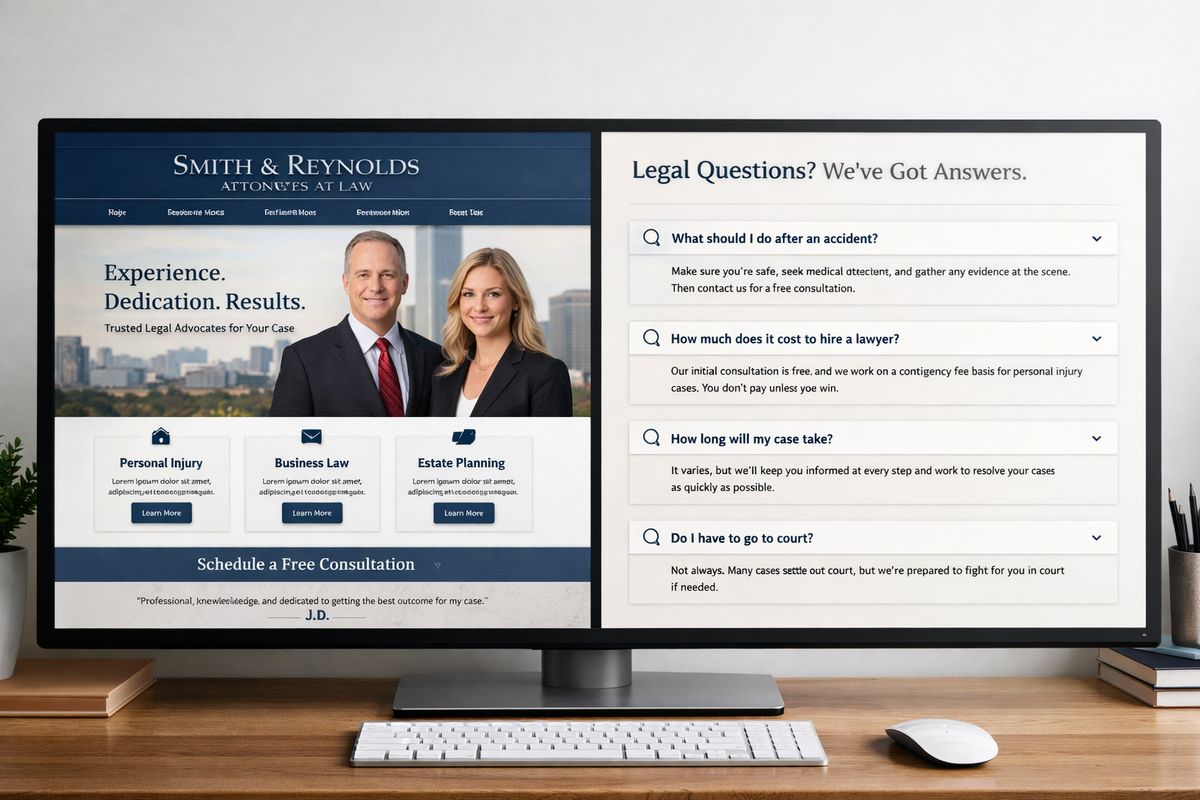
FAQ pages are a natural fit for ChatGPT-style discovery because they mirror how prompts are phrased. The structure is already friendly to question-based searching, and the content is easier to scan and summarize.
Attorney Q&A pages can work especially well when each answer is short, specific, and grounded in local law. Think less “thought leadership,” more “clear answer to a nervous question.”
Blog posts built around real legal scenarios
Scenario-based blog posts often outperform generic “what is personal injury law” articles because they meet a real moment. “What happens after an arraignment?” is better than a broad criminal defense overview for somebody waking up in panic. “What to do if your employer fired you after reporting harassment” is more useful than a vague article about employment rights.
Specific scenarios also create stronger alignment with AI prompts because the wording is closer to what people actually type.
Attorney bio pages and firm about pages
Even attorney bios can become more conversational without losing professionalism. Instead of listing memberships and awards first, explain who you help, what kinds of matters you handle, and what clients can expect when they contact your office.
That small shift can change how approachable your firm feels. It can also strengthen visibility signals, especially when your attorney profile pages clearly explain experience and focus.
Common mistakes that keep law firm content from working in ChatGPT
https://www.youtube.com/watch?v=vOQWxzIPe4o
A lot of content misses the mark for the same predictable reasons. The good news is that most of them are fixable.
Writing for search engines instead of people
If a page repeats the same phrase every other paragraph, reads like a template, or exists only to target a city name, it is probably not doing much for AI or for humans.
Thin location pages are a common example. If the only difference between one city page and the next is the place name, the content feels empty. AI tools tend to do better with pages that provide distinct local value, not recycled copy.
Hiding the answer under long, vague opening paragraphs
Many law firm pages spend the opening section talking about commitment, compassion, and personalized service before saying anything useful.
That delay hurts. Visitors want the answer quickly, and AI systems also benefit when the core explanation is near the top. A page should not make somebody dig six scrolls deep just to understand whether the issue applies.
Sounding polished but saying nothing
Phrases like “committed to excellence,” “tailored legal solutions,” and “results-driven representation” are everywhere because they sound respectable. But they do not communicate much.
The problem is not polish itself. The problem is empty polish. If a sentence could appear on any firm site in any city and still fit perfectly, it is probably not helping.
Forgetting local and jurisdiction-specific details
Conversational content still needs legal specificity. In fact, specificity is what makes it trustworthy.
A page about car accident claims should mention the state rules that affect fault, deadlines, or insurance requirements. A family law page should reflect local process where relevant. A criminal defense page should acknowledge what happens in the actual court system your firm serves.
Friendly writing without jurisdiction detail is just softer vagueness. Clear and local beats generic every time.
How to make your existing law firm website more conversational
You do not need to rebuild every page at once. The smarter move is to start where better language can affect inquiries the fastest.
Start with your highest-intent pages
Begin with practice area pages, location pages, and blog posts that already attract traffic or lead to consultations. Those pages sit closest to actual hiring decisions, so improvements there tend to matter most.
This also makes the project manageable. Instead of chasing a full rewrite, you can focus on the pages with the best upside first.
Rewrite headlines as real questions or clear promises
Weak headings often hide useful content. A heading like “Understanding the Claims Process” is fine, but “What happens after you file a personal injury claim?” is better because it matches the way somebody actually thinks.
The same goes for top-of-page sections. “Florida DUI Defense Representation” may describe the topic, but “What happens after a DUI arrest in Florida?” creates immediate relevance.
Add short answers, examples, and next-step guidance
A page becomes more conversational when it gives direct responses, mini-scenarios, and simple guidance instead of only broad explanations.
For example, if you mention comparative fault, add a quick scenario about a driver who was speeding but got hit by somebody who ran a red light. If you discuss probate, mention a rough timeline and what often slows the process down. Little details make the page feel lived-in and useful.
Use intake calls and emails as a content source
The language coming from prospects is one of your best content assets. If callers keep asking, “Do I need to answer the adjuster?” or “Can I get fired for taking medical leave?” those phrases belong on your site.
That is how conversational content stays connected to reality. It is built from actual demand, not just keyword tools and guesswork.
How to balance conversational tone with legal accuracy and ethics
Law firms have to get this part right. Content should feel approachable, but it also needs to stay accurate, careful, and ethically sound.
Keep the language simple, not sloppy
Simple writing is not vague writing. You can explain timelines, liability, defenses, and legal process in plain English without stripping out nuance.
That means saying what usually happens, where exceptions show up, and when local law changes the answer. The best conversational legal content feels easy to read because it is well explained, not because it skips the hard parts.
Avoid guarantees and overpromises
Friendly tone should never slide into loose claims. If your content implies guaranteed outcomes, certainty about settlement value, or promises about case timelines, it creates risk.
A better approach is direct but measured language. Explain what may happen, what factors affect the answer, and where a legal review is needed. That keeps the page useful without crossing the line into promises your firm should not make.
Use disclaimers where they help, not where they interrupt
Disclaimers still matter, but placement matters too. If every paragraph is interrupted by fine print, the page becomes hard to read and hard to trust.
Put disclaimers where they support understanding, such as near a contact form, at the end of a state-specific explanation, or in a clear note that the content is general information. The goal is to preserve clarity, not bury it.
What a digital marketing agency should do with conversational content for your firm
If you are considering agency help, the standard should be higher than “writes blogs.” Good agency support turns your client questions, search demand, and service priorities into content that sounds natural and performs across search and AI discovery.
Build content from search behavior and client questions
A good process starts with real inputs: keyword research, competitor gaps, intake language, top-performing pages, and AI-style prompts. From there, content gets mapped to the questions people ask at different stages of the hiring journey.
That is much stronger than publishing generic posts on broad legal themes. It is also closer to what actually matters in AI search optimization for law firms, where alignment and clarity tend to beat volume.
Create a voice your attorneys would actually say out loud
The best legal content sounds like something your attorneys could comfortably say in a consultation. Not word for word, but close.
That means less generic legal marketing language and more natural explanation. If a page sounds like a stranger stitched together stock phrases from ten competitor sites, it will not build trust and it will not stand out in AI-driven discovery.
Measure results beyond rankings alone
Rankings still matter, but they are not the full picture anymore. Better conversational content can improve engagement, consultation quality, FAQ visibility, and how often your firm is part of AI-generated answers.
It is also worth checking how your firm appears inside ChatGPT answers, because visibility is not always a simple click from a blue link. Sometimes your influence shows up in summaries, mentions, and source patterns before it shows up in a traffic report.
Questions law firms ask about conversational content
https://www.youtube.com/watch?v=0PVpAWg2NMw
Does conversational content replace SEO?
No. It improves SEO by making your content match the way people actually search and the way AI tools interpret questions. Good structure, search intent, local relevance, and useful answers still matter. Conversational writing simply makes those pieces work better together.
Will plain language make a serious firm sound less professional?
No. Clear firms usually sound more professional because the message is easier to trust. Serious legal work does not require stiff language. It requires accurate explanation, good judgment, and confidence.
Can ChatGPT send clients directly to a law firm website?
Sometimes, but not always. AI tools may cite, summarize, or shape discovery without producing a direct click the way Google often does. That is exactly why being part of the answer matters. If your firm is easy for AI to understand, your visibility can expand even before referral traffic becomes obvious.
How fast can a firm update content to be more conversational?
A few high-value pages can be improved fairly quickly, especially practice area pages and FAQs. A full site overhaul takes longer because it involves message consistency, page structure, and local legal detail. The useful part is that you do not need to wait for a complete rewrite to start seeing improvement.
One smart place to start
Pick one practice area page and rewrite the top section in plain spoken language. Answer the first three questions prospects ask on calls, put the answer near the top, and make sure the page mentions the state-specific rules that affect the issue.
That one change is often enough to show the difference between content that sounds polished and content that actually helps. If you want a clearer, more approachable website that is easier for ChatGPT to understand, schedule a call with Attorney Visibility ai for more information.
Frequently Asked Questions
What is conversational content in legal marketing?
It is website content that sounds like a direct, clear explanation instead of a brochure or legal memo. For law firms, that usually means answering real client questions in plain English and organizing pages around what people actually want to know.
Why does conversational content matter for ChatGPT?
ChatGPT works with natural language patterns. If your pages use the same kind of wording people use in questions, your content becomes easier for the system to interpret, summarize, and connect to legal prompts.
Does conversational content mean informal or overly casual writing?
No. Conversational content should feel human and approachable, not sloppy. You can stay professional, accurate, and ethically careful while still sounding clear and easy to talk to.
Which law firm pages should be updated first?
Start with practice area pages, FAQ pages, and blog posts that already bring in traffic or inquiries. Those pages usually have the strongest mix of search intent and conversion value, so improvements there tend to matter most.
Can a digital marketing agency help make legal content more conversational?
Yes, if the agency works from real client questions, search behavior, and your firm’s actual voice. The right agency will improve clarity without flattening legal nuance, and will build pages that work for both human visitors and AI-driven discovery.
How do you know if conversational content is working?
You usually notice clearer engagement first: better time on page, stronger consultation quality, more useful FAQ visibility, and better alignment with AI-generated answers. Rankings can improve too, but the bigger signal is that your content starts answering the right questions in the right language.