
You can publish a solid legal article, rank decently, and still watch an AI answer pull from somebody else. That is the new frustration, and it is exactly why content for AI search needs a different approach. If your firm wants to show up in AI answers, citations, and follow-up prompts, your pages need to be easy to access, easy to understand, and worth trusting.
Early on, it helps to get one thing straight. Content for AI search is content written and structured so AI systems can find it, interpret it, trust it, and use it in an answer. For law firms, that usually means clear answers, jurisdiction-specific details, visible credibility, and pages that do more than recycle the same legal basics every competitor already published.
Here’s what you’ll learn in this guide:
- Why AI search works differently
- How AI systems pull legal answers
- Which legal content formats perform best
- How to structure pages for extraction
- What makes a page citation-worthy
- Which technical fixes actually matter
- How off-site signals affect visibility
- What to fix first on your site
Why AI Search Feels Different for Law Firms
Classic search often rewarded the page that ranked highest for a query. AI search is messier. A system may retrieve several pages, pull small passages from each, summarize them, and decide which source deserves a citation or mention.
That changes your content strategy in a big way. Ranking still matters, but being usable matters just as much. A page can be relevant enough to get retrieved, then lose out because the answer is buried, the wording is vague, or the legal rule is too broad to trust.
For law firms, this can feel especially annoying. You answer real client questions, your attorneys know the subject cold, and yet an AI summary may cite a legal publisher, a government page, or a better-structured competitor instead. If you want a broader plain-English overview of this shift, it helps to understand how AI-driven visibility works for law firms before getting into page-level tactics.
What “content for AI search” actually means
In plain English, it means content that machines can use without guessing. Your page should make the topic obvious, answer the question quickly, explain the rule accurately, and show enough context that an AI system can safely quote or summarize it.
Think of it like giving directions to somebody in a hurry. If the answer sits in paragraph seven, wrapped in marketing copy and fuzzy language, it gets skipped. If the answer appears in the first few lines, in plain English, with clear headings and a specific jurisdiction, it becomes much easier to use.
Why legal marketing has a higher bar
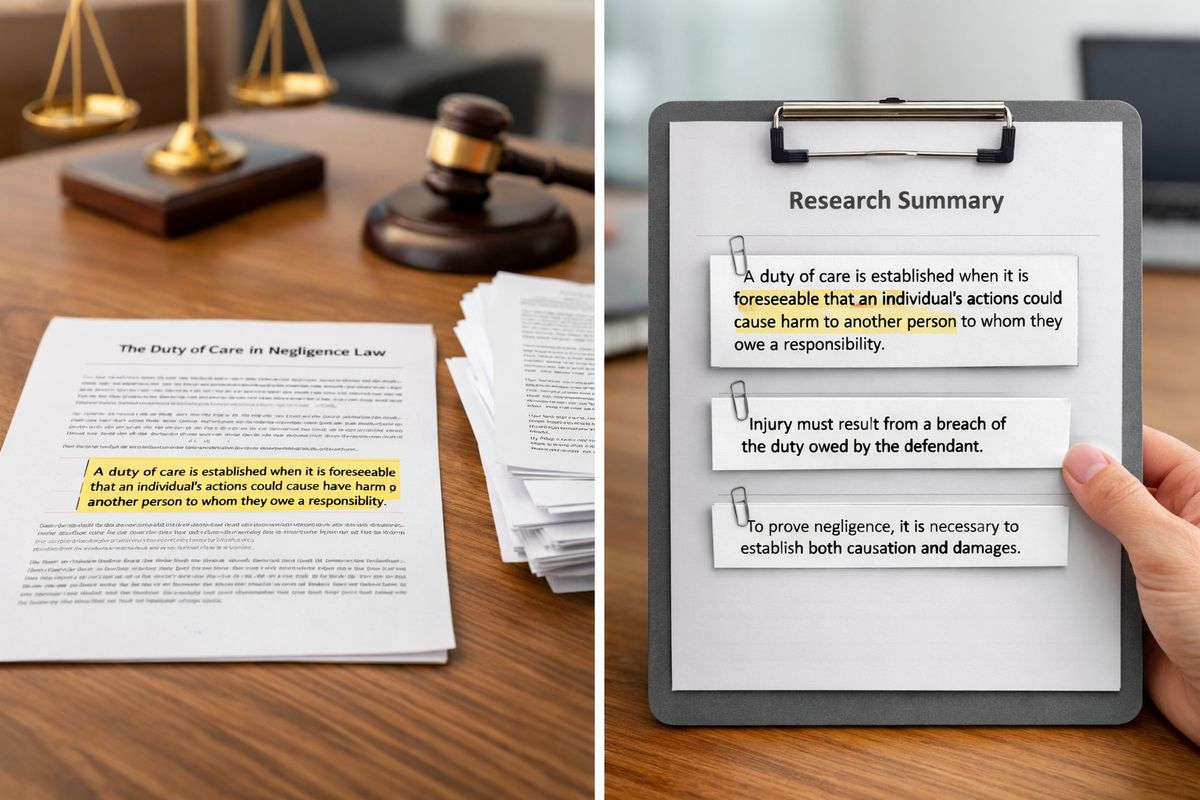
Legal content lives in a trust-heavy category. Accuracy matters. State differences matter. Dates matter. Who wrote the page matters. A weak blog post about kitchen storage can be harmless. A weak article about filing deadlines after a car accident can mislead somebody at a stressful moment.
That is why vague, generic law firm content rarely wins citations. AI systems have to reduce risk when summarizing legal topics, so pages with clear authorship, narrow focus, and verifiable claims have a better chance of showing up. If your content says “laws vary by state” and stops there, that is not helpful enough. If your content says “in Florida, personal injury lawsuits usually must be filed within a specific deadline, though exceptions can apply,” you are finally giving the system something useful to work with.
How AI Search Chooses What to Surface
Most AI search systems move through a few basic steps: find pages, pull relevant passages, summarize what looks most useful, and sometimes cite the source. You do not need a computer science degree to work with that. You just need to understand where your pages can fail.
A page can be invisible because it is hard to crawl. It can be accessible but unusable because the answer is hard to extract. Or it can be well structured and still lose because nothing on the page signals trust. That is the whole game.
Retrieval: can AI systems access your page?
Before anything else, your page has to be reachable. If content hides behind scripts, tabs that never render properly, blocked resources, or odd technical setups, AI systems may have less to work with. Clean HTML still matters. Search basics still matter. Pages need to load, render, and expose the actual text.
This is one reason old-school SEO is not dead. In fact, the overlap between search fundamentals and AI visibility is bigger than most firms expect. If a page is hard for search engines to crawl or understand, it is usually hard for AI systems too.
Extraction: can AI pull a clear answer fast?
Once a system finds your page, it looks for a usable passage. That means direct answers, obvious headings, and paragraphs that stand on their own. Legal pages often fail here because the useful part is buried under a long introduction about the firm.
The trick is simple: answer the question early and cleanly. If somebody asks, “How long do you have to file a wrongful death claim in Illinois?” your page should not spend 300 words talking about compassionate representation before getting there. AI tools are trying to lift the answer fast. Help them.
Trust signals: why some pages get cited and others get skipped
Even a clear answer can get passed over if the page feels thin or unreliable. Trust signals include attorney bylines, review dates, consistent practice focus, accurate legal wording, and an overall reputation that matches the topic. Off-page mentions matter too, especially in law.
This is where source selection gets interesting. AI systems often pull from pages that look authoritative and specific, not merely optimized. If you want a deeper look at what makes legal sources more likely to be chosen in AI answers, that pattern shows up again and again.
Start With the Questions Your Clients Actually Ask
Most law firm blogs are too broad because the topic planning is backward. A generic post on “personal injury law” is not how stressed people search. Real searches sound more like a phone call made from a parking lot at 6:10 p.m.
Good content for AI search starts with the exact questions clients ask when something is wrong, urgent, expensive, or confusing. Those are the prompts AI systems are trying to answer.
High-intent legal questions worth targeting
The best legal questions tend to cluster around a few concerns. Do you have a case? How long do you have? What will it cost? What happens next? Those are not abstract educational queries. Those are decision-stage questions.
If your site answers them clearly, you make it easier for AI tools to match your content to high-intent prompts. A car accident page should address fault, deadlines, insurance, medical treatment, evidence, and likely next steps. A DUI page should explain penalties, license issues, court process, and how a first offense differs from repeat charges. Specificity wins.
Questions by practice area and case stage
A person in early research needs a different page than somebody ready to hire counsel. Early-stage content explains basic rights and timelines. Mid-stage content compares options, risks, and costs. Late-stage content helps somebody decide whether to call now, wait, settle, file, or fight.
That is why the strongest sites build content around the client journey, not just around keywords. If your firm handles multiple services, studying which legal niches tend to perform especially well in AI-driven discovery can help you prioritize what to build first.
Local and jurisdiction-specific prompts
Law is local, even when the issue sounds national. “Can I sue for a slip and fall?” is broad. “How long do I have to file a slip and fall claim in Brooklyn?” is the kind of question AI systems love because it has a narrow answer and clear local context.
That means your content should reflect how people actually search: city, county, state, offense level, filing deadline, local court, or rule variation. Pages that ignore jurisdiction are much easier to skip because the risk of overgeneralizing is too high.
The Best Types of Content for AI Search Visibility
Some content formats are simply easier for AI systems to understand, quote, and cite. That does not mean every page should look robotic. It means the structure should help the answer stand out.
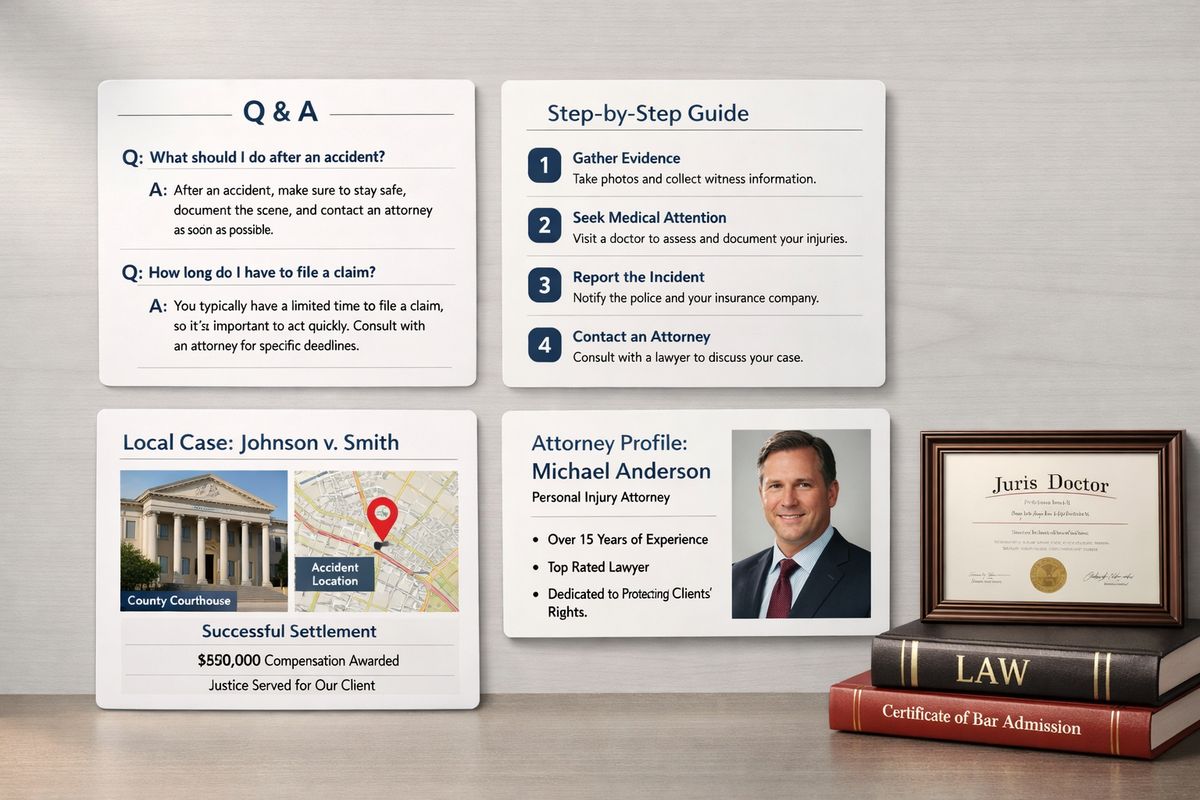
Clear FAQ pages
FAQ pages work because the prompt and answer are already paired. When somebody asks, “Can you leave the state while on probation?” a tightly written question-and-answer block makes extraction easy.
The catch is that law firm FAQs often get lazy. Short, generic answers do not help much. Each answer should be direct, legally accurate, and tied to jurisdiction where needed. A useful FAQ is not a sentence fragment. It is a small, self-contained explanation.
Practice area pages with direct answers
Practice area pages should not just sell your services. They should explain the problem, define who may need help, outline timing, and answer common fears. If your criminal defense page only says your firm fights for clients aggressively, it gives AI almost nothing to work with.
Strong service pages often do double duty. They convert human visitors and provide extractable legal explanations. That is one reason well-built service pages matter so much for AI visibility, especially in competitive markets.
Location pages with real local substance
A city page should do more than swap in a place name. Useful location pages mention local court systems, filing quirks, enforcement patterns, common accident sites, or procedural realities that actually affect the case.
Thin local pages are easy to spot. They read like templates because they are templates. AI systems are not looking for fifty copies of the same page with different city names. They are looking for evidence that your firm understands the legal and practical context in that place.
Attorney bio pages that prove credibility
Attorney bio pages are not fluff. They are trust pages. Bar admissions, jurisdictions, focus areas, publications, speaking appearances, certifications, and media mentions all help support the credibility of your legal content.
This matters more than many firms realize. A strong explanation on a practice page gets more believable when the site also has attorney profile pages that show real legal authority. If your bios are thin, your best content has less support behind it.
Guides, checklists, and process pages
Guides work well for AI search because they answer practical follow-up questions. Somebody arrested for DUI does not just want a definition of DUI. Somebody wants to know what happens after booking, whether a license gets suspended, when court happens, and what to bring to the first meeting with counsel.
Process content is useful because it mirrors how people think in stressful situations. Step-by-step pages, filing checklists, and “what happens next” articles are often much more valuable than another generic explainer.
Comparison and decision content
AI systems often get asked comparison questions because comparisons are hard to sort out quickly. Settlement versus trial. Mediation versus litigation. Chapter 7 versus Chapter 13. Misdemeanor versus felony.
If your site does not answer those side-by-side questions, you miss a big category of AI prompts. Comparison content is especially strong because it helps with decision-making, not just awareness.
How to Structure Legal Content So AI Can Use It
Fancy writing is not the goal here. Usable writing is. If your content is hard to scan, hard to parse, or hard to quote, it becomes much less useful in AI search.
Lead with the answer, then add nuance
Start with the direct answer in the first few lines. Then explain the exceptions, risks, and local variations underneath. That inverted-pyramid structure works because AI systems can grab the top answer while human visitors can keep reading for detail.
Legal content often resists this because the honest answer is sometimes “it depends.” Fine. Say the main rule first, then explain what changes it. That is still better than opening with four paragraphs of throat-clearing.
Use plain-English headings that match real prompts
Headings should sound like the question somebody would actually ask. “How long do you have to file a truck accident claim in Texas?” is better than “Understanding statutory filing frameworks.” One sounds like a search. The other sounds like a brochure nobody asked for.
This also helps your team think more clearly about intent. If a heading cannot be spoken out loud by a real client, it probably needs work. That is one reason conversational page structure tends to help firms show up in AI tools.
Break complex topics into scannable chunks
Long walls of text are hard on people and hard on machines. Short paragraphs, numbered steps, tables where useful, and clear subsections make legal ideas easier to process. A bankruptcy page can separate eligibility, timeline, property issues, cost, and court process instead of lumping everything together.
Scannable does not mean shallow. It means organized. You are still giving the nuance, just in a form that can be lifted and cited more easily.
Add jurisdiction notes where they matter
If a rule varies by state, label that clearly. If a deadline differs by county procedure or case type, say so right near the answer. Do not hide the jurisdiction caveat at the bottom.
This protects accuracy and improves extractability. AI systems are less likely to misuse your content if your page makes geographic limits obvious.
What Makes Legal Content Citation-Worthy
Helpful content is a good start. Citation-worthy content goes further. It says something specific, supportable, and useful enough to quote.
Make specific claims, not recycled generalities
Specific claims beat broad summaries almost every time. “In Ohio, a first-time OVI can trigger license consequences immediately after arrest” is more useful than “drunk driving charges can have serious consequences.” The second statement is true, but it is not worth citing.
This is where many law firm pages fall flat. They say safe things that could appear on any site. AI systems do not need more generic legal wallpaper. They need passages with real informational value.
Support answers with primary sources
When appropriate, link to statutes, court rules, government agencies, official forms, or bar resources. That extra support does not just help visitors. It strengthens the page’s credibility and makes the legal basis easier to verify.
You do not need to turn every page into a law review article. Just show your work when the rule matters. In legal publishing, that extra layer can be the difference between being skimmed and being cited.
Show who wrote or reviewed the content
Bylines matter. Review notes matter. Update dates matter. Practice credentials matter. If your page covers immigration waivers, the attorney tied to that page should make sense for the subject.
This is one area where firms often underinvest because it feels cosmetic. It is not. Clear authorship is part of the trust package. A page that answers a legal question without showing who stands behind it feels weaker.
Keep pages fresh when laws or procedures change
Legal content gets stale fast. Filing rules change. Court procedures change. Thresholds, deadlines, and local forms change. If your content still references an outdated process, it becomes risky for humans and less usable for AI.
Freshness by itself is not magic. But updated legal content has a better chance of staying relevant because it remains accurate. That matters.
The Technical Setup That Helps AI Understand Your Site
You do not need a giant rebuild to improve AI visibility. A handful of technical basics make a real difference.
Strong titles, meta descriptions, and H1s
Your title tag, H1, and meta description help search systems identify the page topic quickly. If those elements are vague, your page starts with a weaker signal.
Keep them clear and aligned. If the page is about divorce filing deadlines in Arizona, say that. Not “Trusted Family Law Representation Since 1998.” Branding can be present, but topic clarity has to come first.
Clean internal linking between related legal topics
Internal links help search systems understand how your pages relate. A truck accident page should connect naturally to evidence, timeline, fault, settlement, and local pages. A divorce page should connect to cost, timeline, mediation, and attorney bios.
Good linking also helps you build topical depth instead of isolated pages. For example, if your team is sorting out how firms can get discovered inside ChatGPT-style search experiences, your internal structure should make those related themes easy to follow across the site.
Schema markup that supports context
Structured data gives extra context about your firm, attorneys, FAQs, reviews, location, and services. It does not replace good content, but it can reinforce what the page is about in a machine-readable format.
For law firms, useful schema often includes organization details, local business details, attorney information, legal service context, and FAQ markup where appropriate. Think of schema as labeling the shelves in a library. The books still need to be good, but the labels help everything get sorted correctly.
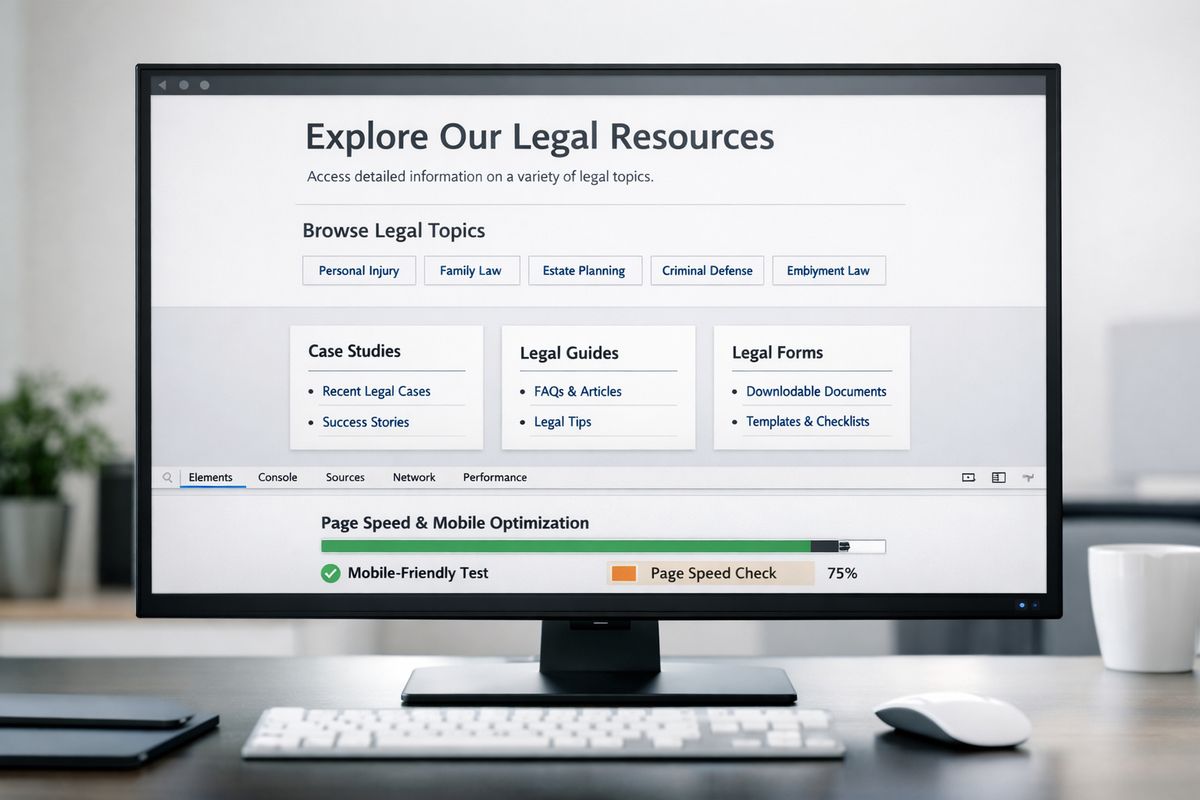
Page speed, mobile usability, and clean rendering
If your page loads slowly, breaks on mobile, or depends on clunky scripts to reveal main content, you create friction. AI systems may still find the page, but they have less clean material to work with.
Mobile matters because many legal queries happen on phones, often in urgent moments. Somebody searching from a tow yard, hospital waiting room, or courthouse hallway is not in the mood for a sluggish site.
Don’t Ignore Third-Party Mentions and Entity Signals
Your site is only part of the picture. AI systems often look across the web to decide whether your firm is a credible legal source.
Consistent firm name, attorney names, and practice focus
Consistency matters more than it sounds. Your firm name, attorney names, office locations, and practice descriptions should match across your site, profiles, and listings. Small mismatches create uncertainty.
If one profile says “personal injury and civil litigation,” another says “accident lawyers,” and another lists five unrelated practices, your identity gets muddy. Clear alignment helps machines connect the dots.
Directory profiles, legal listings, and local citations
Profiles on Avvo, Justia, state bar directories, and Google Business Profile can reinforce your legitimacy and geography. Those listings support your firm’s identity, practice areas, and attorney names in places AI systems may already trust.
This is especially relevant in local legal marketing, where proximity and jurisdiction shape the answer. If you are tightening location signals, it helps to understand which local SEO factors support AI visibility for law firms.
Earn mentions that validate expertise
Off-site mentions can strengthen your credibility in ways your own website cannot. Local news quotes, speaking engagements, association listings, podcast appearances, and commentary in legal publications all send signals that your attorneys are recognized beyond the firm’s own pages.
Awards can help too, though only when they are real and relevant. Thin trophy pages rarely move the needle. Credible third-party validation is what matters.
Common Content Mistakes That Hurt AI Search Visibility
A lot of law firm content underperforms for familiar reasons. The difference now is that AI search exposes those weaknesses faster.
Thin city pages and duplicate practice pages
If your site has near-identical pages for every city or every injury variation, the value is weak. Machines can tell when a page is mostly a template. So can people, honestly.
Each page needs a reason to exist. Real local detail. Real legal differences. Real client questions. Without that, you are adding noise, not depth.
Keyword stuffing and awkward legal jargon
Over-optimized writing is painful to read and hard to trust. If every paragraph repeats the same city and practice keyword, the content starts sounding artificial. AI systems are looking for meaning, not just repetition.
The same goes for needless legal jargon. Define terms in plain English and move on. Precision matters. Pretension does not.
Generic AI-written copy with no real insight
Mass-produced legal copy is easy to spot because it says a lot without saying much. It avoids specifics, softens every answer, and sounds like every other page online. That kind of content rarely earns citations because it adds nothing distinct.
Here’s the blunt version: if your page could belong to any firm in any state, it is probably not good enough. Your content needs judgment, specificity, and local truth.
Burying the answer under sales copy
Some law firm pages spend the first five paragraphs talking about results, compassion, and free consultations before answering the question. That is backwards for AI search.
People need the answer first. Machines need the answer first. Sell after you help.
A Simple Content Framework for Law Firms That Want More AI Visibility
This gets easier once you stop thinking in terms of random blog posts and start thinking in content systems.
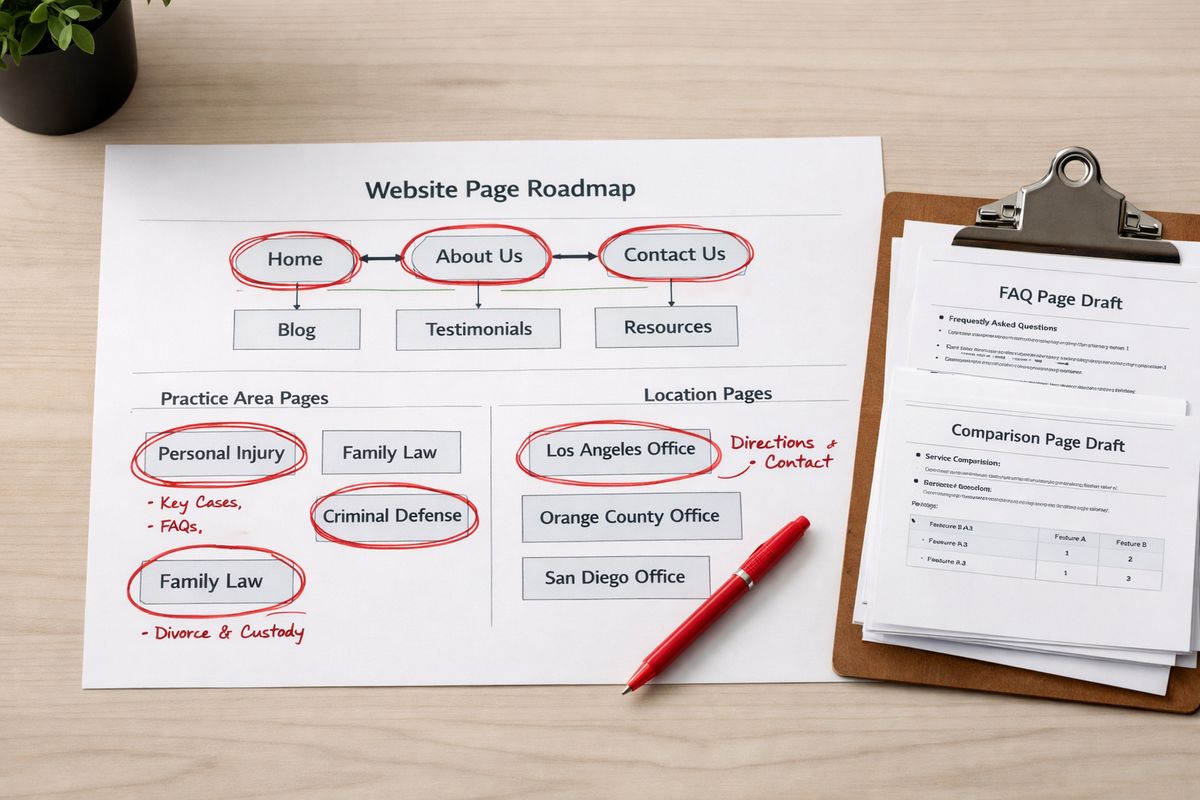
Build pillar pages for each core practice area
Your main practice area pages should act like hubs. Each one should explain the issue clearly, answer the biggest questions, and connect to narrower support pages underneath. That gives your site topical depth and makes the relationships between pages easier to understand.
A strong pillar page is not just broad. It is organized. Somebody should land there and immediately find the path to costs, timelines, evidence, local issues, and hiring questions.
Add support content around timelines, costs, evidence, and outcomes
These are the follow-up questions people ask after the basic explanation. How long will it take? What records matter? What happens if the other driver is uninsured? Can a misdemeanor be expunged? Does bankruptcy clear tax debt?
Support pages are where much of the AI opportunity lives because they answer the next prompt in the chain. That is often where a consultation-ready visitor starts narrowing choices.
Create decision-stage content, not just educational posts
Educational content is useful, but it is not enough. Somebody comparing mediation and litigation, or trying to decide whether to hire a lawyer after an arrest, is much closer to action.
Decision-stage content often earns visibility because it reflects real buying behavior. If you want to understand why some firms keep showing up inside legal answers on ChatGPT, this is a big part of it. They publish pages that help somebody choose, not just learn.
Refresh older pages before publishing more new ones
A rewrite often beats a new post. If your existing practice pages already get some traffic but answer questions poorly, tightening those pages can produce faster gains than publishing another general blog article.
Look for pages with decent impressions, weak engagement, stale legal info, or buried answers. Fix those first. Low-hanging fruit is still fruit.
How to Measure Whether Your Content Is Showing Up in AI Search
Measurement is less tidy than rank tracking, but it is not impossible. You just need a more practical approach.
Track prompts, citations, and source mentions
Start with your highest-value legal questions and test them manually in the AI platforms that matter. Look at whether your firm is cited, mentioned, linked, or paraphrased. Save screenshots and track the patterns over time.
This kind of visibility review works best when it is deliberate. A simple recurring process for checking the answers AI tools give about your firm can reveal which pages are getting picked up and which ones are invisible.
Watch assisted traffic patterns in analytics
Not every AI mention produces obvious referral data. Still, you can watch for clues: growth in long-tail landing pages, more branded searches, better engagement on question-based pages, and stronger consultation paths from those visits.
Sometimes the effect shows up indirectly. A person may see your firm in an AI answer, then search your name later. That still counts.
Audit which pages are most extractable
Take your priority pages and ask one blunt question: can the answer be pulled in under ten seconds? If not, the page needs work. Check headings, intro paragraphs, jurisdiction notes, bylines, and formatting.
This is less glamorous than publishing fresh content, but it is usually more useful.
What to Prioritize First if Your Firm Wants Results
You do not need to redo your whole site this month. Start where the payoff is clearest.
First 30 days: fix your most important practice and location pages
Pick the pages tied most closely to revenue. Usually that means your main practice area pages and your top city or county pages. Rewrite the openings so they answer key questions fast. Add specific legal detail. Improve headings. Tighten authorship and update dates.
If one page is going to get attention first, make it a page that already matters to intake. A single rewrite can tell you a lot.
Next 60 days: publish the missing question-based content
Once core pages are stronger, add the support content your site lacks. FAQs. Process pages. Comparison pages. Cost questions. Deadline questions. Jurisdiction-specific explainers.
Build around real prompts, not content calendar filler. If a question comes up on consultations every week, it belongs on your site.
Ongoing: review, update, and expand what earns traction
Treat AI search like a living system. Watch what gets surfaced. Improve pages that get partial visibility. Expand topics that start earning citations. Retire or merge pages that add little value.
Try one page rewrite first, preferably a high-value practice or location page, and measure what changes over the next few weeks. If you want a clearer plan for your firm, schedule a call with Attorney Visibility ai for more information.
Frequently Asked Questions
How is content for AI search different from regular SEO content?
Regular SEO often focuses on ranking a page for a query. Content for AI search still needs SEO basics, but it also needs to be easy for AI systems to retrieve, extract, trust, and summarize. In practice, that means clearer answers, stronger structure, visible authorship, and more specific legal detail.
Do blog posts still matter for law firms in AI search?
Yes, but only when the topic matches real client questions and the page adds something useful. Generic blog posts about broad legal topics do much less than focused pages on deadlines, costs, process, evidence, or local legal rules.
What kind of law firm pages are most likely to get cited by AI tools?
FAQ pages, strong practice area pages, local pages with real substance, attorney bio pages, process guides, and comparison pages tend to perform well. The common thread is simple: each page answers a concrete question clearly and credibly.
Does AI-written legal content help or hurt?
It hurts when it produces generic copy with no jurisdiction, no authorship, and no real insight. AI can help with drafting or organizing, but your final page still needs legal judgment, factual precision, and clear review by a qualified attorney.
How often should legal content be updated for AI search?
High-value legal pages should be reviewed regularly, especially when laws, court procedures, filing rules, or local practices change. Even without major legal updates, older pages often need clearer formatting, fresher examples, and stronger openings.
Can a small law firm compete in AI search against big legal publishers?
Yes, especially on local, jurisdiction-specific, and decision-stage topics. A smaller firm can win by being more specific, more current, and more practical than a giant national publisher. If your content answers the exact question better, size is not the only advantage that matters.