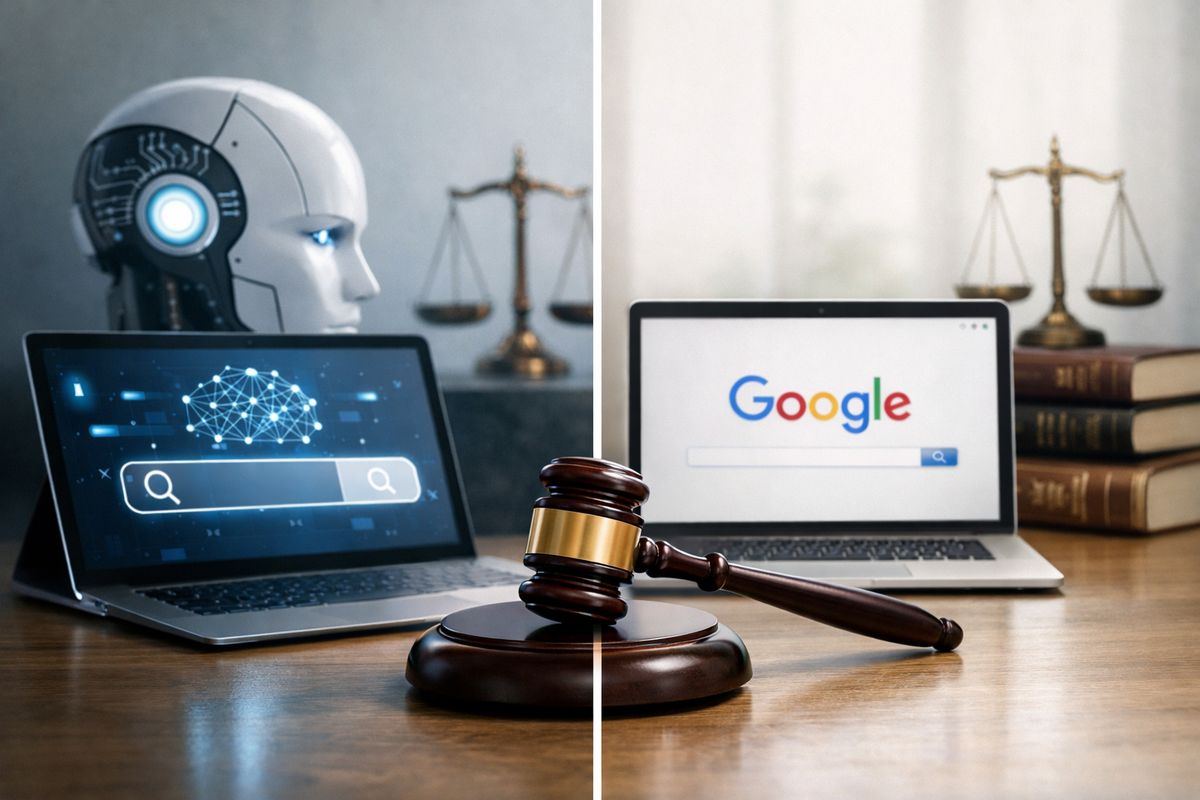
If your firm depends on search to bring in cases, the question is no longer whether AI search vs Google matters. It does. The real issue is where each one fits, and which one deserves your attention first if you want more calls, more qualified leads, and fewer marketing distractions.
For most law firms, Google is still the better bet. AI search is growing fast and worth preparing for, but Google remains the place where urgent, local, high-intent legal searches turn into actual signed cases.
AI Search vs Google at a Glance
AI search and Google are starting to overlap, but they are not the same experience.
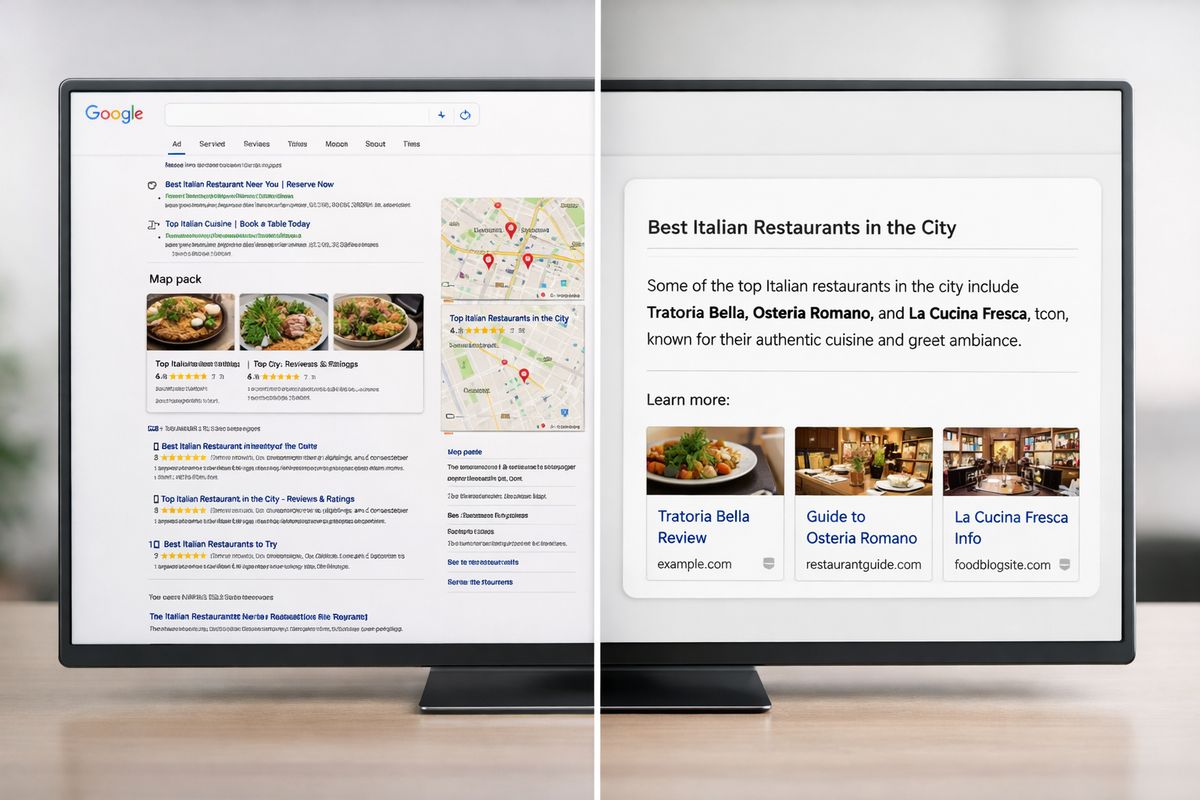
Google still works like a discovery engine. A person searches, sees ads, map listings, organic results, review stars, maybe a featured snippet, then chooses where to click. AI search, by contrast, often acts like an answer engine. Instead of presenting a menu first, it tries to serve a finished response, then cites sources or offers follow-up prompts.
That difference matters a lot for law firms.
If somebody searches “best personal injury lawyer near me” after a crash on I-10 at 5:40 p.m., that person usually wants a phone number, directions, reviews, and a fast decision. Google handles that better. If somebody asks a longer question like “how long do I have to file a medical malpractice claim in Arizona,” AI search may give a cleaner summary faster.
So here’s the simple version: Google is still stronger for lead capture. AI search is becoming more relevant for influence, education, and early research.
How People Search Now
Search behavior has changed because people have changed. Plenty of potential clients still type short phrases into Google, but more are starting to ask full questions the way they would ask a person.
That shift favors AI tools. Instead of searching “divorce attorney Phoenix custody issue,” somebody may ask, “What should I do first if my spouse moved out with the kids in Phoenix?” AI search is built for that kind of query. It responds in plain English, usually in one screen, and often keeps the person inside the tool instead of sending a click to your site.
Google still matters because legal searches are rarely casual. They often happen under stress, on a phone, with a deadline hanging over everything. In those moments, people want options they can verify. They want to compare firms, read reviews, check locations, and make a call. That behavior still fits Google better than AI chat-style search.
If you want a broader plain-English look at this shift, it helps to understand how AI discovery works for firms in practice.
Search Results Experience
The screen experience is where the difference becomes obvious.
Google’s results page is crowded, but useful. A person may see sponsored ads at the top, a local map pack, business profiles, organic listings, FAQs, review snippets, and sometimes a quick-answer box. For a law firm, that gives you multiple ways to appear, even if you are not in the first organic spot.
AI search feels cleaner. Usually, the person gets a synthesized answer first, followed by linked citations, source cards, or suggested follow-up questions. It can feel more helpful in the moment. It can also hide a lot of the comparison process that used to happen in public on the search page.
That is good for convenience, but not always good for legal decision-making. A polished summary can make very different legal options sound equally safe. In family law, criminal defense, estate disputes, or immigration matters, nuance is often the whole case. A simplified answer can smooth over the exact issue that makes somebody need a lawyer.
Visibility for Law Firms
Google gives your firm several visibility lanes. You can appear in the local pack, your Google Business Profile can show reviews and contact info, your practice pages can rank organically, and your branded searches can own more of the page once somebody knows your name.
AI search visibility works differently. Your firm may get mentioned in an answer, cited as a source, quoted for a specific explanation, or surfaced because your content clearly matches the question being asked. You are less likely to “rank” in the classic sense and more likely to be included or excluded from the answer layer.
That means the job changes from “get to position one” to “be useful enough, clear enough, and trusted enough to be pulled into an answer.”
Google still offers more predictable visibility. AI inclusion can feel fuzzier. But the same foundation often helps both. Strong local signals, trusted content, and consistent brand details all matter. That is especially true for firms tightening up the local signals that influence both map results and AI mentions.
Trust and Credibility Signals
Legal marketing runs on trust. Not vague brand trust, but the kind that makes somebody hand over a life problem and expect real help.
Google has long used clear authority signals: backlinks, content quality, location relevance, reviews, business profile strength, and pages that match intent. If your site has detailed practice pages, credible attorney bios, and a healthy review profile, you are giving Google reasons to trust your firm.
AI search appears to lean on many of those same signals, just through a different interface. Systems pull from sources that look authoritative, well-structured, and consistent. If your attorney credentials are buried, your bios are thin, or your practice pages are generic, you are making it harder to be cited. That is one reason strong lawyer profile pages can influence AI visibility more than most firms expect.
Reviews matter too, especially in legal. A law firm with clear third-party validation feels safer. On Google, that can improve local performance and click-through behavior. In AI search, reviews may not always appear directly, but the broader reputation footprint still shapes how trustworthy your firm looks across the web.
Local Search and High-Intent Leads
This is where Google wins, plainly.
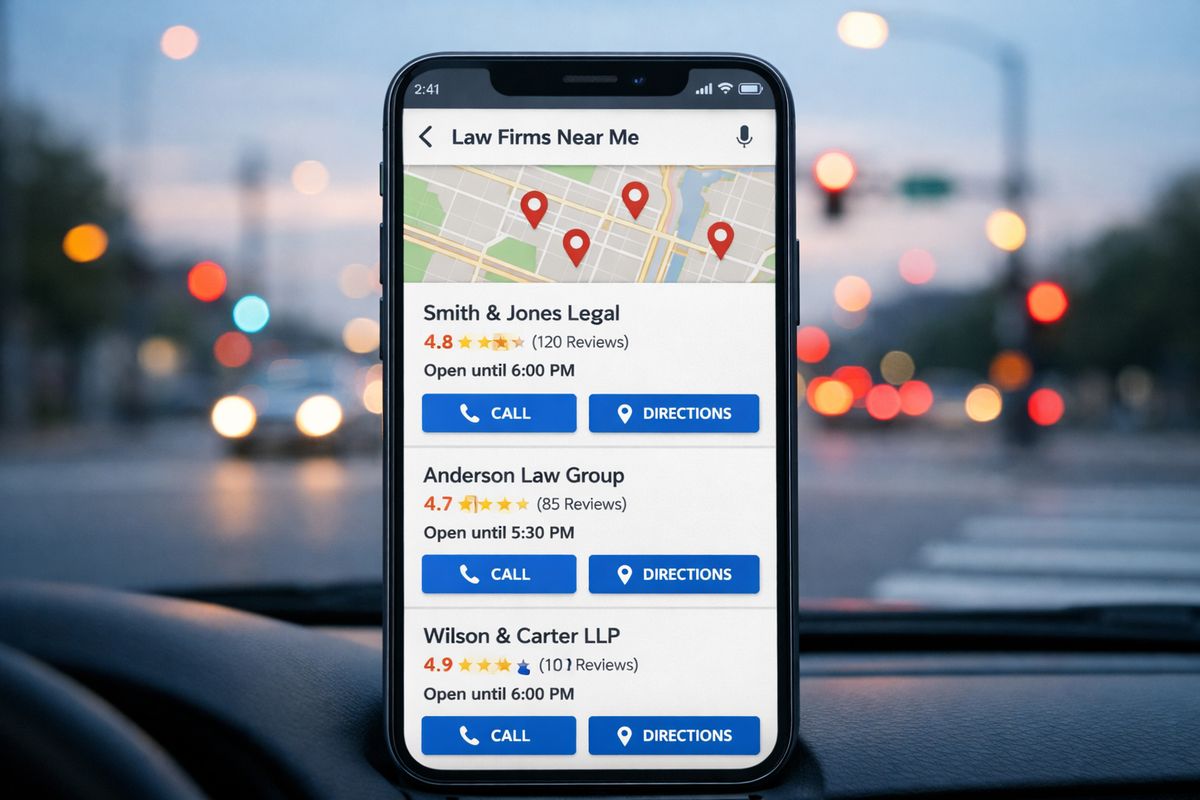
When somebody searches “car accident lawyer near me” or “DUI attorney in Tucson open now,” Google serves the exact things that move a lead forward: a map, tap-to-call buttons, office hours, directions, review counts, and nearby options. That setup matches urgent legal intent almost perfectly.
AI search is not built as well for this kind of moment. It can explain what to look for in a lawyer, describe next steps after an arrest, or summarize timelines. But when somebody is ready to hire, explanation is not enough. Convenience matters. Proximity matters. Fast contact matters.
If your goal is signed cases in the near term, Google deserves the bigger share of your time and budget. AI can support discovery higher up the funnel, but it does not replace the local conversion machine that Google already is.
Research Quality and Answer Depth
AI search is good at making messy information feel manageable. That matters in law, where people often start from confusion. A clean summary can reduce panic and help somebody ask better questions.
Google is still stronger for layered research. It gives people access to multiple firm sites, bar resources, court pages, local news, and long-form explanations. That variety is useful because legal issues are rarely one-answer problems.
The catch is that AI summaries can flatten nuance. A divorce issue in Arizona is not the same as one in Texas. A “simple” estate question may turn on probate status, beneficiary designations, or county procedure. AI can summarize the broad rule and still miss the one fact that changes everything.
So for educational clarity, AI search is often easier. For legal depth and verification, Google still does the job better.
Accuracy and Risk in Legal Content
Bad legal information is not a minor inconvenience. It can push somebody into a deadline mistake, the wrong filing choice, or false confidence.
Google’s link-based model at least shows people where the information comes from. Somebody can compare sources, check a law firm’s credentials, and read the actual page. AI search compresses that process. The answer arrives first, and the source-checking often happens only if the person chooses to dig deeper.
That creates risk because AI answers can sound polished even when they miss a jurisdictional detail or oversimplify an exception. In legal marketing, sounding right is not the same as being right.
This is why your content has to be both readable and careful. Clear jurisdiction labels, updated legal explanations, and visible credentials are not nice extras. They are part of making your firm safer to trust in both systems. It also helps to understand why some sources get pulled into legal AI answers while others stay invisible.
Traffic Potential for Your Website
Google still sends more direct traffic to law firm websites. That matters because your site is where people can read your practice pages, view attorney bios, see case results, and contact you on your terms.
AI search often reduces clicks. If a person gets a decent answer on-platform, the urgency to visit your site drops. Your brand may still benefit from the mention, but awareness is not the same thing as a site visit.
For law firms, that difference is huge. Traffic is not vanity if it comes from qualified searches. Traffic creates remarketing audiences, branded search lift, consultation requests, and measurable behavior inside your site.
So if your agency starts talking as if AI visibility makes website traffic less important, that is a red flag. For most firms, site visits still matter because conversions still happen there.
Lead Generation and Conversion Path
Visibility is only useful if it leads somewhere.
Google supports a direct path from search to action. Somebody finds your business profile, reads a few reviews, taps the phone number, and calls. Or lands on a practice page, checks your credentials, fills out a contact form, and searches your firm name again later. It is a pretty short line from intent to inquiry.
AI search usually plays earlier in the journey. A person asks broad questions, gets oriented, maybe notices your firm cited in a response, then remembers your name later and searches for you on Google. That influence can be real, but it is less direct and harder to measure.
That is why the better question is not “Which one gets visibility?” It is “Which one moves somebody closer to contacting your firm?” For most law offices, Google still has the stronger conversion path.
Content Strategy: What Works for AI Search vs Google
You do not need to rewrite your whole site for AI search. But you do need cleaner, more specific content than many law firm sites currently have.
Google-focused content has often chased rankings with service pages, city pages, FAQs, and blog posts built around clear search terms. That still works when the pages are actually useful. AI-friendly content asks for one more thing: answerability. Your pages need to explain legal topics in a way that is easy to quote, summarize, and trust.
That means less fluff, fewer vague claims, and more direct language. If your page spends 300 words saying you are compassionate and only 80 words explaining what happens after a truck accident claim is filed, the structure is backwards.
For a deeper breakdown, it helps to study the kind of content that gets picked up in AI answers.
Website Structure and Clear Answers
Structure does more work than most firms realize.
A well-built site has focused practice area pages, clear headers, plain-English FAQs, location details, attorney bios, and content that answers one question at a time before moving to the next. Google likes that because it can index the site more confidently. AI tools like it because they can extract context without guessing.
Messy sites create friction. If your page lumps jurisdiction notes, attorney credentials, service descriptions, and contact prompts into one long wall of text, both systems have to work harder.
The trick is simple: write like somebody under stress is scanning your page on a phone in a parking lot.
Authority Content and Topical Depth
Thin content loses in both environments.
If your firm wants to show up for meaningful legal questions, broad fluff is not enough. Detailed guides, case-type pages, and jurisdiction-specific explanations give you more surface area to be found and more proof that your firm actually knows the subject.
This matters for AI search because summary tools tend to favor pages with clear substance. It matters for Google because topical depth helps your overall authority in a practice area. Pages that explain filing timelines, fault issues, damages, defenses, and local procedure usually outperform pages that just repeat “experienced lawyer” in slightly different wording.
SEO vs GEO: What Your Agency Should Be Doing Now
SEO is still the base layer. GEO, short for generative engine optimization, is the newer layer built around getting mentioned, cited, or summarized in AI search environments.
A good agency should not treat these as competing projects. Traditional SEO still covers the heavy lifting: technical fixes, local optimization, internal linking, site speed, crawlability, review growth, citation consistency, and pages that match search intent. GEO builds on that by improving content clarity, source credibility, structured formatting, and answer-ready writing.
In plain English, SEO helps you get found in search results. GEO helps you get used in generated answers.
If your agency is worth hiring, it should already be combining both. That includes improving the signals that make firms more visible in AI-driven search.
Pricing and Cost to Compete
Neither channel is free, even if the click itself is.
Competing in Google usually means ongoing SEO work, local profile management, content development, reviews, link earning, and technical maintenance. Competing for AI mentions requires much of the same foundation, plus more attention to source quality, formatting, and authority signals across the web.
So this is usually not a clean budget swap. It is a both-and decision, with priorities. If your firm needs leads now, more of the budget should stay with Google-focused SEO and local visibility. If your site already performs well and your practice area involves long research cycles, it makes sense to invest more in AI readiness too.
One helpful reality check is how long authority-building usually takes before AI systems start reflecting it.
When Google Is the Better Choice
Google should remain your main focus if your firm depends on local lead generation, urgent-intent searches, map visibility, and steady website traffic.
That includes personal injury, criminal defense, family law, bankruptcy, immigration, and most firms serving a clear geographic market. If potential clients need help quickly and want to compare options before calling, Google fits the buying behavior better.
It is also the stronger choice if your intake process relies on phone calls, directions, review reading, or branded follow-up searches. In other words, most law firms.
When AI Search Deserves More Attention
AI search deserves more attention when your practice area has a longer consideration cycle or a stronger educational component.
Estate planning, employment law, business litigation, intellectual property, tax controversy, and some healthcare-related matters often begin with research before contact. In those cases, early visibility inside AI answers can shape who gets remembered later.
It also matters more if your firm already has strong educational content and wants to expand reach before somebody is ready to hire. If your site explains legal issues clearly and specifically, AI search can become an extra visibility layer instead of an abstract trend.
The Verdict: Which One Matters More for Law Firms?
Google still matters more for most law firms because it drives local discovery, direct clicks, and actual leads. That is the verdict.
AI search is not a replacement for Google. It is the next layer to build for once your local SEO, site structure, reviews, and authority content are in good shape. Treating AI search like a full substitute is like replacing your front door with a nicer waiting room. It may look modern, but it does not solve the basic path to getting people inside.
Try one practical move: review your top practice area page and rewrite the first 300 words so the answer is clearer, more local, and easier to verify. Then keep your Google strategy firmly in place.
Frequently Asked Questions
Is AI search replacing Google for law firms?
No. AI search is changing how people research legal topics, but Google still handles local, urgent, high-intent searches better. For most firms, Google remains the main source of traffic and leads.
Should your law firm optimize for both Google and AI search?
Yes. Google should stay the priority, but AI readiness is worth building now. A balanced approach usually means keeping your SEO foundation strong while improving content clarity and authority for AI visibility. A closer look at where firms should actually focus between classic search and AI discovery can help frame that decision.
What kind of legal content performs best in AI search?
Clear, specific, well-structured content performs best. Practice area pages, jurisdiction-specific guides, attorney bios, and FAQ sections tend to work better than generic blog posts or thin marketing copy.
Why is Google still better for local legal leads?
Google shows maps, reviews, office details, phone numbers, and nearby firms in one place. That makes it far easier for somebody to compare options and contact your office right away.
Can AI search reduce traffic to your law firm website?
Yes. AI tools often answer questions directly on the platform, which can reduce clicks. Your firm may still gain brand exposure, but fewer people may visit your site unless the topic requires deeper research or verification.
Schedule a call with Attorney Visibility ai if you want a clearer picture of where your firm should focus, what to fix first, and how to build a search strategy that works in both Google and AI search.