
Trying to figure out whether law firm awards help a firm show up in ChatGPT can feel oddly frustrating. I’ve been there with visibility questions that seemed simple on the surface, then got messy fast once AI entered the picture. The short answer is this: law firm awards and reviews can help indirectly, but not as neat ranking factors the way many firms hope.
Do awards and reviews help law firms show up in ChatGPT?
Yes, but not in a direct, trophy-in equals mention-out kind of way.
What I’ve seen actually matter is the pattern those signals create across the web. Awards can support authority. Reviews can support trust, recency, and local relevance. But ChatGPT is not scanning one badge on a homepage and deciding a firm deserves placement. It is much more likely to pick up on a broader reputation footprint, meaning credible mentions, consistent profiles, strong practice area signals, and third-party corroboration.
That distinction matters because it saves a lot of wasted budget. I’ve seen firms collect badges for years and still struggle with digital visibility because the underlying web presence was thin, inconsistent, or unclear.
How ChatGPT decides which law firms to mention
ChatGPT does not behave like a standard search results page. In some experiences, it may rely on training data, structured information, well-known public sources, and live web citations. In others, it may summarize what appears most corroborated and recognizable across multiple places online.
That means brand prominence matters. Topical relevance matters. Repetition across trusted sources matters. If a firm keeps showing up with the same name, lawyers, locations, practice areas, and reputation signals across legal directories, local listings, media mentions, and its own website, that firm becomes easier for AI systems to recognize and describe.
For a deeper breakdown of the mechanics, I’d look at how AI systems pull from legal sources across the web. That framing usually clears up a lot of the confusion.
Why this is not the same as SEO in Google search
This is the part nobody warns you about: ranking in Google and being surfaced in an AI answer are related, but not identical.
Google search is built around pages competing for positions. ChatGPT often works by synthesizing information, which means entity clarity matters just as much as page-level optimization. A firm with decent rankings but messy identity signals can be harder for AI to summarize confidently than a firm with slightly weaker rankings but much cleaner corroboration.
I’ve found it helpful to think of SEO as discoverability and AI visibility as recognizability. Both matter. But they are not the same job. That difference becomes clearer in this explanation of where traditional search and AI visibility split apart.
Where awards and reviews fit into that picture
Awards and reviews sit inside that recognizability layer.
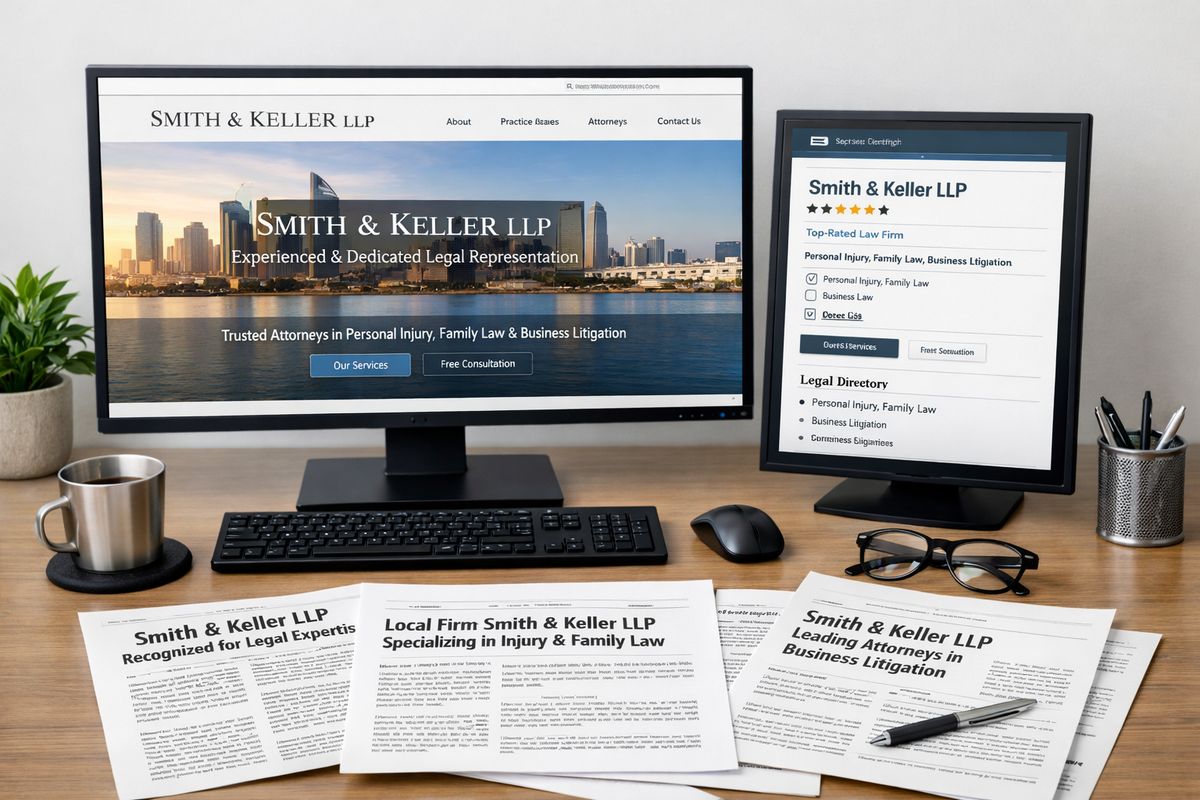
An award on a respected legal site can tell the web, and by extension AI systems, that a firm has third-party validation. Reviews can do something similar, but often with more volume and more natural language. They help confirm that a firm exists, serves actual clients, works in specific practice areas, and is known in a particular city or region.
The key is context. A badge floating alone on an awards page is weak. The same recognition, mentioned on an authoritative directory, mirrored in a firm bio, and supported by local reputation signals is much stronger.
How awards can help, and where firms get it wrong
Awards can help as authority signals, especially when they come from sources that already carry weight online. But I’ve also seen firms overestimate what awards can do on their own.
What worked better in my experience was treating awards as supporting evidence, not the main engine of visibility. If everything else about the firm’s web presence was strong, a recognized award added credibility. If everything else was thin, the award usually did very little.
The awards that tend to carry real signal
The awards that usually mean something are the ones that are recognized outside the firm’s own marketing materials. Think respected legal rankings, bar-related honors, local business recognitions, practice-area distinctions, and publisher-backed lists with real editorial standards.
Why do these matter more? Because they exist on sites that search engines and AI systems can crawl, understand, and compare. They often include structured attorney names, office locations, firm descriptions, and category labels. That makes them easier to connect to the rest of a firm’s online identity.
What weak or low-credibility awards can do instead
Low-credibility awards often create clutter instead of trust.
I’ve seen pages stacked with badges from obscure organizations that looked promotional, not earned. That kind of page may not help AI visibility at all. In some cases, it can dilute credibility because the surrounding signals feel thin or self-referential. If a recognition requires payment, has no editorial transparency, and appears on a site nobody references, it is usually marketing decoration, not a visibility asset.
How reviews influence ChatGPT visibility more directly
Reviews often have more practical value than awards, especially for local and consumer-facing law firms.
The reason is simple: reviews generate recurring third-party language. They mention practice areas, attorney names, communication style, city names, case types, and outcomes-adjacent themes. That gives AI systems more descriptive material to encounter across public profiles and directory pages.
I know how that feels when it sounds unfair. A firm may have spent years building credentials, only to learn that recent review activity can send a louder signal online. But that frustration is real, and ignoring it does not make it less true.
Why Google Business Profile reviews matter most for many firms
For many firms, Google Business Profile reviews matter the most because they sit close to local intent. They affect map visibility, branded search impressions, and how a firm is summarized across the web.
Review volume helps. Recency helps. Sentiment helps. But specificity may matter most of all. A profile with regular, detailed reviews tends to create a stronger public reputation footprint than one with thirty generic five-star posts from the same month. That broader local picture is a big part of what strengthens a firm’s presence for AI-driven local discovery.
How legal directory reviews add another layer of trust
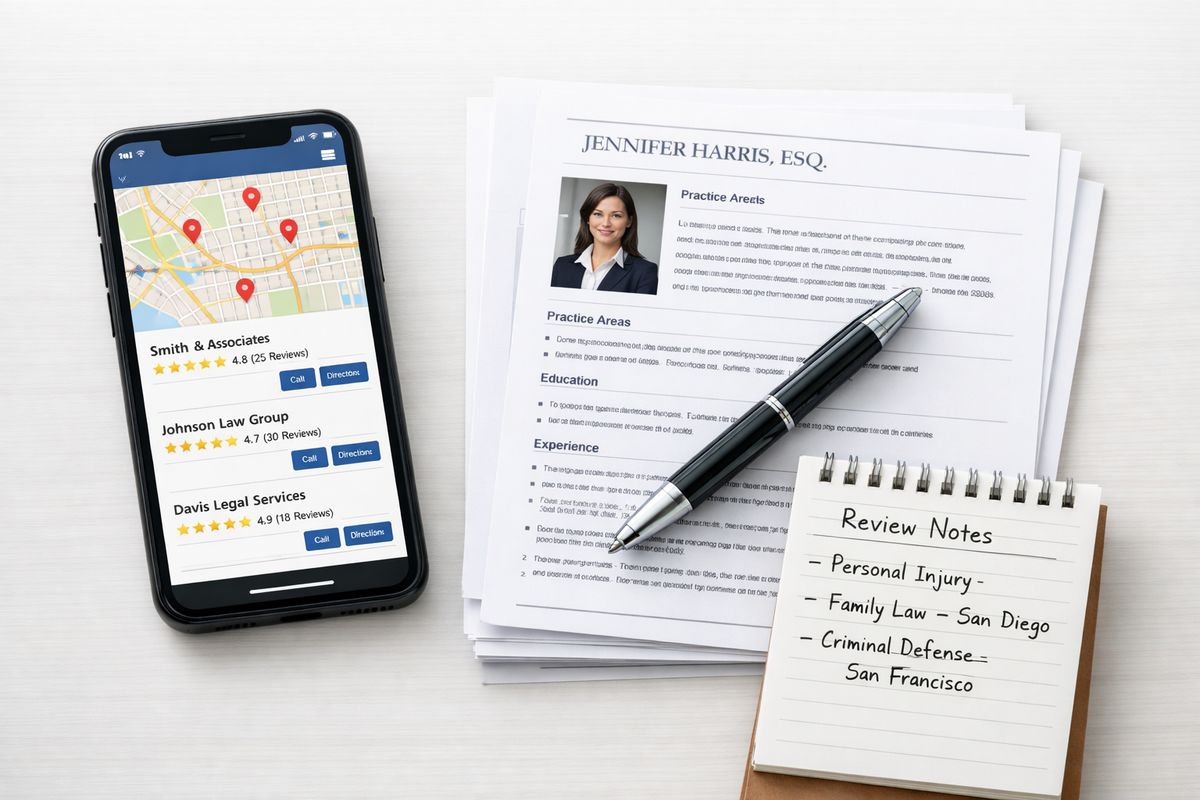
Legal directory reviews reinforce trust in more structured, profession-specific environments. Profiles on Avvo, Martindale-Hubbell, Justia, FindLaw, and Lawyers.com can help connect attorney names, firm names, office locations, and practice areas in ways AI systems can more easily parse.
This matters because AI tools often perform better when the same facts appear in multiple authoritative places. A complete directory profile with consistent details is doing more than feeding referral traffic. It is helping define the entity.
What kinds of review patterns actually help
The patterns that help are usually boring, which is why many firms overlook them. Steady review growth, recent reviews, detailed comments, and distribution across a few credible platforms tend to outperform a sudden blast of generic praise.
Natural language is powerful here. If reviews repeatedly mention “car accident case,” “probate matter,” “immigration filing,” or a city neighborhood, those phrases reinforce how a firm is known. That is one reason I’d give review strategy more day-to-day attention than a trophy page. I’ve gone deeper on that in my take on how reputation signals influence AI mentions.
What ChatGPT is more likely to notice than a trophy page
Awards and reviews matter, but they work best inside a larger ecosystem. What actually helped in situations like this was getting the firm’s identity straight everywhere first, then letting trust signals reinforce it.
Consistent firm information across every profile
Name, address, phone number, attorney bios, practice areas, and office details need to match across the site and every major profile. Even small inconsistencies can make a firm harder to connect into one clear entity.
I’ve seen firms with excellent reputations underperform online simply because attorney names were abbreviated in one place, office addresses were outdated in another, and practice area descriptions shifted from profile to profile. AI systems do better when the puzzle pieces fit cleanly.
Strong third-party mentions beyond directories
Directories are only part of the picture. Local news mentions, bar association listings, podcast appearances, speaking engagements, quoted commentary, legal publication features, and community involvement all create corroboration.
That kind of broad recognition tells a stronger story than a page full of badges. It says the firm is being talked about by other sources, not only describing itself. In many cases, that is the difference between a firm that is merely online and one that is easy for AI to summarize accurately.
Clear practice area and geography signals on the website
The website still has to do its job. If outside signals point back to vague service pages, thin attorney bios, or weak location content, a lot of authority gets wasted.
I’ve found that clear service pages built around actual legal topics and detailed attorney profiles make outside trust signals much more useful. Without that foundation, reviews and awards have nothing strong to reinforce.
Common misconceptions about awards, reviews, and AI visibility
This is where a lot of budget disappears.
“If I win more awards, ChatGPT will rank me higher”
ChatGPT is not a leaderboard. There is no simple award count that pushes a firm upward.
Awards help only when they contribute to a wider pattern of authority, recognition, and corroborated reputation. One respected honor can be more useful than ten obscure ones. Sometimes none of them move the needle much at all.
“Any review is a good review signal”
Not really. Fake, gated, duplicated, or painfully generic reviews may do little or nothing. In some cases, they can create trust problems.
Authenticity matters. Platform quality matters. Distribution matters. A healthy review profile looks earned because it is.
“If my firm ranks in Google, AI visibility will take care of itself”
I wish that were true. It would make this a lot easier.
Search visibility helps because it improves discoverability. But AI systems often synthesize from multiple sources, and they may favor firms with clearer reputation signals and more consistent public information. A strong SEO foundation still matters, though it has to be paired with broader entity signals. I’d frame it as traditional search strength plus AI-specific clarity.
A practical way I’d prioritize awards and reviews for AI-era marketing
When time and budget are limited, I would not start by chasing new awards.
First: fix review generation and profile management
The first move that actually helped in similar situations was building a steady process for collecting real client reviews on the platforms that mattered most. Google Business Profile usually came first, then major legal directories where the firm already had visibility or authority.
This tends to improve trust, local prominence, and the freshness of third-party language all at once.
Next: strengthen authoritative citations and directory presence
After reviews, I’d tighten the profiles. Claim major listings. Complete every field. Align attorney bios, office details, categories, descriptions, and contact information.
That kind of cleanup is not glamorous, but honestly, it often outperforms fancier campaigns. Firms trying to become easier for AI search tools to recognize and mention usually need this groundwork before anything else.
Then: pursue only awards that are genuinely credible
Only after the basics are clean would I pursue awards aggressively. And even then, I’d be selective.
The recognitions worth chasing are the ones with brand recognition, real editorial standards, and indexable pages that clearly connect the award to the firm or attorney. Everything else is optional at best.
How to tell whether awards and reviews are helping at all
Measurement is less tidy here than normal SEO reporting, and I know how annoying that is. There is no universal dashboard showing exactly why a firm appeared in one AI answer and not another.
Still, progress can be tracked. I’d look at branded search growth, referral traffic from directories, review recency, review volume, profile completeness, local pack movement, citation consistency, and the quality of intake. I’d also check how AI tools describe the firm over time. Are practice areas more accurate? Are locations correct? Are attorney names showing up consistently?
Signals worth watching over the next 90 days
Over a 90-day window, the most useful signals are usually simple: fresh reviews on key platforms, cleaner and more complete profiles, more earned mentions, stronger local visibility, and more accurate firm descriptions inside AI tools.
If measurement feels fuzzy, that is normal. The move that actually helped was documenting the baseline first, then checking whether digital reputation signals became more consistent and easier to verify. That is also where tracking AI visibility with a simple repeatable process becomes useful.
The simplest place I’d start
If this whole topic feels murky, I get it. AI visibility has created a strange new layer of marketing, and a lot of firms are being sold certainty where there really isn’t any.
The smallest useful action I’d take is a basic audit: list every award page, review platform, and directory profile connected to the firm, then mark which ones are credible, current, and consistent. That one document usually makes the gaps obvious. From there, the path is much calmer. Visibility tends to improve from clarity and trust built across many sources, not from one more badge.
For firms that want help sorting what matters from what is just noise, I’d encourage scheduling a call with Attorney Visibility ai for more information.
Frequently Asked Questions
Do law firm awards directly improve ChatGPT rankings?
No. Awards are not direct ranking factors in a simple sense. They help indirectly when they strengthen a firm’s authority across trusted third-party sources.
Are reviews more valuable than awards for local law firms?
In many cases, yes. Reviews often create stronger practical signals because they are frequent, public, location-specific, and written in natural language that reinforces services and reputation.
Which awards are worth featuring on a law firm website?
The ones most worth featuring are respected legal rankings, bar-related honors, recognized local business awards, and practice-area recognitions with clear editorial standards and public pages.
Can too many badges hurt credibility?
Yes. A crowded awards page filled with obscure or pay-to-play recognitions can look promotional and may weaken trust instead of building it.
How often should a law firm ask for reviews?
A steady, ongoing process works better than occasional bursts. Consistent review recency tends to look more natural and more useful than collecting many reviews all at once.
What is the first thing to fix before chasing more awards?
I’d fix reviews and profile consistency first. If a firm’s core listings, attorney bios, and public profiles are incomplete or inconsistent, awards usually do not have much to stand on.