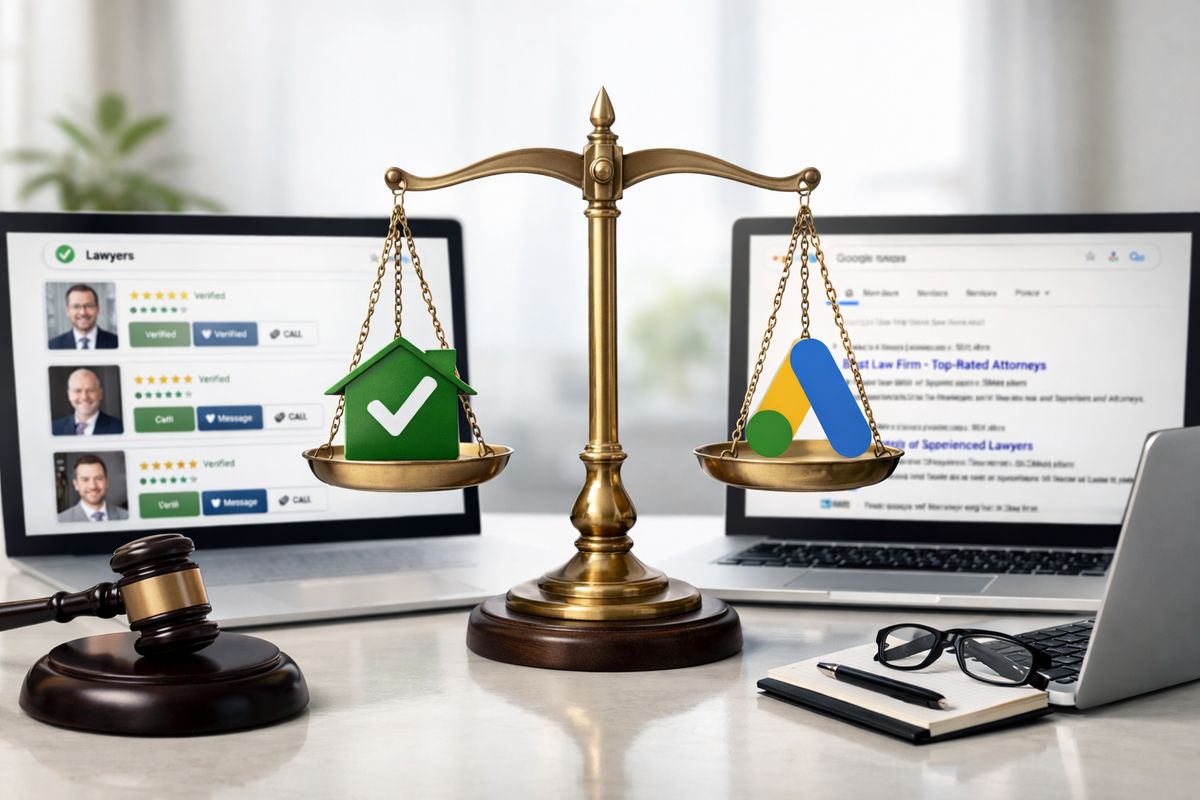
If you are stuck on LSA vs Google Ads for your law firm, the choice feels bigger than it should. Both can bring leads, but they do very different jobs, and picking the wrong one can leave you paying for clicks at 4:17 p.m. while the phone stays quiet.
For most law firms, LSAs win on lead quality and simplicity, while Google Ads win on scale, control, and long-term growth. The real answer is not which platform is better in theory, but which one fits your practice area, market, budget, and how fast your team answers the phone.
LSAs vs Google Ads at a Glance
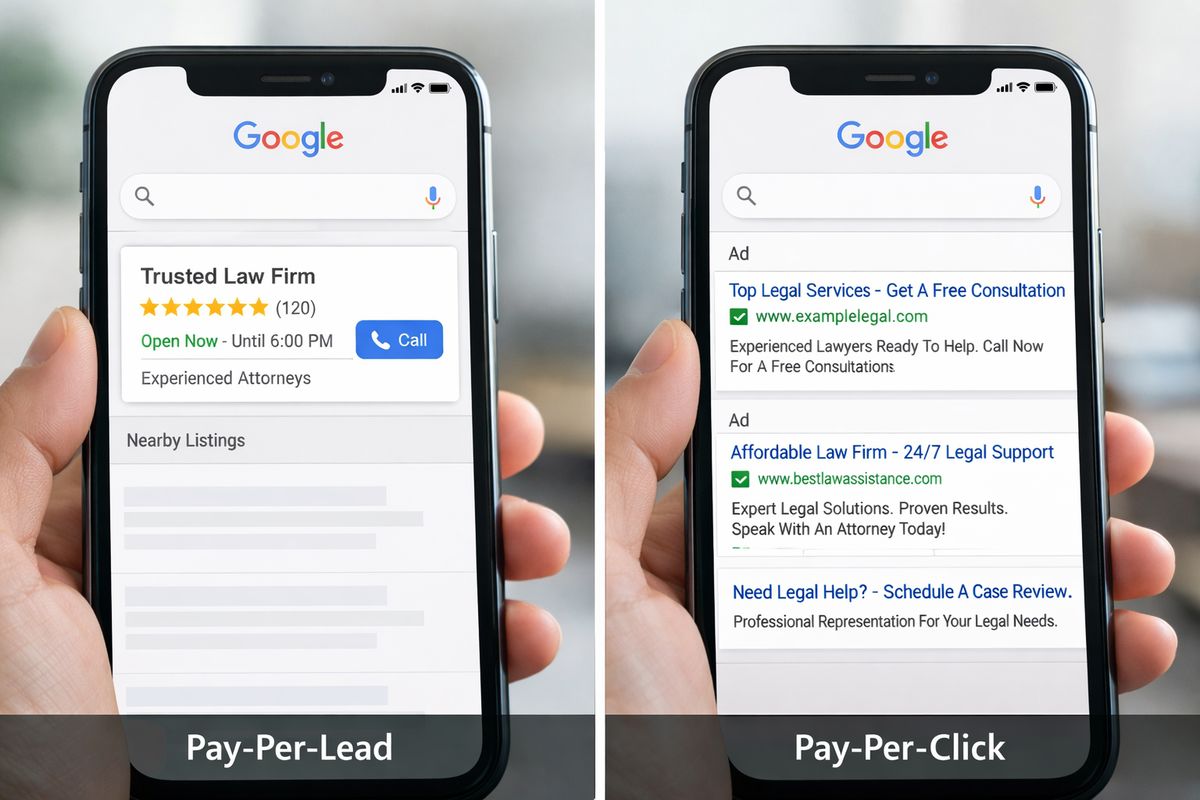
Local Services Ads, usually called LSAs, are the pay-per-lead ads that show at the very top of Google for eligible local services. For lawyers, they usually include your firm name, reviews, hours, phone number, and the Google Screened badge. You pay when a lead comes in, not every time somebody clicks.
Google Ads, in this comparison, means standard search ads. Those are the text ads that show in Google search results after someone types in something like “car accident lawyer near me” or “child custody attorney Dallas.” You usually pay per click, whether that click turns into a call or not.
That is the core difference. LSAs are built to catch high-intent local prospects who want to call now. Google Ads are built to give you much more control over who sees your ads and what searches you want to show up for.
If you want the short version, LSAs are more like a direct phone line. Google Ads are more like a full control panel.
Lead Quality
Lead quality is where LSAs usually look strongest for law firms.
A person clicking an LSA is often further down the decision path. The ad format pushes calls, shows trust signals up front, and usually appears for local, hire-now searches. That means you often hear from somebody who already knows the problem, wants legal help, and is ready to talk today.
Google Ads can bring those same urgent prospects, but Google Ads also catch earlier-stage searches. Somebody looking up “how long do I have to file a personal injury claim” may still be researching, comparing, or just trying to understand the process. That can be useful if your intake and follow-up are strong, but it also means some leads feel less ready.
Here’s the catch: better lead quality depends on practice area and intake. If your firm handles urgent matters like DUI defense or personal injury, LSAs often feel cleaner because the calls are more immediate. If your firm handles longer-consideration matters, Google Ads can be just as valuable because you can meet prospects earlier and guide them toward a consult.
The other part nobody likes to admit is that ad quality is only half the story. If your team misses calls, replies late, or lacks a process for sorting fit from non-fit, even strong leads go stale. That is why it helps to understand the difference between high-intent prospects and raw inquiry volume.
Lead Volume and Reach
Google Ads usually win on reach. Pretty clearly.
With Google Ads, you can show for a much wider set of searches across practice areas, subtopics, and search intent. You can build campaigns around “slip and fall lawyer,” “truck accident attorney,” “probate lawyer near me,” or “green card lawyer consultation,” then split those into cities, service pages, and match types. That opens up far more search volume.
LSAs are more limited. Availability depends on your market, legal category support, and the amount of LSA inventory Google chooses to show. In some cities, LSAs appear often. In others, they barely show at all or rotate aggressively among firms. You can be fully approved and still find volume capped by geography or category.
That makes LSAs great for efficient lead capture, but not always great for scaling. If your firm wants more total opportunities and a bigger footprint across search, Google Ads usually give you more room.
Targeting and Control
This is the section where Google Ads pulls ahead by a mile.
With Google Ads, you can control keywords, match types, locations, ad schedules, devices, audiences, landing pages, and conversion actions. You can push harder on mobile during business hours, limit campaigns to certain ZIP codes, separate Spanish-language landing pages, or send personal injury traffic to one page and family law traffic to another.
LSAs are simpler, which is both the appeal and the limitation. You choose service types, service areas, budget, and basic business details. Google handles much of the rest. That works if you want fewer moving parts, but it also means less control over exactly how and when your ads appear.
For a law firm that wants precision, Google Ads win. For a law firm that wants less daily management, LSAs feel easier.
Setup and Verification
LSAs sound easier until you hit the approval process.
For lawyers, LSA setup usually involves business verification, licensing checks, category approval, insurance or professional documentation in some cases, review management, and a connected profile presence. The Google Screened badge matters here because it affects trust and eligibility. If you want the plain-English version of that badge, this breakdown of the screening label for attorneys clears it up.
Google Ads setup is different. You can launch without the same screening process, but getting good results takes more groundwork. You need campaign structure, keyword research, ad copy, conversion tracking, call tracking, landing pages, negative keywords, and a clear intake path after the click. It is less about approval friction and more about technical and strategic setup.
So which is easier? LSAs are easier to manage once approved. Google Ads are easier to start technically, but harder to run well.
Cost Structure and Budget Flexibility
https://www.youtube.com/watch?v=zzaFlgUl-IA
LSAs are pay per lead. Google Ads are pay per click. That sounds simple, and it is, but the consequences are different.
With LSAs, you are paying for a contact, usually a call or message. That can feel safer because you are not paying for every casual click. If lead quality is good, the math is straightforward. Spend money, get leads, answer fast, book consults.
With Google Ads, you pay every time someone clicks, whether that person calls, bounces, or reads for ten seconds and leaves. Waste can creep in through poor keywords, broad targeting, weak landing pages, or bad mobile experience. A cheap click is not a bargain if it never turns into a case.
That said, Google Ads give you more budget flexibility. You can shift spending by campaign, location, time of day, and practice area. You can tighten spend quickly if a market is underperforming. LSAs give you less room to shape demand.
The trick is not just ad cost. It is what happens after the lead lands. If your phone handling is shaky, your true cost rises fast. That is why tracking every call and consult source matters more than headline cost per lead.
Pricing and Plans
For solo firms and small local practices, LSAs often feel more predictable month to month. You set a weekly budget, pay for actual leads, and usually avoid some of the click volatility that comes with competitive legal search terms.
Google Ads can swing much more. In smaller markets, a modest monthly budget may still get useful traction. In competitive metro areas, legal clicks can get expensive fast, especially in personal injury, criminal defense, and family law. Add landing page work, call tracking, and optimization, and the monthly spend rises.
In practical terms, LSAs often suit firms that want tighter short-term budget control. Google Ads suit firms willing to spend more for wider coverage and more tuning opportunities. If your market is crowded, your ad platform is only part of the equation. Your reviews, local presence, and map visibility matter too, especially for branded and near-me searches. That is where improving your visibility in local search starts to support paid traffic instead of fighting it.
Speed to Results
LSAs can generate leads quickly once you are approved and live. If your profile is complete, your reviews are solid, and your market has active inventory, calls can show up fast.
The slow part is approval. Verification can drag, category approval can stall, and small setup issues can hold things up longer than expected.
Google Ads can go live faster, but performance usually takes longer to stabilize. Early results often need adjustment. Search terms need cleanup. Bids need tuning. Ads need testing. Landing pages may need work. You can launch in a day and still spend two to four weeks getting the account into shape.
So if “speed” means first possible lead after full approval, LSAs often win. If “speed” means how fast you can technically launch, Google Ads win.
Competition and Ad Placement
Placement matters because most prospects do not scroll like patient researchers. They click what feels trustworthy and visible.
LSAs often appear above standard search ads on eligible local legal searches. That top placement gives them a real advantage, especially on phones, where screen space is tight. Reviews and the screening badge also make the ad feel more like a vetted listing than a normal ad.
Google Ads still get strong visibility, but they usually sit below LSAs when both formats show. In categories or markets where LSAs are unavailable or sparse, Google Ads become the top paid option.
That means LSAs can steal attention before a prospect even reaches your standard search ad. But only if your practice area and location actually support them.
Tracking, Reporting, and Attribution
Google Ads are stronger here. Not close.
With Google Ads, you can track calls, form fills, landing page conversions, search terms, keyword performance, device patterns, and assisted paths. You can connect ad spend to signed cases if your systems are set up properly. You can also shape better campaigns over time because you know what is driving results.
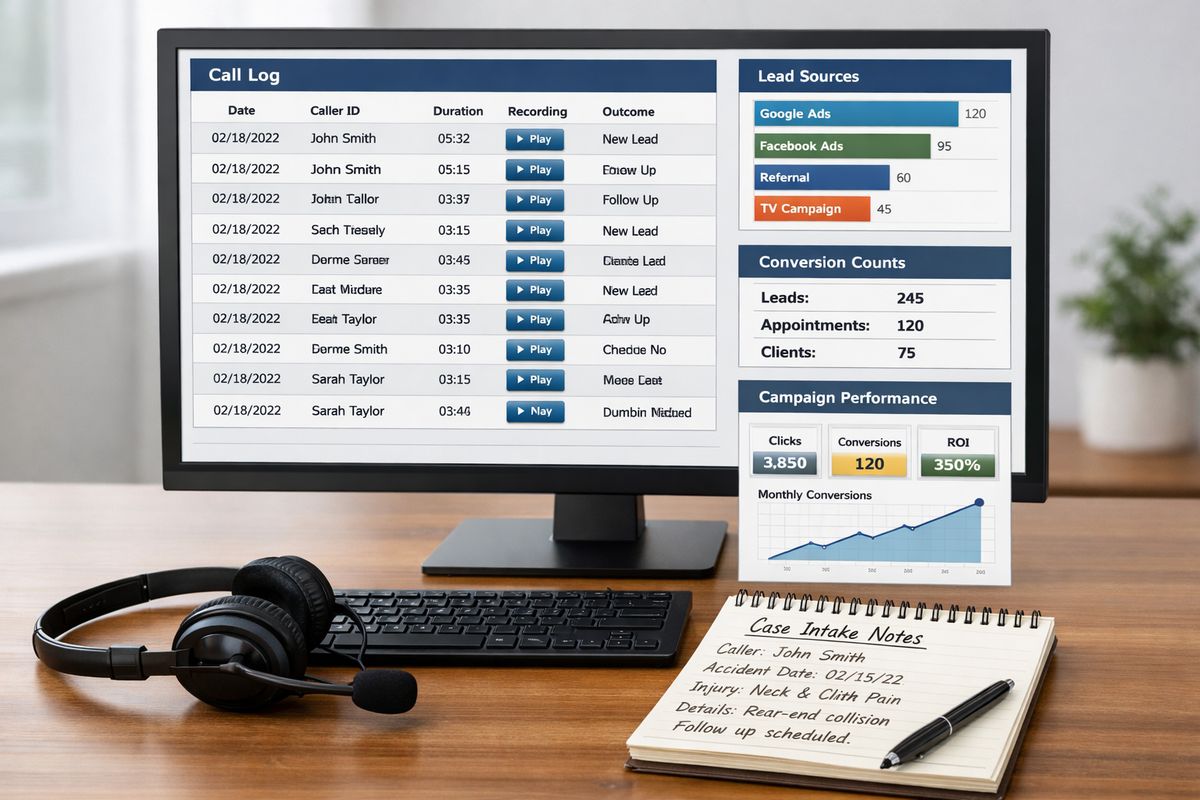
LSA reporting is simpler. You see leads, call recordings in some cases, booking status, and basic lead details. That is useful, but it is not deep. You get enough to judge lead flow, not enough to fine-tune with the same level of precision.
Call tracking matters on both channels, especially if your firm relies on phone leads. If you have been hesitant about it because of map visibility concerns, this explanation of call tracking and local rankings is worth reading before you rule it out.
Screening, Intake, and Lead Disputes
A lead is not a case. Sometimes not even close.
With LSAs, you can dispute certain leads if they are irrelevant, spammy, outside your service area, or otherwise not billable under Google’s rules. That does not fix bad intake, but it does give you some protection against clearly poor leads.
Google Ads do not work that way. You generally cannot dispute a bad click just because it turned into a bad lead. Once the click happens, the money is spent. Your protection comes earlier, through better targeting, better ad copy, negative keywords, and stronger landing page filtering.
Intake also matters more than many firms expect. A missed call at lunch, a slow text reply, or a generic voicemail can sink the value of either platform. If your office struggles to respond fast, using follow-up systems tied to your intake process can make expensive traffic perform a lot better without raising spend.
Best Fit by Practice Area
LSAs usually fit urgent, local, phone-driven matters best. Personal injury, criminal defense, some family law matters, and other immediate-need cases often do well because prospects want help now, not next week.
Google Ads tend to work better when the search journey is longer or more nuanced. Estate planning, immigration, probate, complex business law, and niche sub-practices often benefit from the added space and control of search campaigns. You can speak to specific concerns, direct visitors to targeted pages, and capture early-stage intent before somebody is ready to call.
Family law sits in the middle. Emergency custody or protection-order searches can act like LSA searches, urgent and direct. Divorce and support matters often involve more research, comparison, and hesitation, which gives Google Ads more room to work.
When LSAs Are the Better Choice
https://www.youtube.com/watch?v=Hs7CmcnIyRs
LSAs are the better choice if your goal is simple: get more local calls from people ready to hire, without managing a complicated campaign structure.
You will usually like LSAs if your practice is highly local, your reviews are solid, your team answers the phone fast, and your matters tend to start with urgency. LSAs also make sense if your firm wants a more direct pay-for-lead model and does not need endless targeting options.
They are especially appealing if your intake is built around live conversations. If somebody can call, get screened quickly, and book a consult in one pass, LSAs fit that rhythm well.
When Google Ads Are the Better Choice
Google Ads are the better choice if your firm needs scale, flexibility, and better data.
If you want to expand into multiple cities, promote different practice areas with separate messaging, test landing pages, protect branded searches, or capture research-stage prospects, Google Ads are stronger. You get more coverage across the full search journey and more control over what traffic you invite in.
Google Ads also win if your firm is serious about optimization. Strong campaigns reward better pages, tighter messaging, and better conversion tracking. If your team wants a growth channel, not just a lead faucet, this is usually the better bet.
The Best Strategy for Many Law Firms: Using Both
For a lot of firms, this is not really an either-or decision.
LSAs can grab the ready-to-call prospect at the top of the page. Google Ads can cover the searches LSAs miss, target more specific services, and keep your firm visible across a wider set of legal questions. One catches urgency. The other builds coverage.
That combination works especially well when your intake is organized and your campaigns are not competing blindly. Your pages, tracking, and CRM need to connect cleanly so you know which leads actually become cases. If that setup feels messy, connecting your intake tools and ad sources in one place usually fixes more than another round of ad tweaks.
Verdict: Which Wins Leads for Your Law Firm?
If the question is which platform wins on pure lead quality with less complexity, LSAs usually take it. If the question is which platform wins on reach, control, reporting, and long-term growth, Google Ads usually come out ahead.
So here is the simple rule. Choose LSAs first if your firm wants faster local phone leads, simpler management, and your team is good at answering and closing calls. Choose Google Ads first if your firm wants more scale, tighter targeting, stronger attribution, and room to optimize across multiple services or markets.
For many law firms, the strongest setup is both: LSAs for high-intent local demand, Google Ads for broader search coverage and growth. Try one honest check before choosing. Look at how fast your office answers new leads, because the better platform on paper loses fast if nobody picks up the phone.
Frequently Asked Questions
Are LSAs cheaper than Google Ads for law firms?
Sometimes, but not always. LSAs can feel cheaper because you pay per lead instead of per click. Google Ads can still produce a better cost per signed case if targeting, landing pages, and intake are strong.
Do LSAs work for every legal practice area?
No. Availability depends on market and category support. Some urgent, local practice areas tend to fit LSAs better, while niche or research-heavy matters often do better with Google Ads.
Can your law firm run LSAs and Google Ads at the same time?
Yes, and that is often the strongest approach. LSAs can capture high-intent calls at the top of the page while Google Ads cover more keywords, services, and earlier-stage searches.
Which platform gets better leads?
LSAs often bring more ready-to-call leads. Google Ads can still bring excellent leads, but quality depends more on keyword targeting, landing pages, and intake follow-up.
How long does it take to get results from each?
LSAs can start fast after approval, but approval itself can take time. Google Ads can launch quickly, though results usually improve over the first few weeks as campaigns get tuned.
Do you need a landing page for LSAs?
Not in the same way you do for Google Ads. LSAs focus more on calls, messages, reviews, and profile trust signals. Google Ads usually depend much more on strong, practice-specific landing pages.
If you want a clearer answer based on your market, practice area, and intake setup, schedule a call with Attorney Visibility ai for more information.