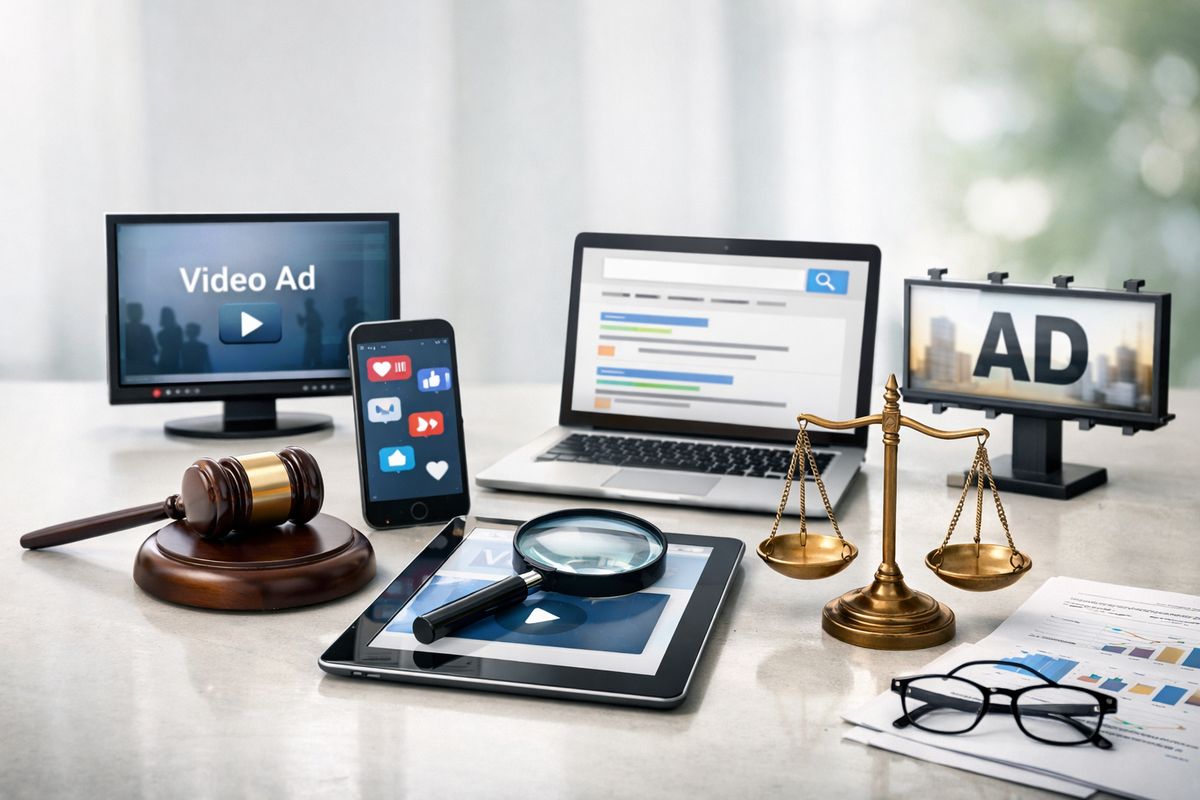


Picking the best legal ads can feel a lot like renting the most expensive billboard in town, then realizing your ideal clients never drive past it. Law firms burn through budget on the wrong channel all the time, not because ads do not work, but because the wrong ad type gets matched to the wrong case mix. This guide shows you how to pick the right channel based on your practice area, market, budget, and intake setup.
Why the “Best” Legal Ad Channel Depends on Your Cases
There is no single best legal ad for every law firm. That is the whole game.
If your firm handles urgent consumer matters, like car accidents, DUI, or child custody emergencies, you usually need channels that capture intent right now. If your work is slower-cycle, like estate planning or business counsel, you can afford more education, more follow-up, and a longer path to contact. Same profession, completely different ad strategy.
Case value matters too. A personal injury firm may be able to justify expensive clicks because one signed case can cover a lot of ad spend. A lower-value practice area has less room for waste. And location changes everything. A search ad in downtown Chicago is not priced like one in a smaller county seat where competition is lighter and fewer firms bid on the same terms.
Speed matters just as much. If you need consultations this month, some channels deserve your attention first. If you want steadier lead flow six months from now, the shortlist changes fast.
The Main Types of Legal Ads You Can Run
Before choosing an agency or a budget, you need to know what you are actually buying. Most law firms compare the same few channels, but those channels do very different jobs.
Google Search Ads
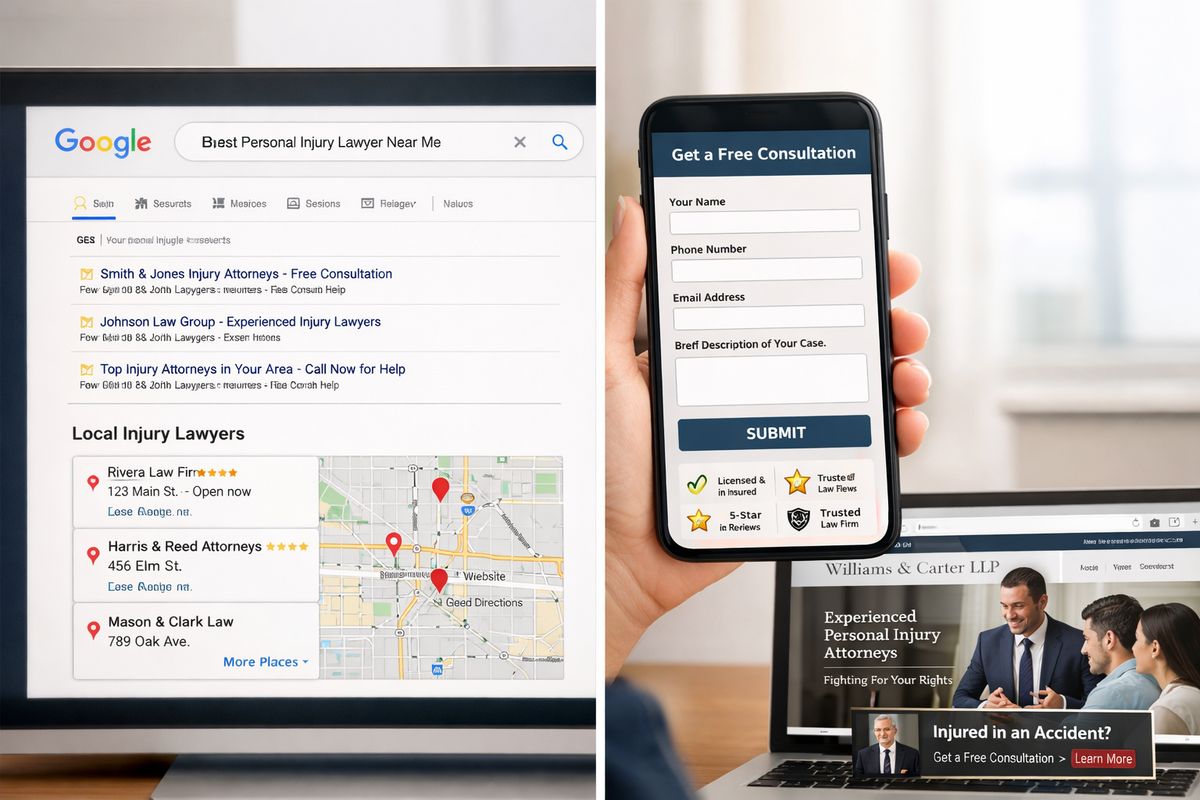
These are pay-per-click ads that appear when someone searches phrases like “car accident lawyer near me” or “DUI attorney in Phoenix.” Search ads are usually the strongest fit when someone already knows a legal problem exists and wants help now.
That high intent is the upside. The catch is cost. Competitive practice areas can get expensive fast, especially in large metros. But if your intake team answers quickly and your landing pages match the search, Google Search can produce some of the most direct consultation opportunities available.
Local Services Ads
Local Services Ads work on a pay-per-lead model instead of a pay-per-click model, and for many firms, that feels simpler. These ads sit at the top of Google for local searches and often include the Google Screened badge, which adds trust before a prospect even clicks. If you want a clearer look at the trade-offs, it helps to understand how these two Google channels differ in practice.
For local firms that want calls fast, LSAs can be a strong first move. But lead quality still varies. Some calls are ready to hire. Some are shopping around. Some are not a fit at all.
SEO and Organic Search
SEO is not an ad in the strict sense, but it competes for the same demand. Instead of paying for each click, you invest in ranking organically for the searches that matter to your firm.
This works best if you want long-term lead flow and do not want to rent every visit forever. SEO usually takes longer to build, but once it gains traction, it can lower your reliance on paid channels. That is especially useful in markets where ad costs keep climbing.
Social Media Ads
Social ads on Facebook, Instagram, and LinkedIn are different from search because they interrupt attention rather than capture it. Someone scrolling photos or checking industry news was not actively searching for counsel when your ad showed up.
That does not make social useless. It makes social situational. Consumer legal services can use it for awareness, remarketing, and staying visible. LinkedIn can help with niche professional targeting, especially for business-related legal work.
Display, YouTube, and Retargeting Ads
Display ads are banner ads. YouTube ads are video ads. Retargeting ads follow up with past site visitors after they leave your website.
These are usually support channels, not the first place to spend your full budget. Think of them like the second conversation after the first introduction. Helpful, often smart, but rarely the best first move if your pipeline is empty today.
How to Pick the Right Channel for Your Law Firm
A good ad plan starts with a few buying criteria, not a favorite platform.
Match the Channel to Search Intent
Search intent means what somebody wants at the moment of the search. If a person types “wrongful death attorney” or “emergency custody lawyer,” intent is high and immediate. Those cases usually perform best with Google-first campaigns because the need already exists.
That is why urgent consumer matters often start with Search or LSAs. You are not trying to create interest from scratch. You are showing up when a prospect is already raising a hand.
Consider Your Case Value and Cost Per Lead
Expensive leads are not automatically bad. Cheap leads are not automatically good.
If a case can be worth tens of thousands in fees, paying more per lead can make sense. If your average matter is smaller or less predictable, high click costs can get ugly fast. The useful question is not “what is the cheapest channel?” It is “what channel brings qualified matters at a cost your firm can actually support?” A lot of firms get clearer on this after sorting out what counts as a real prospect.
Look at Geography and Market Competition
Your market changes the math. In Los Angeles, Miami, or Chicago, ad costs are often higher, competition is tougher, and speed to lead matters more because prospects have options everywhere. In a smaller market, you may get traction with a tighter budget and less aggressive bidding.
Local visibility matters beyond ads too. If your firm struggles to appear in map results, that weakens trust when prospects search your name after seeing an ad. That is where improving local map presence can support paid performance.
Check Your Intake Speed and Follow-Up
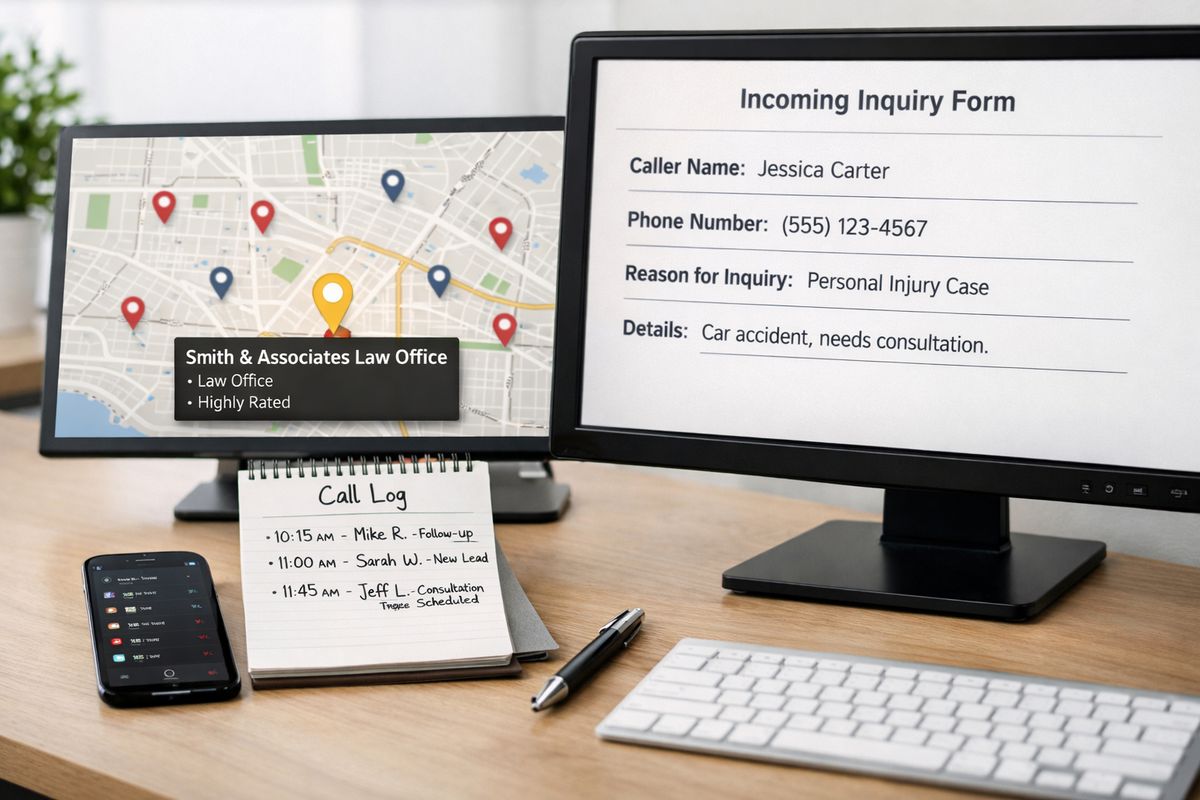
A missed call is not a marketing problem that can be fixed with better ad copy. It is a revenue leak.
If your phone rings at 4:47 p.m. on a Thursday and nobody picks up, the ad did its job and your system did not. Same goes for form leads that sit overnight. Ask any agency how leads get tracked, how quickly your team follows up, and whether call recordings or form outcomes get reviewed. If you want cleaner visibility here, seeing where calls actually come from is one of the first fixes.
Best Legal Ads by Use Case
This is where channel choice gets practical.
Best for Fast Lead Generation: Google Search and Local Services Ads
If your goal is speed, start here. Search and LSAs are usually the fastest path to consultations because they reach people already looking for legal help.
Search gives you more control over keywords, landing pages, and message testing. LSAs can generate calls quickly and add trust through the badge. For many local firms, the strongest short-term setup is not one or the other, but both working together.
Best for Long-Term Growth: SEO Paired With Retargeting
If you want durable lead flow, SEO earns a spot on your shortlist. It takes longer, but it builds an asset instead of buying each click one by one.
Retargeting makes that traffic work harder. Plenty of prospects visit a law firm site, compare options, then leave. Following up with a simple reminder ad can bring some of that traffic back. Add thoughtful follow-up after contact, and staying in touch with colder prospects becomes much easier.
Best for Brand Visibility: YouTube and Social Ads
Brand visibility matters more in crowded markets than many firms admit. If five competitors are all bidding on the same search terms, name recognition can tilt a decision before the click even happens.
That said, awareness channels need realistic expectations. YouTube and social can help people remember your name, your face, and your practice focus. But they usually do not produce the same immediate lead quality as high-intent search traffic.
Best for Niche or B2B Legal Work: LinkedIn and Search
For business law, employment counsel, commercial litigation, or other niche professional services, LinkedIn and Search can complement each other well. Search captures existing demand. LinkedIn helps you reach decision-makers by role, industry, or company type.
The trick is message fit. A business owner looking for outside counsel responds to a different tone than somebody searching after a wreck on the interstate.
What a Good Legal Advertising Budget Actually Looks Like
There is no magic number. There is only budget matched to goals.
Small Budgets: Focus, Don’t Scatter
With a smaller budget, spreading money across five channels usually means underfunding all of them. Pick one channel, maybe two at most, and tighten the scope.
That may mean one practice area, one city, or even ads that run only during hours when your team can answer live. A family law firm in a midsize city, for example, may get better results from focused Google Search campaigns for custody and divorce than from trying Search, Facebook, YouTube, and display all at once.
Mid-Range Budgets: Build a Smarter Mix
A mid-range budget gives you room to combine channels with purpose. Search plus LSAs is a common pairing for faster lead flow. Add strong landing pages and light retargeting, and performance often gets steadier instead of spikier.
This is also the point where infrastructure matters more. Better tracking, stronger intake, and cleaner landing-page alignment can improve results without increasing spend.
Higher Budgets: Add Testing and Expansion
Larger budgets create room to test without getting sloppy. You can expand into more markets, add more practice areas, test more messaging angles, or support search with video and retargeting.
But bigger budgets do not excuse weak strategy. Throwing more money at broad targeting is like turning up the faucet when the bucket has a hole in it. You still need discipline.
Common Mistakes That Make Legal Ads Underperform
Bad results do not always mean bad channels. Sometimes the setup is the problem.
Sending Traffic to a Weak Website
Generic homepages leak conversions. If somebody clicks an ad for “truck accident lawyer,” lands on a broad firm homepage, and has to hunt for answers, friction goes up immediately.
Your landing page should match the ad, answer basic questions fast, and make calling easy on a phone screen. For firms running local campaigns, building pages that fit each market can improve conversion rates more than another round of ad tweaks.
Tracking Clicks Instead of Signed Cases
Clicks and impressions are not useless, but they are not the outcome you actually care about. Signed cases are.
You want call tracking, form tracking, qualified lead review, and signed-case reporting tied back to channel and campaign. If reporting ends at “traffic was up,” that is not enough. A better system for following leads from first click to actual matters makes agency performance much easier to judge.
Using the Same Message for Every Practice Area
A custody search is not the same as a car accident search. An immigration concern is not the same as a white-collar defense concern.
Different practice areas come with different urgency, emotions, objections, and questions. Your ads and landing pages should reflect that. One-size-fits-all messaging usually sounds generic because it is generic.
Ignoring Compliance and Ad Platform Rules
Legal advertising has rules, and platforms have rules too. Disclaimers, bar requirements, restricted wording, and verification steps can affect what gets approved and what gets flagged.
A good agency should know the difference between aggressive marketing and sloppy marketing. You want clean claims, accurate language, and a review process that catches issues early.
How to Choose a Legal Marketing Agency for Paid Ads
The channel matters. The agency running it matters just as much.
Ask How Strategy Changes by Practice Area
If an agency pitches the same setup to every firm, that is a red flag. Personal injury, family law, criminal defense, estate planning, and business law should not all sound identical in strategy meetings.
You want specifics. What changes in keyword targeting, page structure, follow-up, and budget allocation by practice area? If the answer is vague, keep looking. For a deeper agency vetting process, it helps to review what separates a solid marketing partner from a generic one.
Ask What Gets Reported Every Month
Monthly reporting should show where budget went, how many leads came in, what those leads cost, and how many were actually worth your time. Signed cases, qualified lead rate, and call quality matter a lot more than vanity graphs.
If reports stop at impressions and clicks, you are missing the part that affects revenue.
Ask Who Owns the Ad Account and Data
This one gets overlooked until it becomes a headache. If you ever switch agencies, you should not lose access to your ad history, conversion data, or campaign assets.
Ownership should be simple and clear from the start. No surprises. No locked doors.
Ask How Landing Pages, Intake, and Ads Work Together
Legal ads are not just ads. They are a system.
A keyword triggers an ad. The ad leads to a page. The page drives a call or form. Your intake process decides what happens next. If an agency only talks about click-through rate and never asks who answers the phone, that is a bad sign.
A Simple Shortlist: Which Channel Should You Try First?
If your firm handles urgent consumer matters and you need leads soon, start with Google Search or LSAs. If your goal is longer-term growth and stronger organic visibility, start building SEO while using retargeting to recover missed opportunities. If your market is crowded and brand recall matters, YouTube or social can support visibility. If your work is niche or B2B, LinkedIn plus Search is often the smarter pairing.
The simple rule is this: pick the channel that matches how your clients actually look for help, then make sure your landing pages and intake are ready before you spend another dollar.
If you want a clearer plan for your firm, schedule a call with Attorney Visibility ai for more information.
Frequently Asked Questions
What are the best legal ads for getting leads quickly?
Google Search Ads and Local Services Ads are usually the fastest options for urgent legal matters. Both put your firm in front of people actively looking for help right now.
Are Local Services Ads better than Google Ads for law firms?
Not always. LSAs can drive calls quickly and build trust with the badge, but Search Ads offer more control over keywords, messaging, and landing pages. In many cases, the better setup is using both strategically.
How much should your law firm spend on legal ads?
Your budget should match your case value, market competition, and growth goals. A smaller budget usually works better when focused tightly on one practice area or one geography instead of being spread across several channels.
Do social media ads work for lawyers?
Yes, but usually better for awareness, remarketing, and visibility than for high-intent lead capture. If your goal is immediate consultations, search-based channels tend to outperform social.
What should you ask a legal marketing agency before signing?
Ask how strategy changes by practice area, what metrics get reported each month, who owns the ad account and data, and how ads connect with landing pages and intake. Those answers tell you a lot about how the agency actually works.
Why do some legal ads get clicks but not clients?
The usual reasons are weak landing pages, slow follow-up, poor targeting, or reporting that measures traffic instead of real case outcomes. Good ads can still fail when the rest of the funnel is not ready.