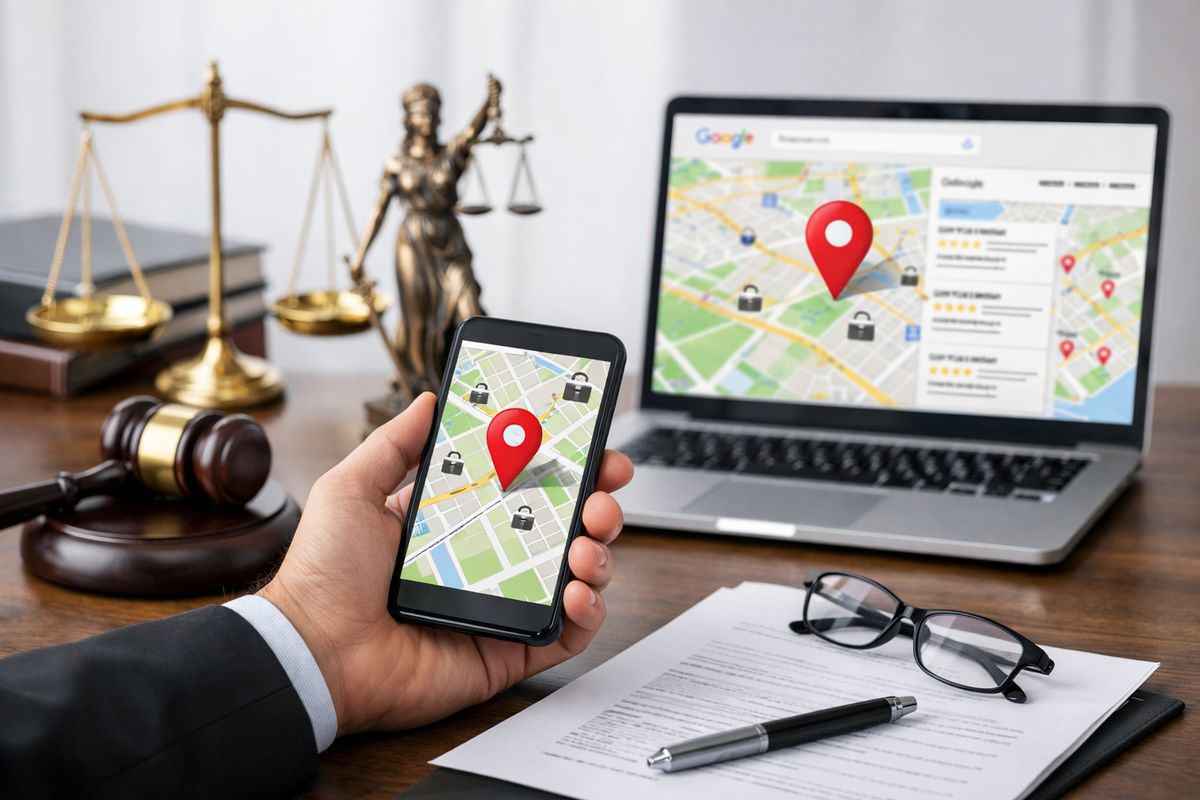
Google Maps for lawyers means your firm appears where local legal searches actually turn into calls: the map results, the local 3-pack, and the business profile a potential client sees before visiting your site. That visibility is not a nice extra. It often decides who gets contacted first, especially when somebody needs a lawyer now, not next month.
What Google Maps for Lawyers Actually Means
If somebody searches “divorce lawyer near me” or “car accident attorney in Phoenix,” Google often shows a map with a few firms before the regular website results. That is the practical meaning of Google Maps for lawyers. It is your chance to show up at the exact moment somebody is looking for legal help nearby.
Here’s the thing: local visibility often beats a beautiful website that nobody sees. If your firm appears in the map pack with strong reviews, accurate hours, and a clear phone number, you are already in the running before a consultation starts.
Where Your Firm Shows Up
There are three pieces that get mixed together all the time.
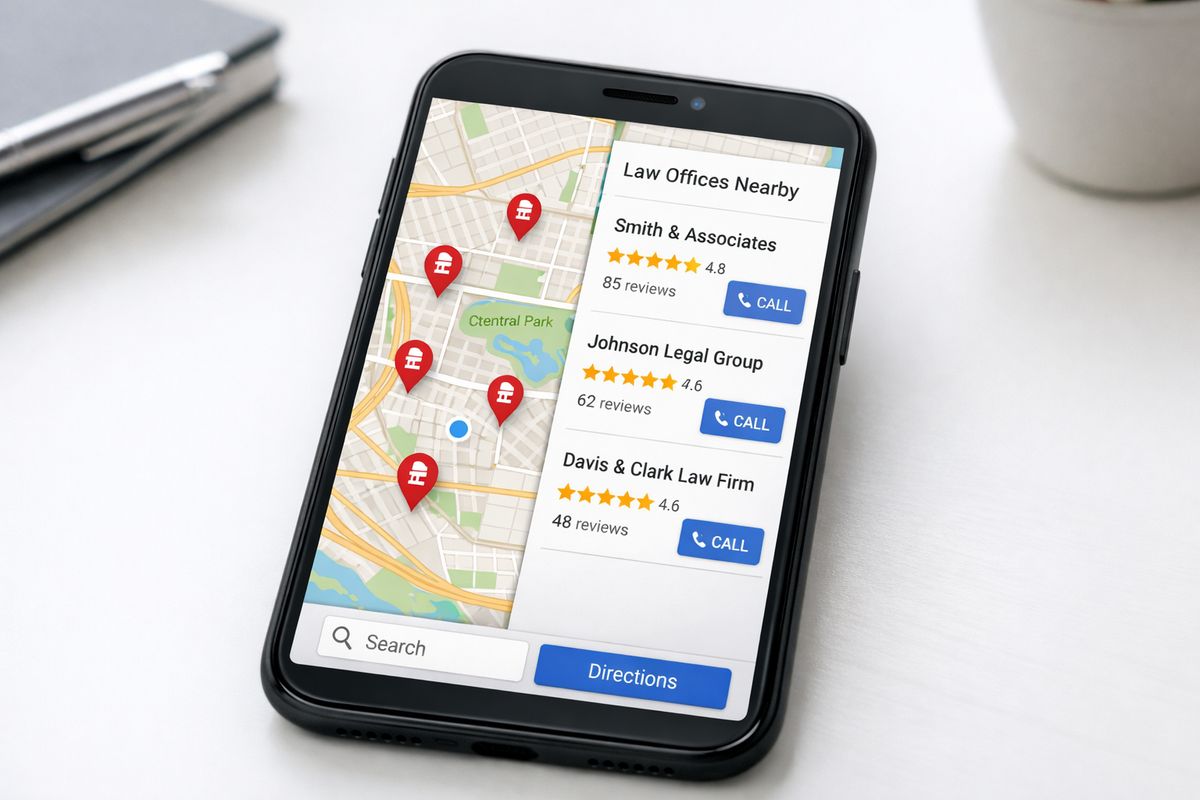
Google Maps results are the listings inside the Maps app or map interface. The local 3-pack is the short list of firms shown on the main search results page, usually right under the map. Your Google Business Profile is the listing itself, the profile with your name, category, reviews, hours, photos, and contact details.
Think of it like a storefront. The map pack is the busy street corner sign. Your profile is the front window. Your website is what somebody sees after walking in.
Why Local Visibility Wins Cases Before a Consultation Starts
A lot of legal searches happen in moments that are urgent, messy, and emotional. Somebody is sitting in a hospital waiting room, standing outside a courthouse, or at a desk at 8:17 a.m. trying to solve a problem before the day gets away. In that moment, the map result feels faster and safer than scrolling through ten blue links.
That first click matters because map results remove friction. A person can see your location, call button, reviews, and business hours in seconds. No hunting around. No guessing if your office is even open.
High-Intent Searches Turn Into Calls Faster
Map searches often come from people with immediate intent. Not casual curiosity, actual need. Somebody searching “DUI lawyer near me” is usually not doing light research for fun.
That is why Google Maps can outperform other channels on speed. Proximity, review stars, open hours, and tap-to-call features make it easy to act right away. If you also track those calls properly, you get a much clearer picture of what is working, which is exactly why measuring phone leads the right way matters so much for law firms.
Maps Builds Trust in a Split Second
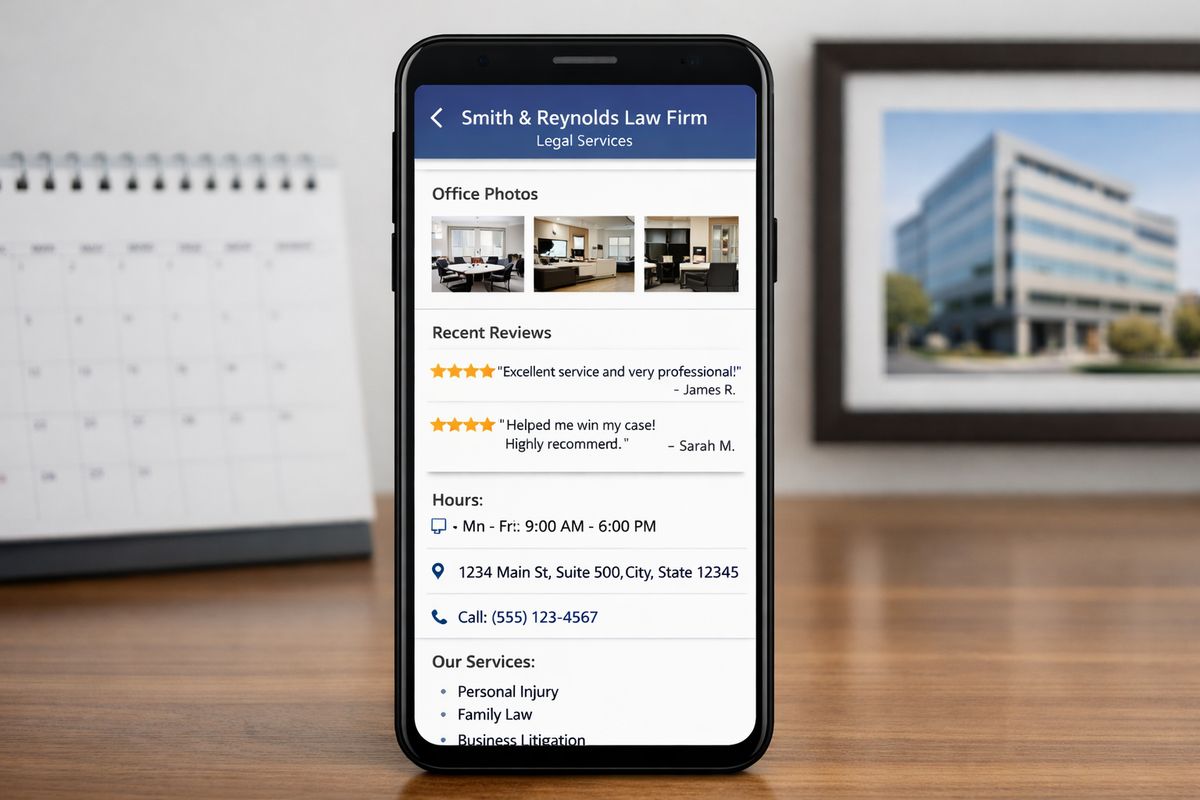
Before anybody reads your attorney bio, a quick impression has already formed. A verified profile, recent reviews, office photos, and a complete business description do a lot of work in very little time.
That quick trust check is real. If your profile looks current and cared for, you feel established. If it has old hours, no photos, and three reviews from 2021, you feel easy to skip.
How Google Decides Which Law Firms Show Up
Google mainly looks at three ideas: relevance, distance, and prominence. Those sound technical, but the basics are simple. Google wants to show a firm that matches the search, is reasonably close, and looks credible online.
If your rankings are weak, start there. Not with hacks.
Relevance
Relevance means how closely your firm matches what somebody searched. If your profile says “personal injury attorney” and your website clearly explains accident cases, you are more relevant for that search than a vague profile that just says “lawyer.”
Your primary category, secondary categories, service descriptions, and practice area pages all help. If you want a deeper breakdown, it helps to understand what actually moves local map positions for law firms.
Distance
Distance is exactly what it sounds like. Google uses the searcher’s location and compares it to your office location. For “near me” searches, this matters a lot.
You cannot control where somebody is standing when searching. You can control whether your address, service areas, and location details are clear and consistent.
Prominence
Prominence is your local reputation in Google’s eyes. Reviews matter here. Mentions of your firm on legal directories matter too. So do links to your website, press mentions, and the overall strength of your online presence.
In plain English, prominence means Google sees signs that your firm is real, active, and trusted.
What an Optimized Google Maps Presence Looks Like for a Law Firm
A strong listing does not look flashy. It looks complete, clear, and believable. That is the trick.
A Fully Built-Out Google Business Profile
Your profile should have the correct firm name, address, phone number, website, office hours, categories, services, and business description. Accuracy matters more than stuffing your profile with every city and practice term you can think of.
If your setup feels thin or outdated, it helps to see what ongoing profile maintenance should actually cover. Most firms are missing more than one field.
Reviews That Sound Real and Recent
Reviews do two jobs at once. They can help your visibility, and they absolutely affect whether somebody clicks or calls. A steady stream of honest, specific feedback is far better than a sudden pile of suspicious five-star reviews.
Responses matter too. A short, professional reply shows your profile is active and your firm pays attention.
Consistent Firm Information Across the Web
NAP means name, address, and phone number. If those details vary across directories, listings, and your own website, Google gets mixed signals.
It is like sending mail to three different suites in the same building. Eventually something gets lost. Consistency helps Google trust the location data attached to your firm.
Useful Photos, Posts, and Updates
Photos of your office, building entrance, reception area, and attorneys give people a sense that your firm is real and accessible. Occasional updates can help too, especially if your profile otherwise feels static.
Photos are not the whole ranking story, but they absolutely influence clicks.
The Website Signals That Support Your Map Rankings
Google Maps does not work alone. Your website supports your listing, confirms your practice areas, and helps convert local searches into actual consultations.
Practice Area Pages With Local Intent
If you handle multiple services or serve nearby cities, your website should reflect that clearly. Separate pages for practice areas and locations help Google connect your profile to relevant searches.
That does not mean pumping out thin city pages. It means building stronger pages for the places you actually serve so your local signals make sense.
Contact Pages That Make Things Easy
Your contact page should match your profile exactly. Same phone number, same address, same office details. Add an embedded map, simple directions, parking notes if useful, and mobile click-to-call.
Small details matter here. If somebody is already stressed, convenience wins.
Local SEO Basics That Still Matter
Title tags, schema, mobile speed, and local backlinks still support map rankings. You do not need a full technical deep dive to understand the big idea: your website should confirm who you help, where you help, and how to contact you fast.
If you want the bigger picture, this fits into the broader work behind moving up in local search as a law firm.
Common Google Maps Mistakes Law Firms Make
Most firms do not have a visibility problem because Google is unfair. The problem is usually neglect, confusion, or bad setup.
Treating the Profile Like a Directory Listing
Your Google Business Profile is not a place to park your address and forget about it. It is active marketing real estate. People make decisions there.
An untouched profile sends a message, and it is not a good one.
Chasing Keywords Instead of Clarity
Stuffing city names and practice terms into your business name or description usually looks awkward, and sometimes crosses Google’s rules. Clear beats clever here.
If your profile reads naturally and accurately, trust goes up. If it looks manipulated, trust drops.
Ignoring Performance Data
Google gives you useful signals, calls, website clicks, direction requests, search terms, and photo views. If you never check them, you miss easy clues about what needs fixing.
And if leads are coming in but the wrong ones keep booking, it helps to know the difference between more inquiries and better matters.
How to Measure Whether Google Maps Is Bringing You Better Cases
Visibility is nice. Better cases are better.
Metrics Worth Watching
Watch calls, direction requests, website clicks, consultation form fills, and branded versus non-branded searches. Calls suggest urgency. Direction requests show local intent. Website clicks often mean somebody wants more proof before reaching out. Branded searches show existing awareness, while non-branded searches show discovery from new prospects.
Quality Matters More Than Raw Leads
Ten weak leads are not better than three strong ones. If Google Maps is working well, you should see matters that fit your practice areas, your geography, and your intake standards.
That is the point. Not traffic for traffic’s sake.
When It Makes Sense to Get Help With Google Maps for Lawyers
Some firms can handle basic setup in-house. But once updates stall, reviews slow down, citations get messy, or rankings slip in core markets, DIY starts getting expensive in a quiet way.
Signs Your Firm Has Outgrown DIY
If your profile is incomplete, your contact info is inconsistent, your reporting is unclear, or your firm is barely visible in your main market, it is probably time for help. The same goes if nobody knows why calls are up one month and down the next.
What Good Support Should Actually Do
Useful support should cover setup, category choices, review strategy, citation cleanup, local landing pages, tracking, and maintenance. Not vague promises about “visibility.”
A good partner should also explain what changed, what improved, and what still needs work. If you are sorting through options, it helps to know what a law firm marketing partner should really deliver.
Questions Law Firms Usually Have About Google Maps
Can a Smaller Firm Outrank a Bigger One on Google Maps?
Yes. A smaller firm with a better maintained profile, stronger reviews, clearer relevance, and better local signals can outrank a bigger name in map results.
How Long Does It Take to Improve Visibility?
Some fixes, like corrected categories or updated hours, can help quickly. Stronger gains usually take steady work over a few months, especially in competitive practice areas.
Do Reviews Really Influence Rankings and Clicks?
Yes. Reviews support local prominence, and they strongly affect whether somebody trusts your firm enough to call.
What Should You Try First?
Start with your Google Business Profile. Check your name, category, phone number, address, hours, reviews, and website link. Then make sure those same details match across the web.
Frequently Asked Questions
Does Google Maps matter if your firm already ranks organically?
Yes. Map results often appear above regular website listings, and they attract people ready to call fast. Organic rankings still matter, but maps often gets the first look.
Can you rank in nearby cities without an office there?
You can show up in nearby areas, but distance still matters. Strong service pages, clear local signals, and solid prominence help, though a real office usually carries more weight.
Is a Google Business Profile enough by itself?
No. Your profile works best when your website, citations, reviews, and local SEO support it. Maps visibility is connected to the rest of your online presence.
How often should you update your profile?
Check it monthly at minimum. Update hours, photos, services, and posts as needed, and respond to reviews consistently so the profile stays active and accurate.
Can bad intake waste good map traffic?
Absolutely. If strong prospects call and nobody answers well, local visibility only gets you halfway there. That is why intake and follow-up matter just as much as rankings.
If your firm wants better local visibility and better cases, schedule a call with Attorney Visibility ai for more information.