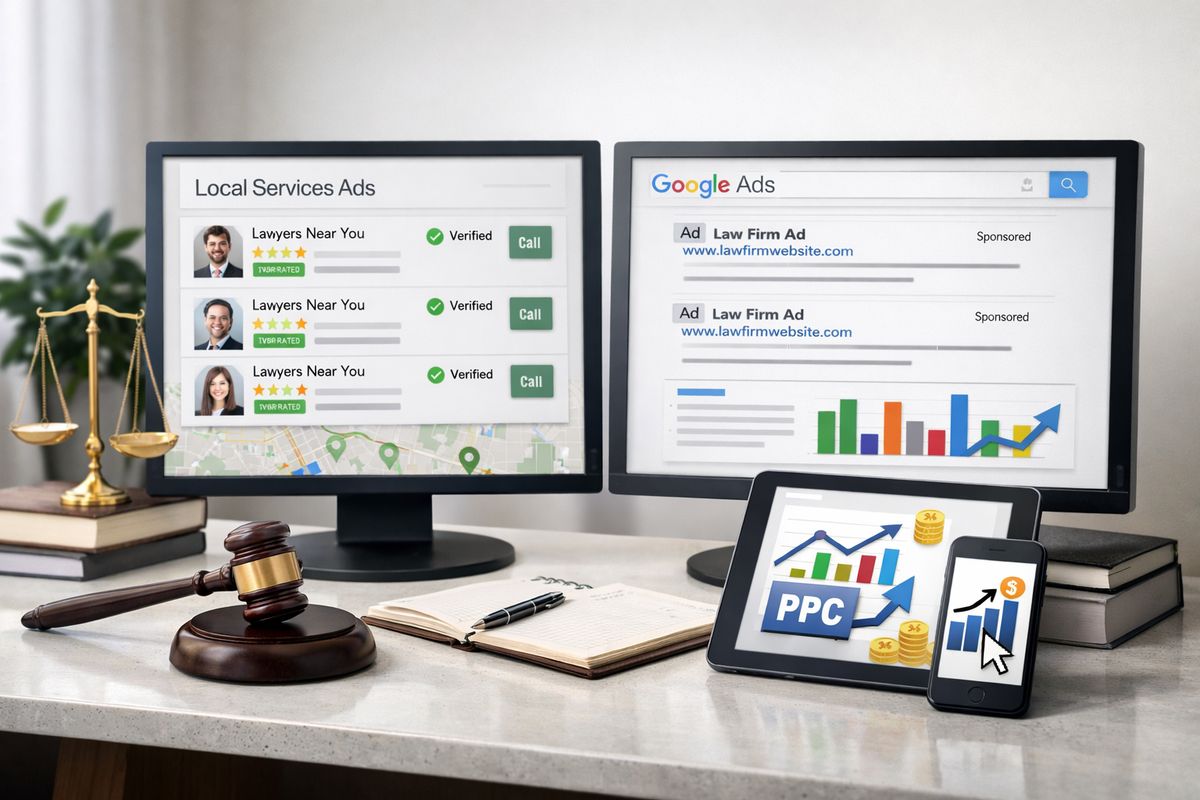
If you’re trying to choose between Local Services Ads vs Google Ads for your law firm, the real question is not which platform sounds better. It’s which one fits how your firm actually signs cases. For most law firms, that answer comes down to intake speed, case value, and how much control you want over the lead flow.
Local Services Ads vs Google Ads at a Glance
Here’s the short version: Local Services Ads are built to get direct calls and messages from nearby prospects fast. Google Ads gives you more room to shape the search, the message, and the path to conversion.
That difference matters more than it seems.
A person searching “car accident lawyer near me” at 8:17 a.m. in downtown Phoenix is usually looking for the fastest trusted option, not a long educational journey. Local Services Ads are designed for that moment. A person searching “how to protect assets before probate” is often earlier in the process and may need more context before reaching out. Google Ads tends to handle that better.
For most firms with a strong intake team and a local consumer practice, Local Services Ads are often the easier first win. For firms that need precision, scale, and better message control, Google Ads usually pulls ahead.
| Feature | Local Services Ads | Google Ads |
|---|---|---|
| Pricing model | Pay per lead | Pay per click |
| Placement | Very top of local results | Top and bottom search ads |
| Format | Fixed profile-style ad | Custom text ads |
| Best for | Fast local inquiries | Broader demand capture |
| Targeting control | Limited | Deep control |
| Trust signals | Google Screened, reviews | Ad copy, landing page, branding |
| Setup difficulty | Lower | Higher |
| Optimization depth | Moderate | High |
How Local Services Ads Work for Law Firms
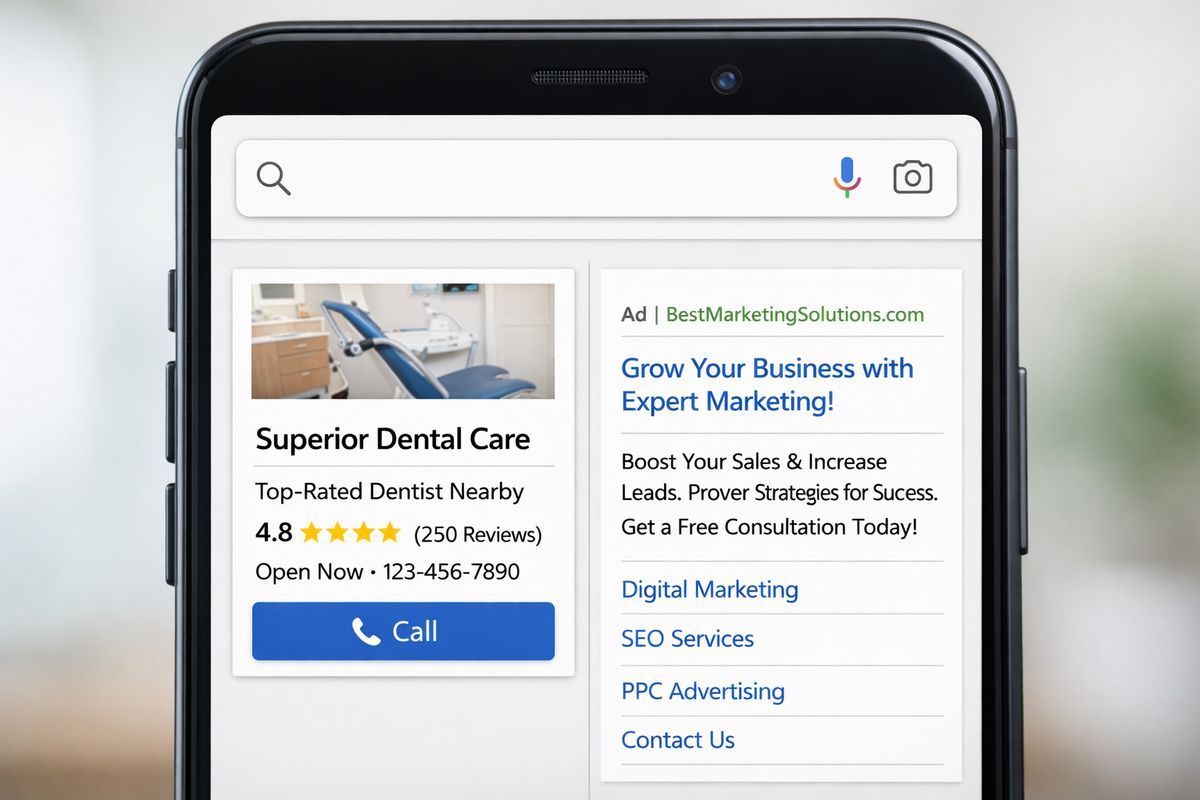
Local Services Ads, often called LSAs, show your firm in a compact local ad unit above traditional search ads in many legal searches. You pay for leads rather than clicks, which sounds simple because it is.
Your profile includes your firm name, reviews, office hours, service area, and in eligible categories, the Google Screened badge. That badge matters. It tells prospects your firm passed Google’s screening process, which can give nervous searchers a reason to call you instead of the next listing. If you want a closer look at that trust signal, this breakdown of what the badge actually tells prospects helps.
The format is narrow by design. You do not get much room to persuade. You mostly win on location, reviews, responsiveness, and credibility at a glance. That makes LSAs feel a bit like a well-placed storefront sign. If somebody already wants a lawyer, the ad helps that person contact you quickly.
How Google Ads Work for Law Firms
Google Ads is a bigger system with more moving parts. You choose keywords, write ad copy, decide where and when ads run, send traffic to landing pages, and pay when somebody clicks.
That sounds less convenient, but the extra control is the whole point.
With Google Ads, you can target “DUI lawyer free consultation,” exclude searches for jobs or pro bono help, send mobile users to a click-to-call page, and run a completely different message for estate planning than for personal injury. You can also shape what happens after the click, which matters if your practice area requires trust-building before a prospect is ready to talk.
The catch is that weak setup gets expensive fast. Expensive clicks plus a bad landing page is one of the easiest ways to burn through budget in legal advertising.
Ad Placement and Search Visibility
Placement changes behavior. People do not study search results like a contract. People scan, tap, and move on.
LSAs often win attention first because they appear at the very top of the page and look different from standard ads. Google Ads still gets strong visibility, especially on high-intent searches, but it usually asks more from your messaging to earn the click.
What Local Services Ads Look Like in Search
LSAs show up with reviews, business details, and contact options in a compact local pack style layout. On many searches, that makes them look less like advertising and more like a pre-vetted shortlist.
That matters when somebody needs help quickly. A person dealing with an arrest, crash, or custody emergency is often looking for a shortcut. The Google Screened badge, review count, and “call” behavior give LSAs that shortcut feel.
You also benefit from proximity and business relevance. If your local presence is weak, improving how your firm shows up in local map results often supports visibility around these searches too.
What Google Ads Look Like in Search
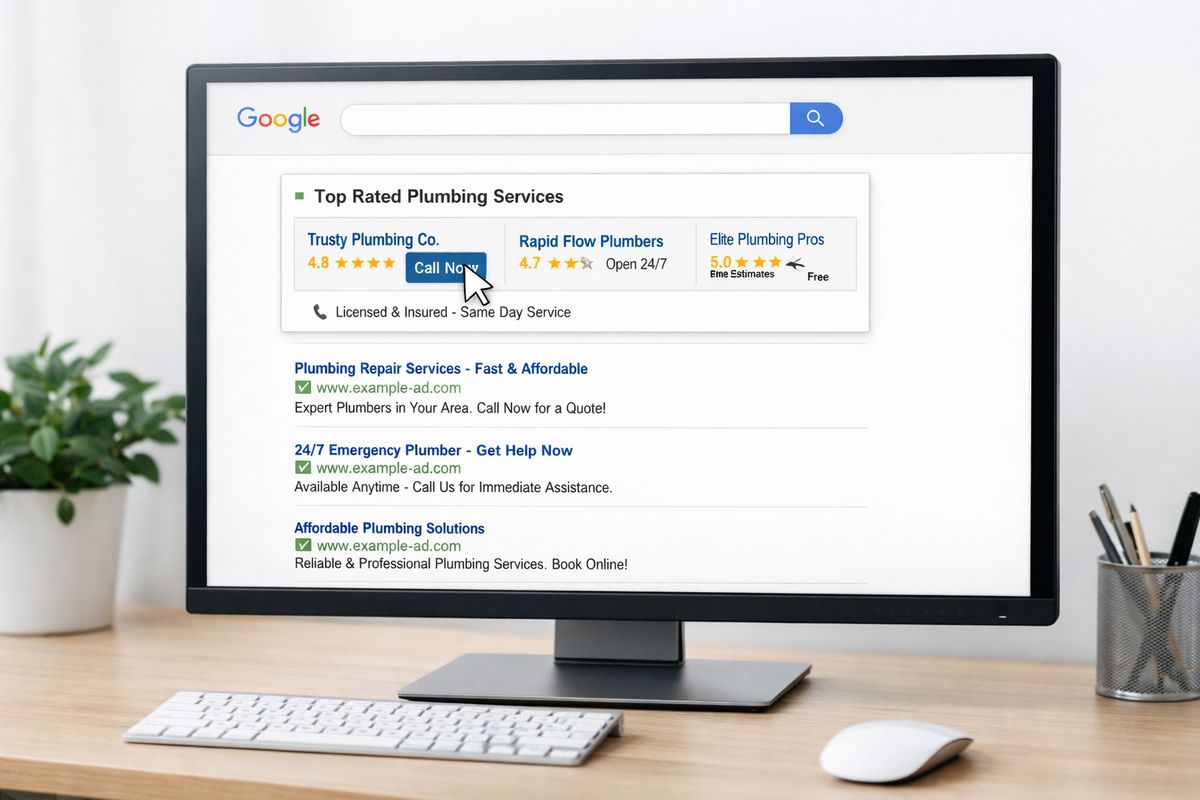
Google Ads appears as text ads with headlines, descriptions, and extensions like phone numbers, sitelinks, and callouts. You do not get the same built-in badge effect, but you get far more control over the message.
That can be powerful. A sharp headline about truck accidents, denied insurance claims, or same-day bail help can still pull strong intent clicks, especially when the landing page matches the search closely.
In other words, Google Ads can absolutely compete for urgent searches. It just does so with relevance and persuasion rather than a fixed trust wrapper.
Targeting and Control
This is where the platforms really split.
LSAs keep things simple. Google Ads gives you knobs, switches, levers, and a few trap doors if you are careless. Simplicity is nice, but only until your leads get messy.
Targeting Options in Local Services Ads
With LSAs, you can set service areas, choose practice categories, define business hours, and manage lead types. That is useful, but still fairly limited.
You cannot manage keyword intent with the same precision you get in search campaigns. You cannot build separate paths for “high asset divorce attorney” versus “cheap divorce lawyer.” You cannot shape device strategy or audience layering in much detail.
That makes LSAs easier to run, but also harder to fine-tune when lead quality slips. A fuller explanation of how this channel behaves for law firms day to day is worth reading before you commit budget.
Targeting Options in Google Ads
Google Ads gives you much tighter control. You can use match types, negative keywords, radius or zip-code targeting, ad scheduling, location exclusions, device adjustments, and audience signals.
That control matters in legal. If your firm only wants plaintiff-side employment cases, or only wants estate planning leads from specific ZIP codes, Google Ads lets you narrow the field. You can also separate campaigns by practice area and write messaging that fits the exact problem somebody is searching.
Here’s the thing: better control only helps if somebody is actively managing it. Left alone, search campaigns drift.
Lead Quality and Intent
More leads is not the same as better leads. Law firms learn that the hard way.
LSAs often bring stronger immediate-contact intent. Google Ads can bring better-fit cases when the legal issue is more nuanced and the campaign is built carefully. If your team is trying to improve the kind of prospects that actually turn into cases, this is usually the section that explains why.
When Local Services Ads Tend to Bring Better Leads
LSAs tend to shine when the prospect is local, needs help soon, and is comfortable making contact right from the search page. Personal injury, criminal defense, family law, and immigration often fit that pattern, especially when urgency and trust are doing most of the work.
If your intake team answers fast, confirms fit quickly, and follows up well, LSAs can produce excellent lead flow. The ad format nudges prospects toward immediate action, so the timing is often better than what you get from broader search traffic.
The catch is that not every lead is your ideal case. You may still get wrong-practice inquiries, price shoppers, or calls outside your preferred geography.
When Google Ads Can Bring Better Leads
Google Ads tends to bring better leads when the search itself is more specific, more complex, or part of a longer decision process. Estate planning, business litigation, tax issues, professional licensing defense, and higher-value niche matters often benefit from more explanation before contact.
With the right keywords and landing pages, you can filter intent better. You can speak directly to “succession planning for family business owners” instead of hoping a general local ad catches the right person.
That often means fewer junk inquiries and better pre-qualified consultations, especially if your site does a good job educating and converting.
Trust Signals and Credibility
Legal prospects are nervous. Some are scared. Some have never hired a lawyer before. Trust is not a nice extra here. It is the price of entry.
LSAs and Google Ads build trust in different ways.
Trust Advantages of Local Services Ads
LSAs borrow trust from Google’s own presentation. The badge, the review count, and the structured layout do a lot of work before anybody clicks or calls.
That first impression is powerful because it reduces uncertainty. Your firm looks established, verified, and easy to contact. For a stressed prospect, that may be enough to trigger the call.
This format especially helps firms with strong review profiles and disciplined management of the listing details prospects check before calling. If your reviews are thin or inconsistent, the advantage shrinks fast.
Trust Advantages of Google Ads
Google Ads asks you to create trust instead of inheriting as much of it. That sounds harder because it is, but it also gives you more room to tell the right story.
You can highlight board certification, years handling a specific case type, consultation details, language support, and the exact legal problem you solve. Then your landing page can back it up with attorney bios, testimonials, FAQs, and a cleaner intake path. Firms that invest in pages built for local legal searches instead of generic website traffic usually feel this advantage pretty quickly.
So yes, LSAs help you look safe. Google Ads helps you look right.
Cost Structure and Budget Efficiency
This is the part everybody wants reduced to one sentence. Pay per lead sounds better than pay per click. Sometimes it is. Sometimes it absolutely is not.
Budget efficiency depends on lead fit, response speed, and conversion process.
Local Services Ads Costs
LSAs charge by lead, not by click. That feels efficient because you are paying for actual contacts, not just traffic. Google also offers disputed lead processes in some situations, which can help when a lead is clearly irrelevant.
But a cheap lead that goes unanswered is still wasted money. So is a lead outside your case criteria. Budget pacing can also feel uneven if lead volume surges or slows without much warning.
This is why response time matters so much. If calls ring and nobody picks up, the platform is not the main problem. Better phone attribution and intake visibility often reveals that quickly.
Google Ads Costs
Google Ads charges per click, and legal clicks can be brutally expensive. In competitive metros, some searches cost enough to make sloppy management painful by lunchtime.
Still, higher click costs do not automatically mean worse ROI. If your campaign filters traffic well and your landing pages convert, you may spend more per visit and less per signed case than you would with low-cost but poor-fit leads elsewhere.
Quality Score, keyword selection, ad relevance, and landing page experience all affect performance. In plain English, a smart setup can keep the economics healthy. A lazy setup can turn into a money leak.
Setup, Management, and Optimization
If your goal is getting live fast, LSAs is the easier path. If your goal is building a system you can shape and improve deeply, Google Ads has more upside.
What It Takes to Launch Local Services Ads
Launching LSAs usually means verification, background checks, practice area selection, review building, and profile completion. It is still work, but the work is mostly administrative and reputation-based rather than strategic.
Once live, you monitor lead quality, respond quickly, and keep reviews healthy. Compared with traditional PPC, the setup is simpler and less intimidating.
What It Takes to Launch Google Ads
Google Ads needs real planning. You need keyword research, campaign structure, ad copy, conversion tracking, landing pages, and ongoing optimization.
That setup is not just technical busywork. It determines whether your campaign attracts “wrong number” traffic or actual case opportunities. If you are evaluating outside help, knowing what competent marketing support should actually manage for your firm can save you from paying for fancy reporting and weak execution.
Reporting and Conversion Tracking
If signed cases matter more than raw lead counts, reporting becomes a deciding factor.
LSAs gives you a useful snapshot. Google Ads can give you a much deeper picture.
Measuring Results in Local Services Ads
LSAs shows lead counts, calls, messages, and some call recordings or booking outcomes depending on setup. That is enough to spot broad patterns.
You can usually tell whether the phone is ringing and whether leads look relevant. For some firms, that is enough. For others, it is only the first layer.
Measuring Results in Google Ads
Google Ads supports conversion tracking for calls, forms, offline conversion imports, and more advanced attribution paths. That matters when the signed case, not the initial inquiry, is the real success metric.
If your intake process includes screening, callbacks, and CRM updates, stronger tracking from first touch through retained matter helps you judge the channel fairly. Without that, Google Ads can look expensive even when it is producing your best cases.
Best Fit by Practice Area and Firm Type
The best channel depends less on platform hype and more on how your practice works in real life.
When Local Services Ads Make More Sense
LSAs usually makes more sense for local consumer-facing firms that rely on quick calls and fast consultations. Think personal injury, criminal defense, family law, immigration, bankruptcy, or DUI.
If your market is local, your reviews are solid, and somebody reliably answers the phone during business hours, LSAs can be a very practical fit.
When Google Ads Makes More Sense
Google Ads makes more sense when your practice area is specialized, higher-value, or harder to explain in a short local listing. Estate planning, business law, elder law, tax controversy, and niche litigation often fit here.
It also helps in crowded metro markets where message control can separate your firm from a long list of similar options.
When Using Both Is the Smart Move
Using both is often the strongest long-term approach. LSAs catches prospects ready to call now. Google Ads captures broader search demand, more nuanced case types, and searches that need tailored messaging.
That combination works especially well when your intake is organized and your budget can support both without starving either channel.
Pricing and ROI Comparison
If your firm wants the cleaner entry point, LSAs usually wins on simplicity and speed to lead. If your firm wants better visibility into case economics and more room to improve performance over time, Google Ads often wins on strategic ROI.
The trick is matching platform economics to your case value. Lower-value, high-volume consumer matters often benefit from LSAs because quick calls can close fast. Higher-value, lower-volume matters often justify the extra work and click cost of Google Ads because precision matters more than raw volume.
So which is more efficient? LSAs is often more efficient at generating immediate contacts. Google Ads is often more efficient at building a controllable growth engine.
Which Law Firms Should Choose Local Services Ads
Choose Local Services Ads if your firm wants a simpler path to inbound leads, your review profile is already strong, and your intake team answers calls quickly. This is usually the better fit if your main goal is getting qualified local conversations without managing a complex ad system.
It is also a smart choice if your practice depends on urgency. When somebody needs a lawyer today, not after reading three blog posts, LSAs can meet that moment better.
Which Law Firms Should Choose Google Ads
Choose Google Ads if your firm needs more scale, tighter targeting, stronger message control, or better support for specialized searches. This is usually the better fit if your cases are higher-value, your market is competitive, or your prospects need education before booking.
It also makes sense if your firm wants to grow across multiple practice areas and measure performance with more precision.
Verdict: Local Services Ads or Google Ads for Law Firms?
Here’s the clear answer: most law firms should start with the channel that matches intake speed and case economics first, then expand from there.
If your firm wins by answering the phone fast and converting local urgency into consultations, start with LSAs. If your firm wins by targeting specific legal problems and guiding prospects through a more thoughtful decision, start with Google Ads.
Neither platform fixes weak intake. That part comes first.
Best Choice for Simplicity and Fast Lead Capture
Local Services Ads is the better fit when your main goal is getting qualified local calls with less campaign complexity. You get strong placement, built-in trust cues, and a format built for immediate contact.
For many consumer-facing firms, that is enough to justify starting there.
Best Choice for Control, Scale, and Long-Term Growth
Google Ads is the better fit when you want deeper targeting, stronger brand control, and more room to grow across practice areas and markets.
If your firm cares about campaign precision, landing page strategy, and long-term demand capture, Google Ads gives you more ways to improve performance over time.
The One Thing to Try First
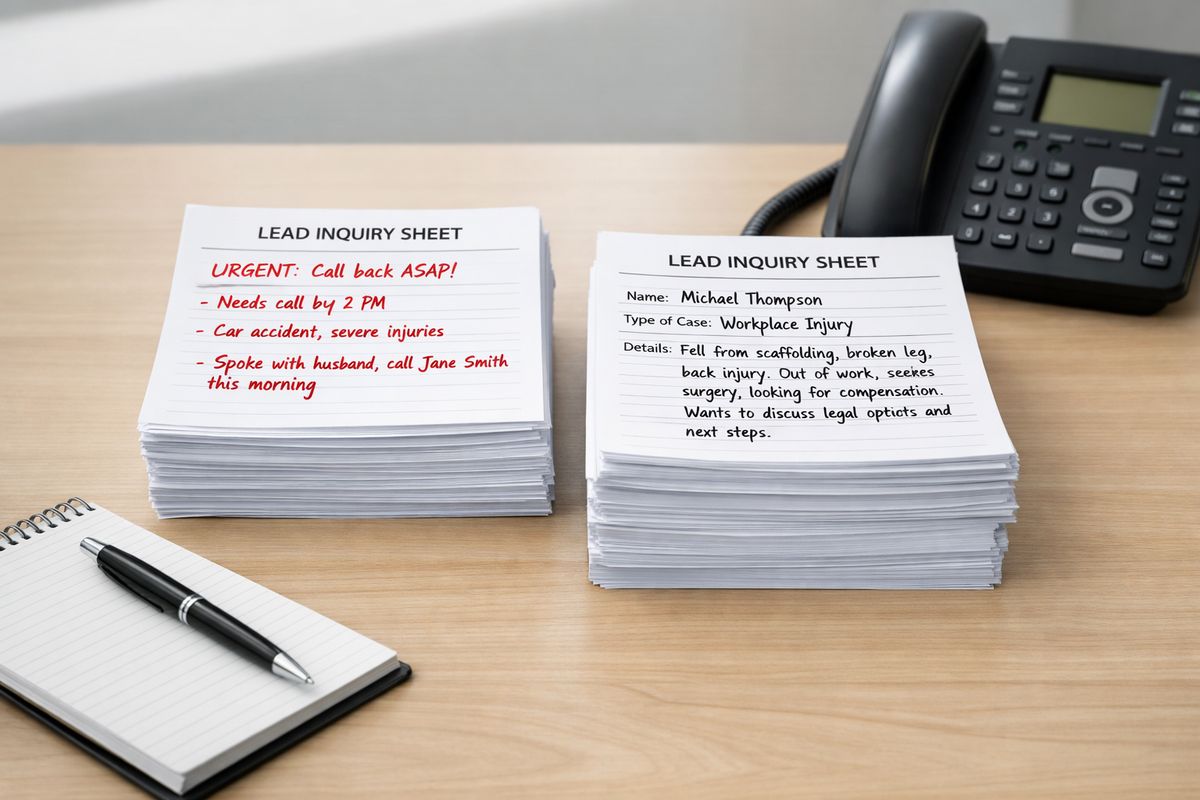
Before raising ad spend on either platform, audit your intake response time. Count how long it takes for a live call to get answered, a voicemail to get returned, and a form lead to get a human response.
That one fix often beats switching platforms.
Frequently Asked Questions
Are Local Services Ads better than Google Ads for lawyers?
For fast local lead capture, often yes. For control, targeting depth, and long-term scaling, Google Ads is usually better. The better choice depends on how quickly your firm responds to leads and how specific your case targets are.
Do law firms pay per click with Local Services Ads?
No. Local Services Ads typically uses a pay-per-lead model. Google Ads uses pay per click, which means you pay when somebody visits your site or calls through a click-based ad.
Can your law firm run both Local Services Ads and Google Ads at the same time?
Yes, and many firms should. LSAs can catch high-intent local prospects ready to contact you now, while Google Ads can cover broader searches and more customized messaging.
Which platform brings higher-quality legal leads?
Local Services Ads often brings stronger immediate-contact leads. Google Ads often brings better-fit leads for specialized or research-heavy matters. Quality depends heavily on setup, intake, and follow-up.
Is Google Screened required for Local Services Ads for lawyers?
In eligible legal categories, the screening and badge process is a major part of the platform’s trust appeal. Without that credibility layer, LSAs loses much of what makes it stand out.
What matters more than the ad platform itself?
Intake. If your firm misses calls, responds slowly, or fails to track which leads become consultations and cases, neither platform will perform the way it should.
If you want help sorting out which channel fits your firm, schedule a call with Attorney Visibility ai for more information.