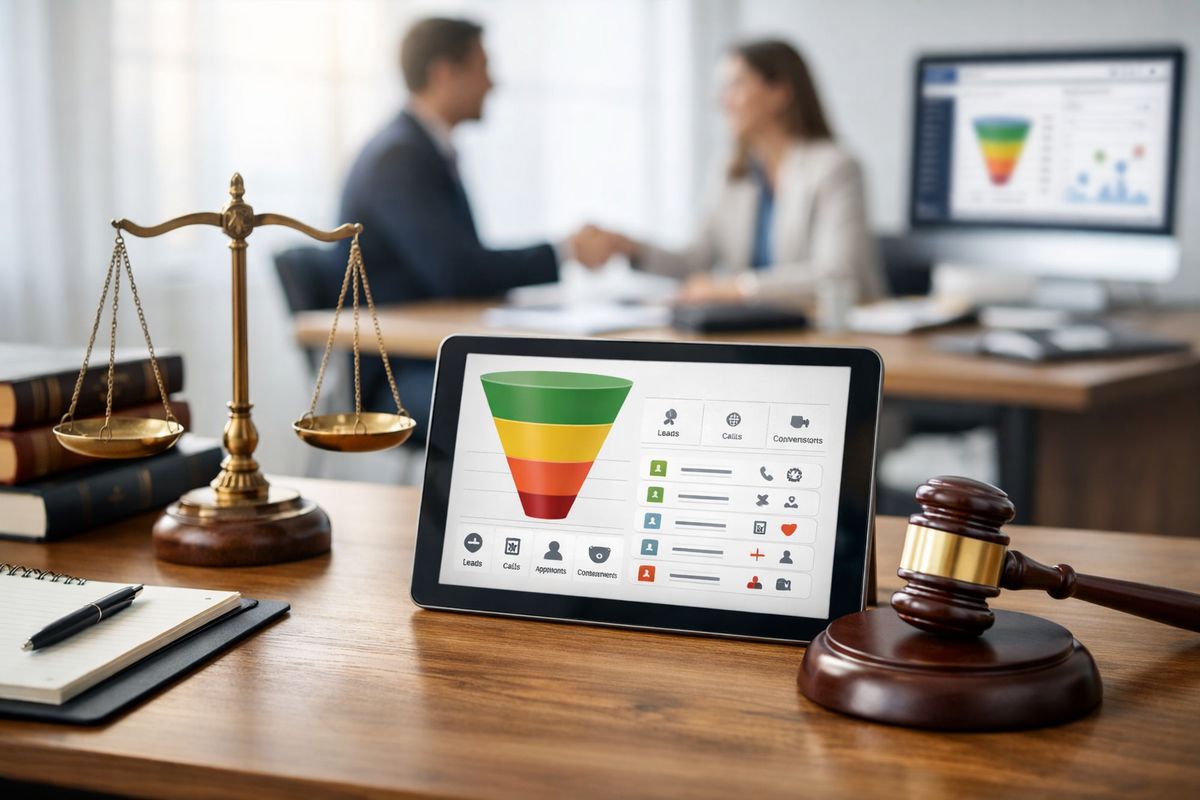
Legal lead tracking is the process of recording where each potential client came from, what happened after contact, and whether that lead became a signed case. If your phone rings, chat pings, inbox fills up, and referrals come in all before lunch, legal lead tracking is how you stop guessing and start seeing what is actually bringing in work.
What Legal Lead Tracking Actually Means
At its simplest, legal lead tracking is keeping a clean trail from first touch to final outcome. You want to know where a lead found you, how that person reached out, how fast your team responded, whether the matter was a fit, and what happened in the end.
That sounds basic, but in a busy firm it often is not. A call comes in from Google Ads, a form fill lands from organic search, a referral gets texted over by another attorney, and a live chat starts while somebody is already on the phone. By Friday, half the story is missing.
The simple version: following a lead from first contact to signed case
Think of it like tracking a package. You do not just want to know that something was shipped. You want to know where it started, where it paused, and whether it arrived.
A legal lead follows a similar path: click, call, form, consult, follow-up, hire or no hire. If somebody leaves a voicemail at 4:47 p.m. on a Tuesday and nobody logs it, calls back, or marks the result, that lead can disappear without anyone noticing. That is not a marketing problem alone. That is lost revenue hiding in plain sight.
Lead tracking vs. lead management
Here’s the distinction that clears up a lot of confusion. Lead tracking tells you what happened. Lead management is how your team responds and moves the lead forward.
So if a prospect came from Local Services Ads, filled out a form, got a callback in 12 minutes, booked a consult, and signed, tracking records that path. Management is the callback, the reminders, the consult scheduling, and the follow-up. The two work together, but they are not the same thing.

Why Busy Law Firms Need It
If your lead tracking is messy, money is getting lost. That is the plain truth.
Without tracking, you cannot tell which channels bring qualified matters, which ones bring noise, or where intake is dropping the ball. You can spend thousands on ads and still have no clear answer to a simple question: which leads actually turned into clients?
You can’t fix what you can’t see
Most lead loss is not dramatic. It is quiet. A form sits in an inbox. A call goes unanswered at lunch. A referral comes in through text and never gets entered anywhere. Somebody says, “We get a lot of bad leads from Google,” but nobody has the record to prove it.
That visibility gap is why so many firms feel busy without feeling efficient. If your firm is struggling to connect local visibility with actual intake, it helps to understand how showing up in map results affects case flow.
It helps you spend smarter, not just market harder
Lead volume can be misleading. Fifty leads from one source can look exciting until you notice only one was a fit. Meanwhile, eight leads from another source turned into three strong cases.
That is why legal lead tracking should connect marketing spend to retained clients, not just calls or clicks. If you are comparing paid channels, a breakdown of how LSAs and Google Ads differ in lead quality makes that point pretty quickly.
What You Should Track for Every Legal Lead
You do not need a giant spreadsheet with 40 columns. You need the few data points that actually explain performance.
Lead source
Start with where the lead came from. Google Ads, Local Services Ads, organic search, referral, directory, social media, email, direct call, all of that counts.
The troublemaker is “unknown.” Unknown source means your reporting has a hole in it. If too many leads fall into that bucket, you cannot tell what deserves more budget and what needs to be cut.
First contact details and timing
Track the date, time, contact method, and who answered first. Did the person call, fill out a form, start a chat, or send a text? Did somebody respond in 10 minutes or the next morning?
That timing matters because speed changes outcomes. In legal intake, the first firm to respond often gets the consult.
Practice area and qualification status
Not every lead belongs in your pipeline as a real opportunity. You need to know the matter type, location, urgency, conflict status, and whether the case fits your intake criteria.
This is where a lot of reporting goes sideways. If bad-fit leads and good-fit leads are lumped together, marketing looks worse than it is. A clear definition of what makes a lead worth pursuing keeps your numbers honest.
Outcome and value
The final piece is the result. Did the lead book a consultation, no-show, need follow-up, get declined, sign, or go elsewhere? If you can attach case value or estimated revenue, even better.
That closes the loop. Once you know source plus outcome, you stop measuring activity and start measuring business.
How Legal Lead Tracking Works Day to Day
This does not need to become a giant reporting project. The best systems are boring, consistent, and easy to follow.
Capture every lead in one place
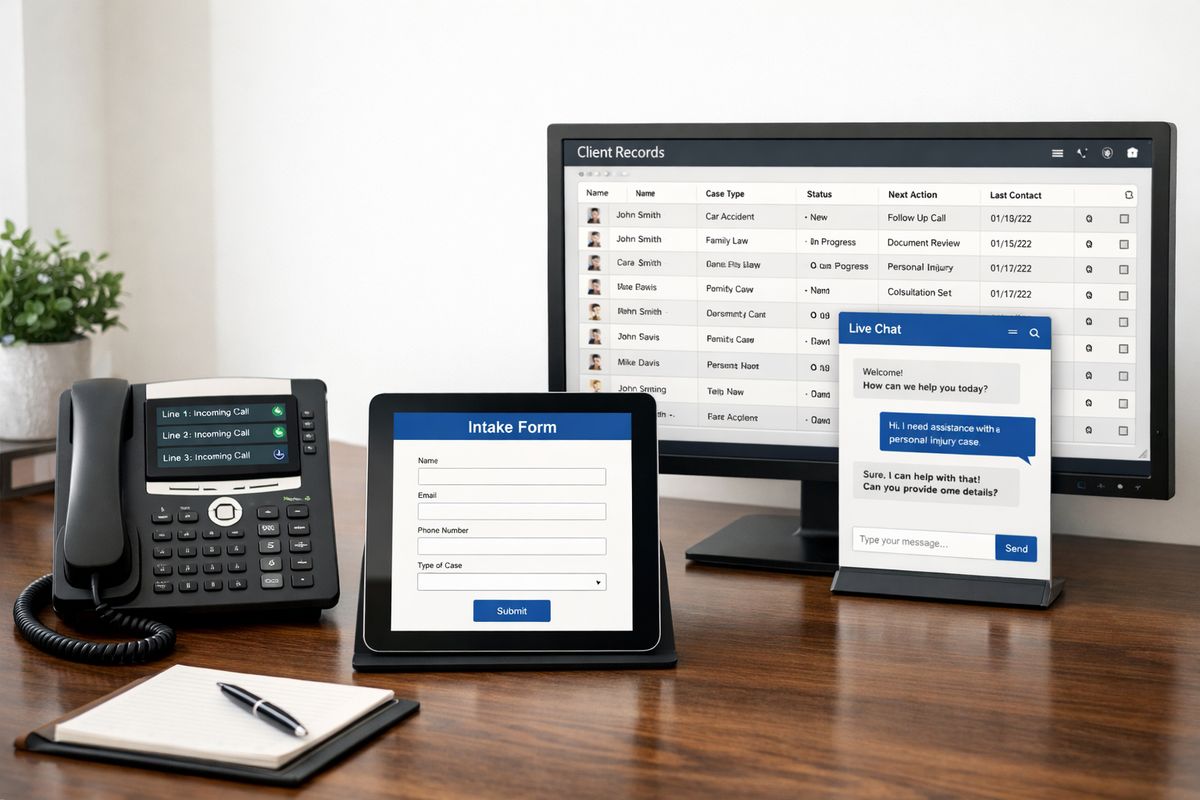
Calls, forms, chats, texts, and referrals need to land in one main system. That system can be intake software or a CRM, which is simply the place where lead details, notes, and follow-up live.
If lead data sits in five tools that do not connect, things slip. That is why many firms look at connecting intake and client data in one place.
Assign, respond, and follow up fast
Once a lead comes in, it should go to the right person right away. Then the response needs to happen fast, ideally within minutes, not hours. If there is no answer, follow-up should continue with a few attempts across call, text, or email.
The trick is consistency. Strong follow-up often matters just as much as lead source, especially when automated reminders and outreach help your team avoid dropped balls.
Review what turns into real cases
A weekly or monthly review shows you what is working. You can spot which campaigns produce consults, which intake steps stall, and which sources bring signed cases instead of empty volume.
Fancy charts are optional. Clear answers are not.
Common Tools and Methods Law Firms Use
Most firms piece this together with a mix of tools. What matters is what each tool helps you see.
Call tracking
Call tracking uses different phone numbers to show which ad, page, or campaign drove a call. It also gives you call logs, timestamps, and sometimes recordings.
That can be incredibly useful, especially if phone calls drive most intake. But call volume alone does not tell you enough. You still need to know whether those calls were qualified and whether they signed. A closer look at how source-based phone tracking works for firms helps here.
Intake forms, chat, and CRM tagging
Web forms and chat tools can capture source details automatically, then pass that information into your CRM with tags or labels. Those tags might note campaign, practice area, or lead type.
The catch is simple: if tagging is inconsistent, reports become junk fast. Good tracking depends on clean habits.
Reporting dashboards
A dashboard is just a quick snapshot. You want to see lead volume, response time, consults booked, signed cases, and cost per retained client in one glance.
Clarity beats flashy design every time.
Common Mistakes That Make Tracking Fall Apart
Most firms do not fail because they chose the wrong software. They fail because the process breaks.
Counting leads but not signed cases
If you stop at calls or form fills, you are only measuring noise. A busy top of funnel can hide weak results at the bottom.
The goal is retained matters. Phones ringing is nice. Signed cases pay the bills.
Letting leads live in too many places
A spreadsheet here, an inbox there, sticky notes at reception, a call log in another tool, and case software somewhere else, that is chaos. It is like trying to cook dinner with ingredients stored in three different kitchens.
Pick one place to hold the full story.
Skipping follow-up and blaming the source
Sometimes a good channel looks bad because intake was slow or inconsistent. If your team waited six hours to call back or gave up after one attempt, the source did not fail. The process did.
Judge channels after the follow-up is solid, not before.
How to Start Without Making This a Big Project
You do not need a six-month rebuild to get better tracking in place. Start small and make it stick.
Start with three must-have questions
For every lead, ask: where did this come from, did somebody respond fast, and did it become a signed case? That baseline alone will tell you more than most firms currently know.
Pick one system of record
Choose one main place for lead data. Not two. Not four. One.
That gives your team a shared source of truth and cuts down on tool hopping.
Try one weekly review
Set aside 20 minutes once a week to check sources, response times, and signed cases. That one habit can expose wasted spend, intake gaps, and strong channels surprisingly fast.
Frequently Asked Questions
What is legal lead tracking in plain English?
It is the record of where a potential client came from, how that person contacted your firm, what your team did next, and whether the matter turned into a signed case.
Is legal lead tracking the same as a CRM?
No. A CRM is the tool where lead details and follow-up often live. Lead tracking is the process of recording and reviewing what happened to each lead.
What is the most important thing to track first?
Start with source, response time, and signed-case outcome. If you know those three things, you already have a useful picture of marketing performance.
Why do law firms lose leads even when marketing is working?
Because intake breaks. Missed calls, slow follow-up, unlogged referrals, and weak qualification can waste good leads before a consultation ever gets booked.
How often should your firm review lead tracking data?
Once a week is a good starting point. A short weekly review is usually enough to catch problems before a month of budget disappears.
What changes once you understand your lead tracking?
You stop making decisions by gut feel. You can see which channels bring real cases, where intake is slowing down, and what deserves more attention.
If legal lead tracking feels messy right now, try one thing first: spend 20 minutes this week reviewing lead source, response time, and signed cases in one place. For more information and a clearer plan, schedule a call with Attorney Visibility ai.