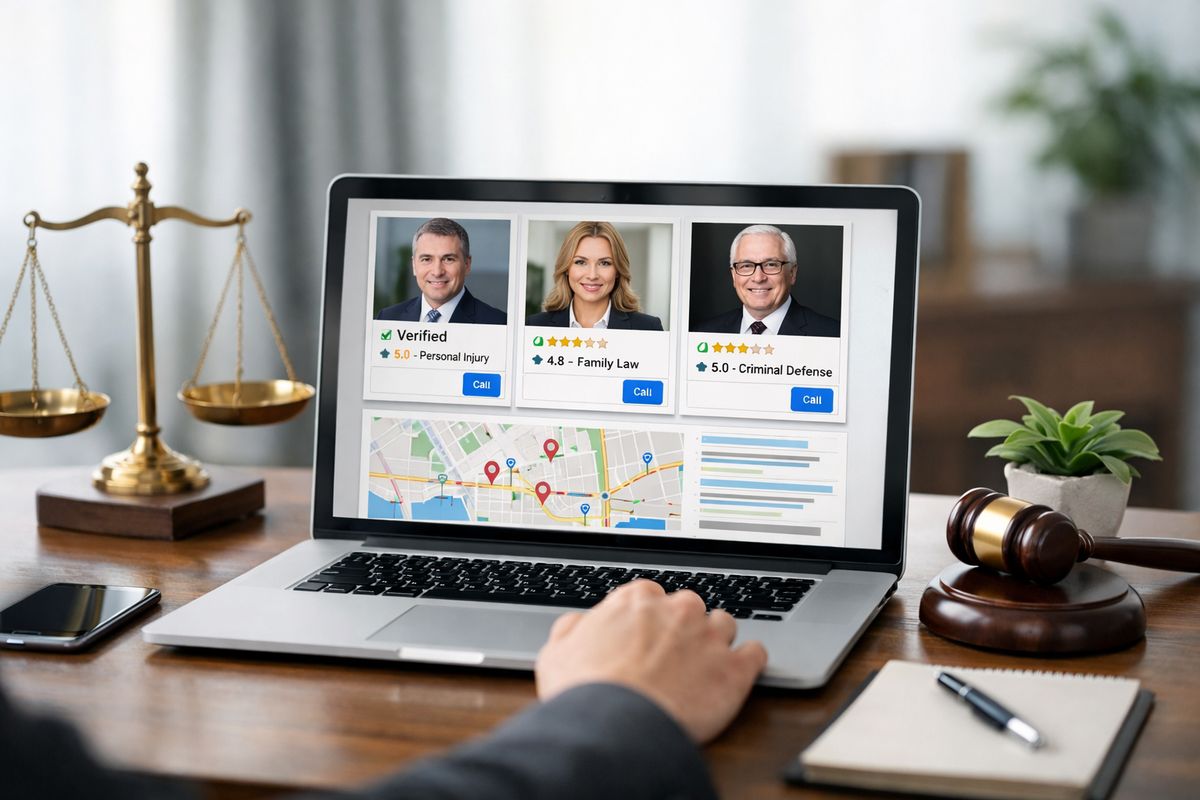

Local Services Ads for lawyers are Google’s pay-per-lead placements for eligible law firms, shown prominently when someone searches for legal help nearby. For firms evaluating growth channels, the business case is straightforward: based on analysis of legal intake programs, LSAs can shorten time-to-value, improve lead quality, and create a more direct path from search visibility to retained matters than many awareness-focused tactics.
What Local Services Ads for Lawyers Are and Why They Matter
Local Services Ads, often called LSAs, are not standard text ads. They are a local lead-generation product from Google that connects searchers with screened service providers, including eligible law firms, through calls and message leads. In plain English, the format is built for one purpose: helping a person with immediate legal intent find a nearby attorney quickly.
That distinction matters because legal marketing economics are shaped by urgency. A person searching for a divorce attorney, DUI lawyer, or estate planning attorney often wants immediate contact, not a long research process. In that context, ad placement alone is not the real value. The value is reduced friction between intent and intake.
Based on analysis of legal marketing programs, firms often see LSAs as a bridge between visibility and consultations. Traditional SEO may take months to gain traction. Standard PPC can generate traffic, but the firm still pays for clicks that do not become conversations. LSAs sit closer to the bottom of the funnel. They are designed to produce leads, not page visits.
How Local Services Ads Really Work
LSAs operate through an eligibility and ranking system that is simpler than PPC on the surface, but not simple in practice. A law firm must first qualify for the program, complete verification, configure its profile, and meet Google’s screening standards where required. Once active, the ad can appear when Google determines the search has strong local service intent and matches the firm’s category, location, and standing.
Visibility is influenced by several factors at once. Ranking is not controlled by budget alone. Reviews, responsiveness, business hours, proximity to the searcher, profile completeness, and overall account health all affect how often a firm appears and how many leads it receives. What the field data shows is that LSAs reward operational discipline as much as advertising spend.
Where LSAs Appear in Google Search
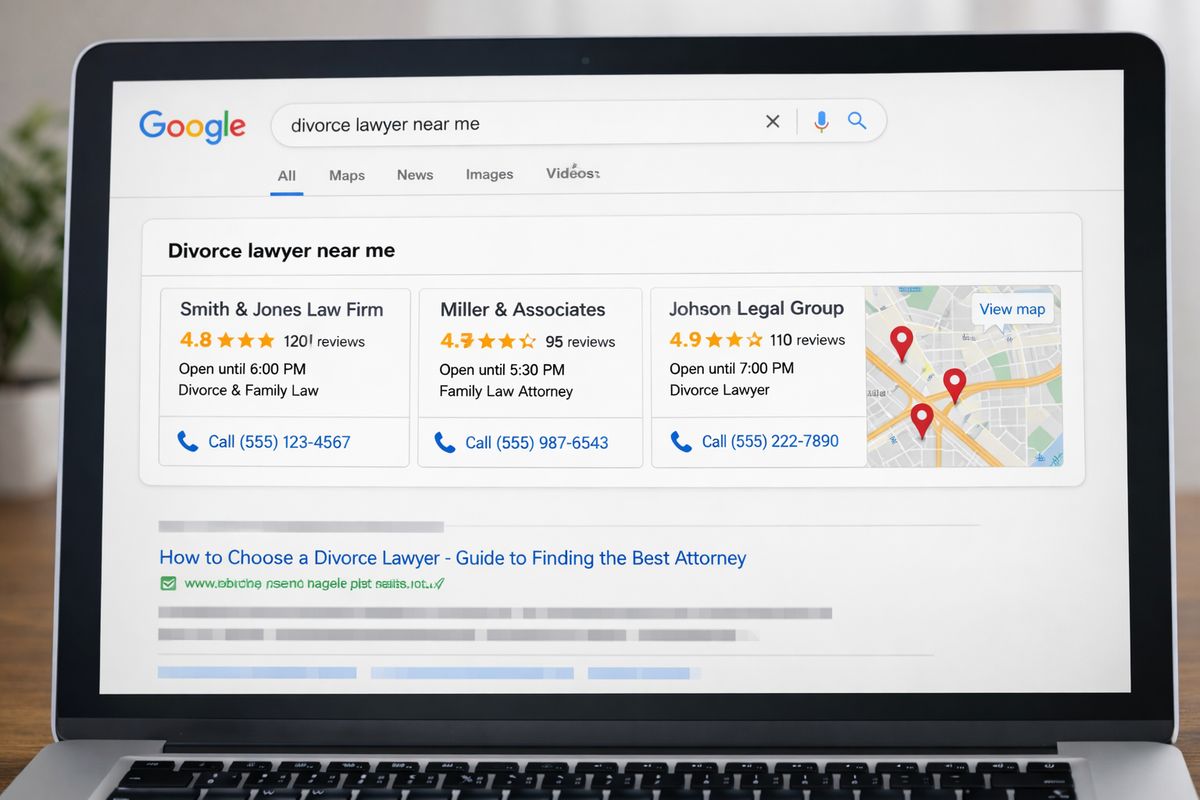
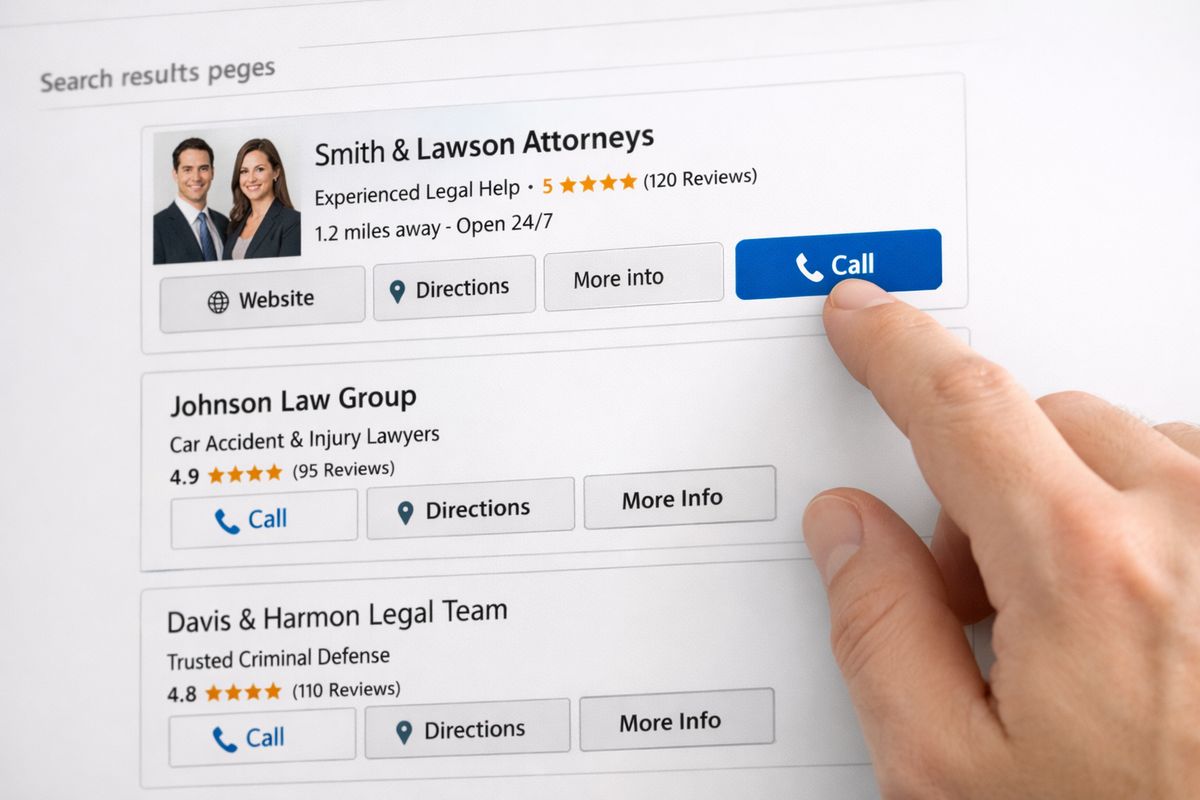
In many local-intent legal searches, LSAs appear above traditional paid search ads and above organic results. That placement changes user behavior immediately. The searcher often sees attorney names, ratings, business hours, and trust indicators before seeing a website result.
This matters because top-of-page placement captures attention at the moment of highest urgency. In practical terms, firms often experience more direct calls and fewer informational clicks. The ad unit acts less like a billboard and more like a matchmaking layer inside Google’s search experience.
Pay Per Lead, Not Per Click
The billing model is one of the clearest differences between LSAs and standard Google Ads. In LSA campaigns, firms generally pay for leads, such as qualified calls or messages, rather than paying every time someone clicks. According to Google’s Local Services Ads overview, the product is designed to help businesses pay for results rather than clicks.
That billing model changes how ROI should be measured. A click-based campaign is judged partly by traffic quality and landing page performance. An LSA campaign is judged more directly by lead qualification, contact rate, consultation rate, and signed-case rate. That is why many firms pairing LSAs with channel-level paid search comparisons reach clearer budget decisions faster.
The Google Screened Badge and Trust Effect
For eligible law firms, Google may display the Google Screened badge after the required verification and screening process is completed. The badge is a trust signal. It tells the searcher that Google has verified certain business and professional details under the program’s rules.
Trust markers matter in legal services because prospects often make decisions under stress. They may compare only two or three firms before calling. A visible credibility cue can influence conversion before a website visit ever happens. Firms seeking deeper context on this marker usually benefit from understanding how the badge affects local credibility.
The Four Drivers That Determine LSA Performance
LSA performance is shaped by four operational drivers. The recommendation is to evaluate these drivers before increasing budget, because most underperformance is caused by alignment failures, not a lack of spend.
Driver 1: Practice Area and Market Eligibility
Not every legal category is treated the same. Google’s support for law firm LSAs depends on practice area availability, program policy, and geography. A firm may be fully qualified as a business and still find that its market offers limited volume or uneven economics.
Based on analysis of local search programs, practice area fit is the first filter for expected performance. Consumer-facing categories with clear local demand usually perform better than categories with lower search volume or broader geographic buying patterns. If Google does not actively support the category in a given market, there is no optimization tactic that can create volume.
Driver 2: Proximity, Hours, and Responsiveness
LSAs are deeply tied to local matching. Service area settings, physical office relevance, business hours, and response behavior all affect delivery. A firm that appears available when a prospect searches is more likely to receive the lead than a similar firm that appears closed or routinely misses calls.
Responsiveness is often one of the strongest revenue drivers in the entire program. The data shows that firms answering quickly convert more consultations and often maintain better platform standing over time. In practice, LSA performance can rise or fall at the intake layer. That is why agencies frequently connect ad management with better call handling and source tracking.
Driver 3: Reviews and Reputation Signals
Reviews influence both visibility and conversion. A stronger review profile can improve a firm’s competitive position in the ad unit, and it can also improve the odds that a searcher chooses that firm over another displayed beside it.
Review quality matters more than raw awareness. A firm may be well known offline and still underperform if its Google review profile is thin, outdated, or inconsistent. Review velocity also matters. A living reputation profile signals relevance and recency. LSAs and local search are separate systems, but they both reward credible public feedback.
Driver 4: Budget, Bidding, and Lead Capacity
Budget still matters, just not in isolation. A higher weekly budget can increase potential delivery, particularly in competitive markets, but it does not guarantee top visibility if the account is weaker in reviews, responsiveness, or relevance.
Lead capacity is the overlooked part. Overspending without intake capacity reduces ROI because missed or poorly handled leads still create cost friction. The recommendation is to align spend with staffing, live answer coverage, and consultation scheduling capacity. Lead generation without lead handling discipline is rarely profitable.
What Triggers Local Services Ads for Lawyers
LSAs are usually triggered by high-intent local searches, not by casual information gathering. Google tends to show them when the query suggests a person wants professional help in a specific area and may be ready to call now.
Query Types That Commonly Surface LSAs
Common examples include searches such as “divorce lawyer near me,” “DUI attorney Chicago,” “estate planning lawyer near me,” and “immigration lawyer in Phoenix.” These queries combine service intent with local intent. The searcher is not researching legal theory. The searcher is looking for a nearby provider.
That is why LSAs often perform best in urgent or easily qualified consumer matters. The query itself signals intent, and the ad format shortens the path to contact.
Why Keywords Matter Less Than Many Firms Assume
Many firms assume LSAs operate like keyword campaigns. They do not. Category selection, service matching, location, reviews, responsiveness, and account standing often matter more than website keyword targeting. A firm cannot force LSA visibility simply by repeating practice terms on a page.
Website relevance still matters in the broader local ecosystem, but LSAs are not controlled like standard search campaigns. Firms that confuse the two often misdiagnose performance problems. In many cases, the issue is eligibility, profile configuration, or reputation strength, not keyword density.
Which Law Practice Areas Tend to Perform Best
LSAs usually perform best when consumer intent is immediate, local, and easy to qualify during intake. That pattern is consistent across many legal markets, though performance still varies by competition, case value, and response speed.
High-Urgency Consumer Practice Areas
Family law, criminal defense, estate planning, immigration, and bankruptcy often align well with the format. These categories share a few traits: the searcher often wants rapid contact, the service need is geographically anchored, and the first consultation can be scheduled quickly.
From a business-outcome perspective, these categories also tend to benefit from shorter time-to-conversation. A faster initial touchpoint can improve consultation rates and reduce lead decay.
Practice Areas With Caveats or Limited Availability
Personal injury is the most commonly discussed example here. In some markets, availability, pricing, and policy treatment may differ from other categories. Lead economics can also be less predictable because qualification standards are higher and competition is intense.
Other categories may face similar caveats if the local market lacks enough search volume or if the service is not consistently supported within Google’s current program rules. The recommendation is to validate category eligibility and expected economics before treating LSAs as a core acquisition channel.
Local Services Ads vs Google Ads vs Local SEO
The most common confusion in legal marketing is treating these channels as interchangeable. They are not. Each captures demand differently and operates on a different ROI timeline.
LSAs vs Traditional Google Ads
LSAs are pay-per-lead, while traditional Google Ads are usually pay-per-click. LSAs offer simpler ad units and less granular control. Google Ads provides deeper control over keywords, ad copy, landing pages, audience strategy, and testing.
That makes PPC more flexible but also more management-intensive. LSAs are narrower and closer to direct inquiry generation. Firms comparing channel economics often assess both formats together because the differences in billing, control, and attribution directly affect acquisition planning.
LSAs vs Map Pack and Organic SEO
LSAs are paid placements. Local SEO affects map visibility and organic rankings through a different system and a longer cycle. Reviews, location authority, and business consistency influence both environments, but they do so through separate mechanisms.
A firm can dominate LSAs and still underperform in maps, or rank well in maps and have no LSA presence at all. For firms struggling with local visibility outside the ad unit, issues often trace back to core profile and map presence problems.
When Firms Should Use Them Together
The strongest search programs usually combine channels. LSAs capture immediate high-intent local demand. PPC expands reach and testing control. SEO builds compounding visibility in maps and organic results over time.
That mix reduces channel risk. If one source becomes more expensive or less available, the firm still has other demand paths working. Based on analysis of legal acquisition programs, diversified search portfolios typically produce more stable consultation flow than single-channel strategies.
The Setup Process: From Eligibility to Going Live
An LSA program requires procedural setup. Firms that treat the launch as an operational project, rather than a simple ad activation, usually reach productive performance faster.
Step 1: Eligibility, Licensing, and Business Verification
The first step is confirming that Google supports the relevant legal category and market. The firm must also provide accurate business information, attorney licensing details, and required documentation. Name, address, and phone consistency matter because verification problems often begin with conflicting records.
Step 2: Background Checks and Google Screened Approval
Google’s screening process may involve attorney and firm verification at a high level, subject to current rules. Timeline varies, and delays are common when documentation does not match public records. Firms generally benefit from preparing bar details, business information, and supporting materials in advance.
Step 3: Profile Build-Out and Service Configuration
Once eligibility is confirmed, the firm configures its profile. That includes service categories, office hours, service areas, intake methods, and business descriptions. These fields influence both matching and conversion. A weak profile can go live, but it rarely performs well.
Step 4: Review Generation and Launch Readiness
Review acquisition should begin before launch, not after. Firms entering the platform with stronger rating strength and review count typically gain traction faster because they present lower friction to prospects from day one. Review generation also supports surrounding local visibility efforts, including stronger map-based presence over time.
What a Good Lawyer LSA Profile Includes
A strong LSA profile does not need marketing theatrics. It needs clarity, relevance, and trust.
Core Business Details
Firm name, phone number, office hours, service area, and practice categories should be accurate and consistent across all listings and systems. Mismatches create both verification risk and conversion friction. If a prospect sees one phone number in LSAs and another elsewhere, trust drops immediately.
Trust and Conversion Elements
Reviews are central, but not the only factor. Clear service descriptions, visible availability, and Google-provided trust indicators reduce uncertainty. In practical terms, a prospect deciding between similar firms often chooses the one that looks more responsive and more credible at a glance.
Costs, Lead Pricing, and ROI Expectations
Law firms usually ask the right first question: what does a lead cost? The better question is what a signed matter costs after qualification and follow-up.
How LSA Lead Costs Are Calculated
LSA lead pricing varies by market, practice area, competition, and lead type. A family law lead in a large metro can price very differently from an estate planning lead in a mid-sized market. Google sets pricing through its own system rather than through the standard auction logic familiar in PPC.
That means cost per lead should never be treated as cost per case. The gap between those two numbers is where profitability is won or lost.
Why Cheap Leads Are Not the Goal
Low lead cost without qualification discipline often weakens ROI. Based on analysis of legal marketing programs, firms that focus only on cheap lead volume often absorb more administrative waste, more unqualified contacts, and lower retained-case efficiency.
The recommendation is to evaluate the channel around qualified consultations and retained matters. A higher-cost lead that converts at two or three times the rate of a cheap lead is usually the better business asset. That is the same logic behind stronger screening and qualification standards for better prospects.
How to Evaluate Return on Investment
A useful LSA ROI model includes lead volume, contact rate, consultation rate, signed-case rate, average case value, and refund-adjusted acquisition cost. This framework is operational, not theoretical. If a firm cannot track those steps, it cannot judge the channel accurately.
That is why high-performing programs often connect LSAs to structured intake systems, CRM tagging, and follow-up workflows. Firms improving how marketing sources flow into case-management processes usually get clearer ROI visibility faster.

Common Lead Quality Problems and What Causes Them
Lead quality concerns are common, but weak quality is rarely random. Most problems trace back to setup, intake, or qualification design.
Mismatched Practice Area or Geography
Broad service settings can produce irrelevant inquiries. If the account is configured too loosely, Google may connect the firm with matters outside its preferred geography or outside its true service mix. Intake time gets wasted, and conversion rates drop.
Missed Calls and Slow Follow-Up
Missed calls are one of the costliest failures in LSAs. A prospect with urgent legal need often calls the next listing within minutes. Slow follow-up also weakens conversion on message leads. Firms that improve scheduling coverage, receptionist workflows, or after-hours systems typically recover performance faster than firms that only raise spend.
Disputed Leads and Billing Reviews
Some billed leads may qualify for dispute under Google’s rules if they are invalid. Disciplined billing review protects ROI. Agencies managing LSAs should audit lead quality regularly, dispute ineligible charges where appropriate, and report on net acquisition cost rather than gross spend alone.
Common Misconceptions About Local Services Ads for Lawyers
Misunderstanding the format leads to poor planning. Three misconceptions appear most often.
“Spending More Automatically Increases Visibility”
More budget can increase opportunity, but it does not override weak reviews, poor responsiveness, incomplete profiles, or low proximity relevance. LSAs are not won by spend alone. The field data shows that operational quality often determines who captures the marginal lead.
“LSAs Replace SEO and PPC”
They do not. LSAs are one demand-capture channel inside a wider search strategy. Firms with stronger results usually combine paid and organic programs, then align tracking and intake across all of them.
“Relevant Website Keywords Trigger More LSA Impressions”
Not in the way many firms assume. Website relevance can support the broader local presence, but LSA delivery is not controlled like keyword bidding in search ads. Category fit, geography, reviews, and account standing usually matter more.
How to Decide Whether LSAs Are a Fit for a Law Firm
LSAs are not universal. Fit depends on economics, staffing, and market structure.
Strong-Fit Conditions
The strongest fit usually includes local consumer practice areas, clear geographic focus, strong review foundation, and fast intake handling. It also helps when the firm has a defined qualification model and knows which matters produce the best revenue and retention outcomes.
Warning Signs That the Channel May Underperform
Weak phone coverage, poor review profile, unclear service mix, low local demand, and difficult qualification economics are common warning signs. A firm without disciplined intake often misreads the problem as media failure when the real issue is operational loss between lead and consultation.
What an Agency Should Manage in an LSA Program
For law firms evaluating agency support, the standard should be operational ownership, not surface-level ad monitoring.
Setup and Compliance Management
An agency should manage verification support, category setup, profile accuracy, screening coordination, and launch readiness. Errors at this stage delay activation and reduce early performance.
Ongoing Optimization and Reporting
Agency management should include lead auditing, dispute submission, review strategy, schedule adjustments, service-area refinement, and reporting tied to consultations and signed matters. Vanity metrics are not enough. The recommendation is to require reporting that shows retained-case economics.
Intake Coordination With Marketing
The strongest agencies connect marketing to intake operations. That includes receptionist coverage, CRM tagging, call routing, follow-up timing, and source attribution. What the field data shows is that many LSA programs fail at the handoff, not at ad delivery. Firms assessing partners should prioritize agency selection standards tied to measurable business outcomes.
Frequently Asked Questions
Are Local Services Ads for lawyers available in every practice area?
No. Availability depends on Google’s current category support and local market coverage. A firm may be eligible as a business but still find that a specific practice area has limited or no active LSA inventory in that geography.
How long does it take for a law firm to get approved?
Approval time varies based on documentation accuracy, verification requirements, and screening delays. Some firms move through the process relatively quickly, while others face longer timelines if licensing, business records, or identity details do not align.
Do LSAs send traffic to a website?
They can, but their primary function is direct lead generation through calls and messages. In many cases, the ad unit is designed to help the prospect contact the firm without a long website research path.
Can a law firm dispute bad LSA leads?
Yes. Google allows disputes for certain invalid leads under its rules. Regular billing review is part of good program management because refunded invalid leads improve true acquisition cost reporting.
What matters more, budget or reviews?
Both matter, but reviews often shape both visibility and conversion more than firms expect. A larger budget cannot fully compensate for weak reputation signals or poor responsiveness.
Recommendation
Local Services Ads should be treated as a high-intent local acquisition channel, not a passive listing. The recommendation is to launch only when eligibility, reviews, and intake responsiveness are already in place, then manage the program against signed-case ROI rather than raw lead volume. Firms seeking a more structured evaluation of fit, setup, and performance management should schedule a call with Attorney Visibility ai for more information.