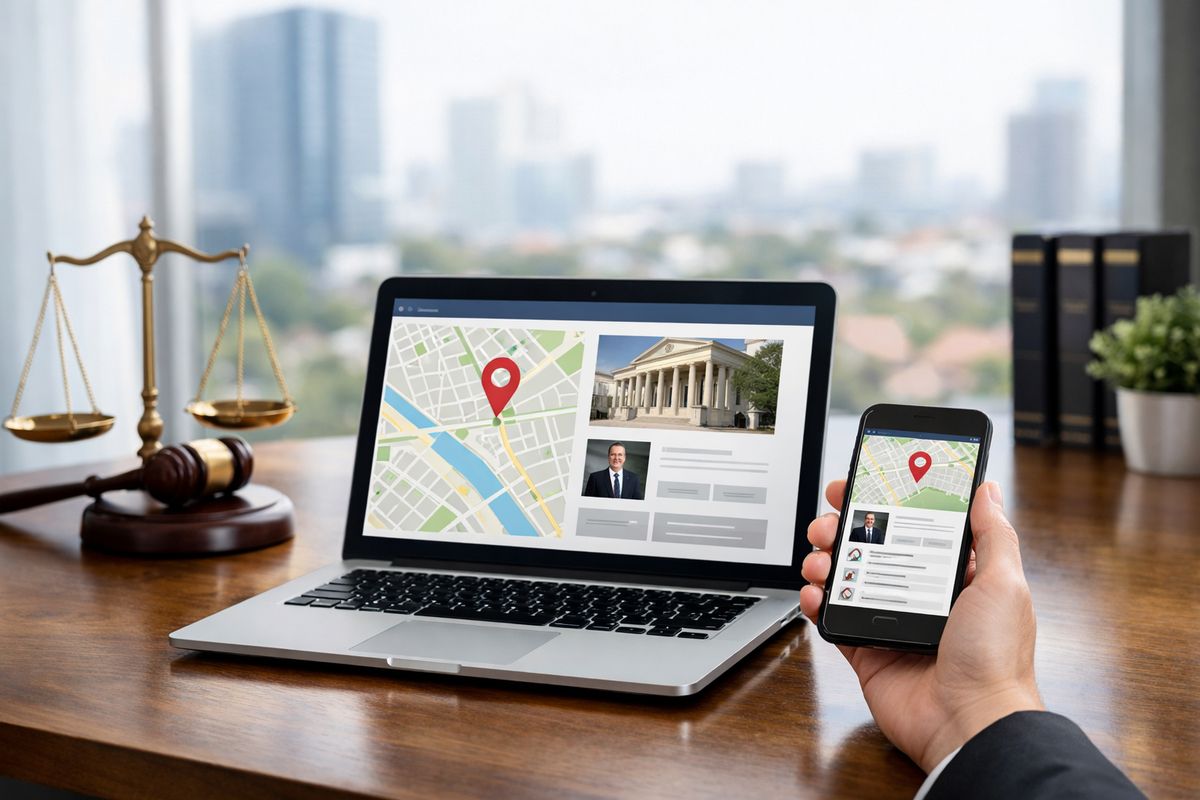
You publish a city page, add the practice area, swap in the town name, and wait for the phone to ring. Then nothing. Better local landing pages are not about repeating city names until the copy sounds unnatural, they are about matching real local intent and making it obvious that your firm can help someone in that place, with that problem, right now.
Why most local landing pages for law firms fall flat
Most law firm local landing pages fail for a simple reason: they look like placeholders. The page says “serving Scottsdale” or “helping clients in Mesa,” but everything else could belong to any firm in any market. That kind of page may exist, but it does not persuade.
Google has also gotten much better at spotting thin location content. A page built only to catch search traffic, with barely changed copy from one city to the next, usually sends weak quality signals. Even when it ranks for a while, it often converts poorly because a stressed-out person can feel the generic tone immediately.
Here’s the thing: local landing pages work when the page reflects actual local search behavior. Someone searching “car accident lawyer in Scottsdale” is not looking for a broad statement about statewide service. That person wants signs of local relevance, a clear legal fit, and a fast next step. If your page misses any of those, it falls flat.
What a local landing page needs to do for your firm
In plain English, local landing pages are dedicated pages built around a specific place and a specific legal need. That place might be a city, suburb, neighborhood, or service area. The legal need might be personal injury, family law, criminal defense, estate planning, or another practice area with clear local demand.
Each page has two jobs at once. First, it has to help your site show up for location-based searches. Second, it has to reassure a potential client that your firm can actually help in that area. That second job matters just as much as the first. Rankings without calls are just nice-looking reports.
This is why good pages sit at the intersection of SEO and conversion. The page structure, headings, internal links, metadata, and location language support visibility. The trust signals, useful details, and contact flow support action. If an agency only talks about ranking, that is only half the job. A better benchmark is how local pages connect to your broader local search strategy for law firms.
The difference between a location page and a doorway page
A location page is a real page with a real purpose. It gives useful information for a specific area, offers clear next steps, and reflects your firm’s actual service footprint.
A doorway page is the opposite. It is a thin, near-duplicate page made mainly to capture traffic for lots of place names. Same copy, same structure, same promise, just a different city dropped into the headline. That approach creates risk because search engines tend to treat low-value duplication as a sign that the page exists for ranking manipulation rather than user benefit.
The difference comes down to substance. A legitimate local page has distinct value, local context, and enough original detail to justify its existence. A doorway page feels like a stack of photocopies with different labels taped on top.
The core ingredients of a strong law firm local landing page
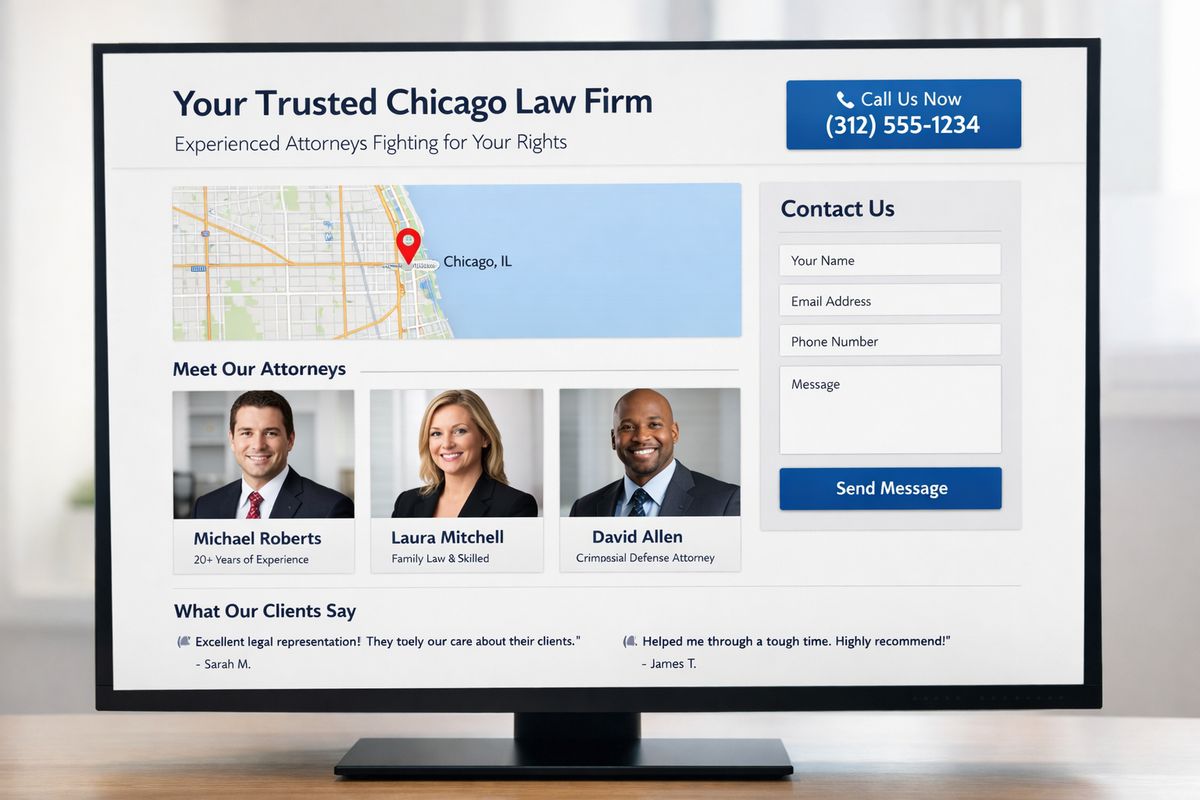
Strong law firm local landing pages tend to share the same foundation. The page stays focused on one practice area, gives clear local cues, builds trust quickly, and makes it easy to contact your firm without hunting around.
That sounds obvious, but a lot of pages miss one of those pieces. Some are locally relevant but vague about the legal issue. Some explain the service well but could belong anywhere in the country. Some look polished but hide the phone number below a wall of copy. Good local pages do not force visitors to connect the dots.
If you are evaluating agency work, this is where skill becomes visible. A strong agency can show how the page is supposed to rank, what local signals it uses, how it supports conversion, and how it fits into nearby assets like your Google Business Profile and maps visibility. That overlap matters because showing up more consistently in local map results often supports the same trust and location signals that help landing pages perform.
A location-specific headline and page angle
The headline should pair the legal service with the place naturally. “Car Accident Lawyer in Scottsdale” works because it matches what someone may actually search. But the trick is not the formula, it is the angle beneath it.
A strong page angle speaks to the client’s problem, not just the keyword. If the page opens by explaining what happens after a crash on Loop 101, or what to expect when dealing with an insurer after a collision near Old Town, the content immediately feels more grounded. That is very different from a page that simply says your firm proudly serves Scottsdale three times in the first paragraph.
Local proof that feels real
Local proof is where a page starts sounding believable. Useful local details can include office location, service area language, nearby courts, neighborhoods served, local traffic patterns, common claim issues in the region, or what an initial consultation looks like for someone nearby.
Specificity matters. A page that mentions downtown Phoenix courthouses, or the difference between serving clients in Chandler versus central Phoenix, does more than fill space. It signals familiarity. It tells a potential client that your page was built with a real place in mind.
That does not mean stuffing every paragraph with landmarks. It means adding the kind of details that would naturally come up in a conversation with someone who lives there.
Trust signals that help someone take the next step
This is where conversion often happens. A visitor lands on the page, scans for reassurance, and decides whether your firm feels credible enough to contact.
Good trust signals include attorney bios, testimonials, review snippets, bar admissions, awards, media features, case results where appropriate, and plain-language explanations of your process. Contact options matter too. A clear phone number, a short form, and a visible consultation option do more for lead flow than an extra 500 words of filler.
If your intake process is part of your advantage, say so. For example, if your team responds quickly, uses after-hours answering, or connects inquiries into a structured follow-up process, those details can support confidence. That is especially true if your lead handling ties into how firms manage consult requests and follow-up.
How Gemini can help you build better local landing pages faster
Gemini can be genuinely useful here, but only if you treat it like a drafting and research assistant, not a replacement for judgment. It can speed up the work that usually slows content production: organizing page sections, identifying likely client questions, drafting rough variations, and tightening language.
That speed matters when you need multiple local landing pages and do not want every draft to start from a blank page. But speed is not the finish line. Your firm’s actual experience, compliance requirements, intake process, and local knowledge still have to shape the final page.
The catch is simple: AI makes it easier to produce passable content at scale, which also makes it easier to produce forgettable content at scale.
Use Gemini for research prompts and page structure
A smart use of Gemini is upfront planning. You can use it to map likely search intent, suggest page sections, cluster FAQs, and surface the common concerns someone in a certain city may have before calling a lawyer.
That helps you get to a cleaner brief faster. Instead of starting with “write a city page,” you get a structured plan: local introduction, legal issue overview, area-specific context, trust section, FAQ, and contact path. That is far more useful than a generic first draft.
Use Gemini to draft local variations without sounding copy-pasted
Gemini can also help create first drafts across several locations, but only if each page keeps sections that are truly local. Shared structure is fine. Shared messaging is fine. Shared paragraphs with city names swapped out are not.
A better approach is to keep a flexible template and customize the parts that carry local value. That might include area-specific FAQs, office logistics, nearby courts, commuting realities, neighborhood references, or examples of the kinds of cases that tend to arise in that market. If every page reads like a name swap, it will feel thin. It is the website version of swapping nametags at the same event and hoping nobody notices.
Use Gemini to improve clarity, not replace legal review
Gemini is good at tightening headlines, simplifying legal language, and making long sections easier to scan. That is useful because stressed-out people do not read law firm pages like law review articles. They skim, pause, and look for the sentence that tells them they are in the right place.
But AI should never invent attorney claims, outcomes, guarantees, office details, or local experience. Every page still needs firm review. That includes advertising compliance, state bar rules, disclaimers, and factual accuracy. If an agency talks about AI as a magic button but cannot explain review safeguards, that is a problem. The broader question is not just whether AI is used, but how law firms are using AI in marketing without losing control.
What to include on each page if you want better rankings and better leads
A good local landing page has to do more than exist. It has to answer search intent, establish local relevance, and remove friction from the next step. If any one of those is missing, the page gets weaker.
Localized service copy
Each page needs original service copy that speaks to the legal issue in that market. Original does not mean writing a novel. It means giving the page a reason to exist beyond the city name.
That can include common client concerns in the area, how your process works for nearby residents, what timelines often look like, and what practical questions tend to come up before someone books a consultation. A personal injury page in Tempe, for example, may naturally emphasize traffic corridors, insurance friction, or access to nearby medical treatment in a way that a similar page elsewhere would not.
Contact details, map signals, and conversion paths
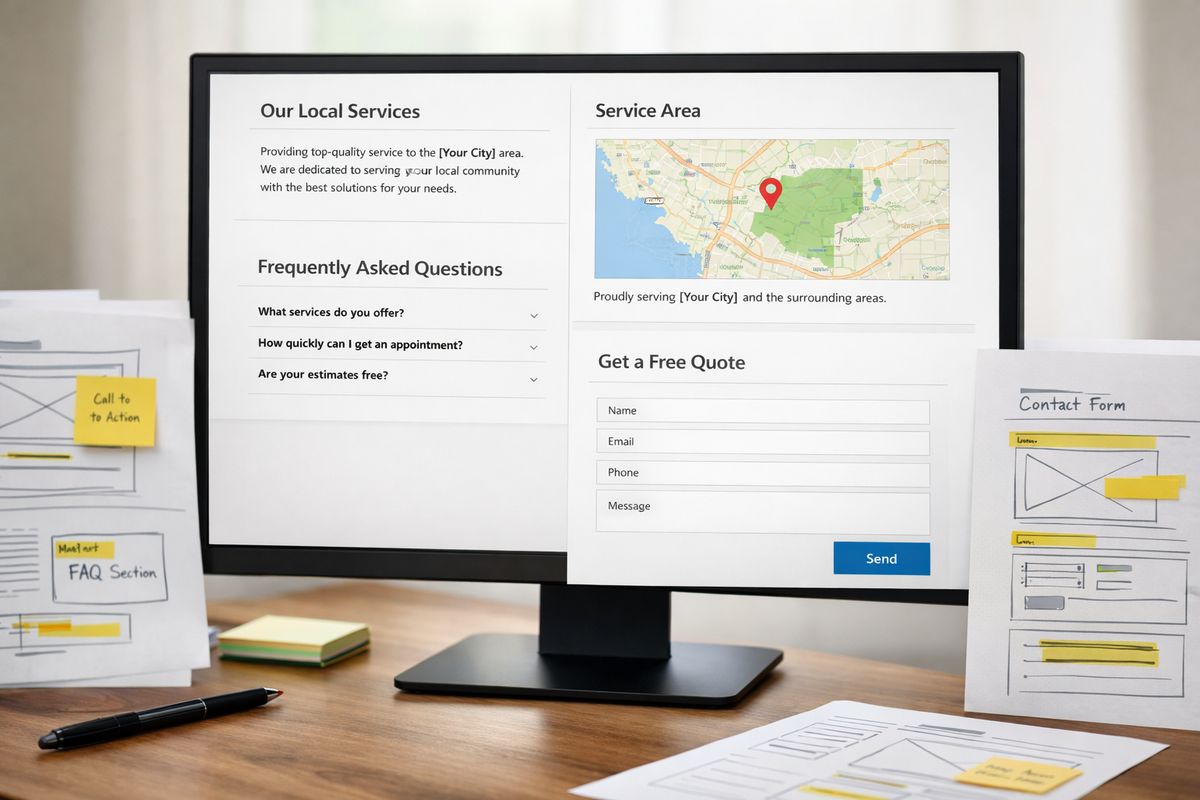
This section is often more important than firms expect. Clear contact details, office information, click-to-call buttons, embedded map elements where relevant, short forms, and booking options all reduce friction.
Consistency matters too. If your name, address, and phone details conflict across your site, your listings, and your page content, confusion follows. So do missed opportunities. Local pages should support, not contradict, your visibility setup. That includes keeping your business profile details aligned with your site.
Tracking matters just as much. If you cannot tell which page generated a call or form fill, you cannot judge page quality. A serious agency should explain how law firms track inbound calls without losing local performance clarity.
FAQs that match local search intent
FAQs are one of the easiest ways to improve both relevance and usability. Good questions often cover jurisdiction, office visit expectations, consultation logistics, service areas, travel distance, nearby courts, or whether you can help without an in-person meeting.
The best FAQs sound like real pre-contact questions, not SEO padding. If someone is anxious, confused, or short on time, a strong FAQ section can be the thing that tips the page from passive visit to active inquiry.
Common mistakes that quietly weaken local landing pages
A weak local page is not always obviously broken. Sometimes it just loses power little by little, through repetition, awkward copy, or details that never got reviewed.
Copying the same page across every city
This is the most common problem, and it is usually easy to spot. Same introduction, same body copy, same trust section, same CTA, different city. That undercuts trust because the page feels interchangeable.
People notice sameness quickly. Search engines do too. If the page could be moved from Glendale to Gilbert with almost no edits, it probably does not carry enough local value.
Writing for search engines instead of stressed-out people
Keyword-heavy copy usually sounds robotic, and robotic copy performs badly for legal services. Someone looking for a lawyer is rarely in a relaxed browsing mood. Clarity, empathy, and speed matter more.
A better page uses natural location language, answers practical questions, and makes the next step feel simple. Search visibility matters, of course, but not at the expense of sounding human.
Forgetting compliance, accuracy, and firm review
Wrong office details, sloppy claims, outdated attorney info, and unreviewed AI output can do real damage. Legal marketing has tighter stakes than most service industries. A page that moves fast but says the wrong thing is expensive in all the ways that matter.
Any content workflow should include legal review, fact checks, practice-area approval, and attention to attorney advertising rules. This is non-negotiable.
How to judge whether an agency can actually help with local landing pages
Plenty of agencies can talk about local SEO. Fewer can explain how local landing pages should work for a law firm specifically, with legal compliance, intake realities, and lead quality in mind.
A good agency should be able to connect page strategy to rankings, conversion, tracking, and actual case intake. If the conversation stays vague, that tells you a lot. It also helps to compare the agency’s thinking against broader advice on choosing a marketing partner for your firm.
Questions to ask before you hire
Ask direct questions. How do you avoid duplicate content across cities? How do you research local intent? How do you use Gemini or other AI tools in the workflow? What gets reviewed by your firm before publishing? How do you measure rankings, calls, form fills, and lead quality?
Good answers should sound concrete, not polished. You want process, examples, and trade-offs, not buzzwords.
What good deliverables should look like
Strong deliverables usually include content briefs, page outlines, location-specific sections, review workflows, on-page SEO guidance, internal linking plans, and layouts designed to convert. You should be able to see where the local value lives on each page.
If all you get is a promise of content volume, that is not enough. Volume is easy. Distinct, effective pages are harder.
Red flags worth noticing early
Watch for promises of hundreds of pages in a week, vague AI workflows, no legal review process, no examples by practice area, and no plan for measuring lead quality. Those are not small issues. Those are signs that the pages may be built for output, not outcomes.
Another red flag is an agency that treats all leads as equal. Better local pages should support better inquiries, not just more traffic. That distinction becomes clearer when you look at what separates stronger prospects from empty lead volume.
A simple rollout plan for your first few local landing pages
Start with one high-value practice area and two or three priority locations. Pick places where you already have some traction, real service capability, or strong revenue potential. Build those pages well before expanding.
Then measure what happens. Look at rankings, yes, but also calls, form fills, consult quality, and how fast leads move through intake. Revise the pages based on what people actually respond to. The best local landing page strategy usually gets sharper after a few live rounds of data.
Before doing anything bigger, review one existing city page on your site and highlight every sentence that could belong to any firm in any town. Then fix those sections first.
Frequently Asked Questions
How many local landing pages should a law firm create?
Start small. A few strong pages for priority practice areas and locations usually outperform dozens of thin pages. Expand after you see real results.
Can local landing pages hurt SEO if they are too similar?
Yes. If pages are near-duplicates with city names swapped in, search engines may treat them as low-value or doorway-style content. That can weaken rankings and conversions.
Should every local landing page include an office address?
Not always. If you have a real office in that location, include accurate office details. If you serve an area without a physical office there, be clear about the service area and avoid misleading location signals.
Is Gemini safe to use for law firm landing pages?
It can be useful for research, outlining, and drafting, but only with careful review. You should never publish AI-generated legal claims, guarantees, or local details without checking every line.
What matters more on a local page, SEO or conversion?
Both matter, but conversion often gets ignored. A page that ranks and does not generate consults is underperforming. The best pages handle visibility and trust at the same time.
How long should a local landing page be?
Long enough to answer the search, establish local relevance, and make the next step easy. In many cases, that means a page with real substance, not a thin 300-word placeholder and not a bloated page full of repetition.
If your current local landing pages feel interchangeable, that is the first thing to fix. Schedule a call with Attorney Visibility ai for more information and a closer look at how better local landing pages can bring in stronger leads.