
If ChatGPT SEO feels like a shortcut your firm should be using, that instinct is partly right. The faster answer is this: ChatGPT can absolutely make law firm SEO quicker, but it should not be running the strategy. What actually works is using AI for speed and support, then putting human legal SEO judgment in charge of rankings, trust, and signed cases.
What “ChatGPT SEO” actually means for a law firm
For a law firm, ChatGPT SEO does not mean handing content production to a chatbot and hoping Google rewards the effort. It means using ChatGPT to help with tasks like outlining practice area pages, drafting FAQ sections, suggesting title tags, cleaning up headings, and turning attorney notes into a usable first draft.
That can save real time. A page that once took a blank screen, two coffee refills, and half a Tuesday to start can suddenly have structure in ten minutes. But speed is only one part of SEO, and honestly, it is not the deciding part.
The real question is simpler: does the work help your firm get found by the right people and turn that visibility into consultations? In legal marketing, that depends on more than text generation. It depends on search intent, local competition, trust signals, technical site health, review quality, practice area positioning, and the accuracy of every claim on the page.
So “ChatGPT SEO” is best understood as AI-assisted SEO. Support tool, not strategy brain.
ChatGPT vs traditional law firm SEO support at a glance
For most law firms, agency-led SEO is the better choice if the goal is steady lead generation. ChatGPT wins on speed and low upfront cost. Traditional legal SEO support wins on everything that actually moves competitive rankings and signed cases.
Here is the quick comparison:
| Factor | ChatGPT-assisted SEO | Traditional agency-led SEO |
|---|---|---|
| Speed | Very fast drafts and ideas | Slower, more review-heavy |
| Cost upfront | Low | Higher |
| Legal accuracy | Unreliable without review | Stronger with legal editing |
| Local SEO execution | Limited | Full campaign support |
| Strategy depth | Surface-level | Competitive and intent-driven |
| Trust signals | Cannot create real credibility | Builds and highlights credibility |
| Conversion focus | Weak by default | Stronger page and intake alignment |
| Risk control | Requires close supervision | Better safeguards |
The tradeoff is not complicated. ChatGPT helps you produce more. A good law firm SEO agency helps you produce the right things, in the right markets, with a better chance of turning traffic into matters.
If you want a broader side-by-side view of AI and traditional search work, this breakdown of how AI tools stack up against standard legal SEO helps frame the decision clearly.
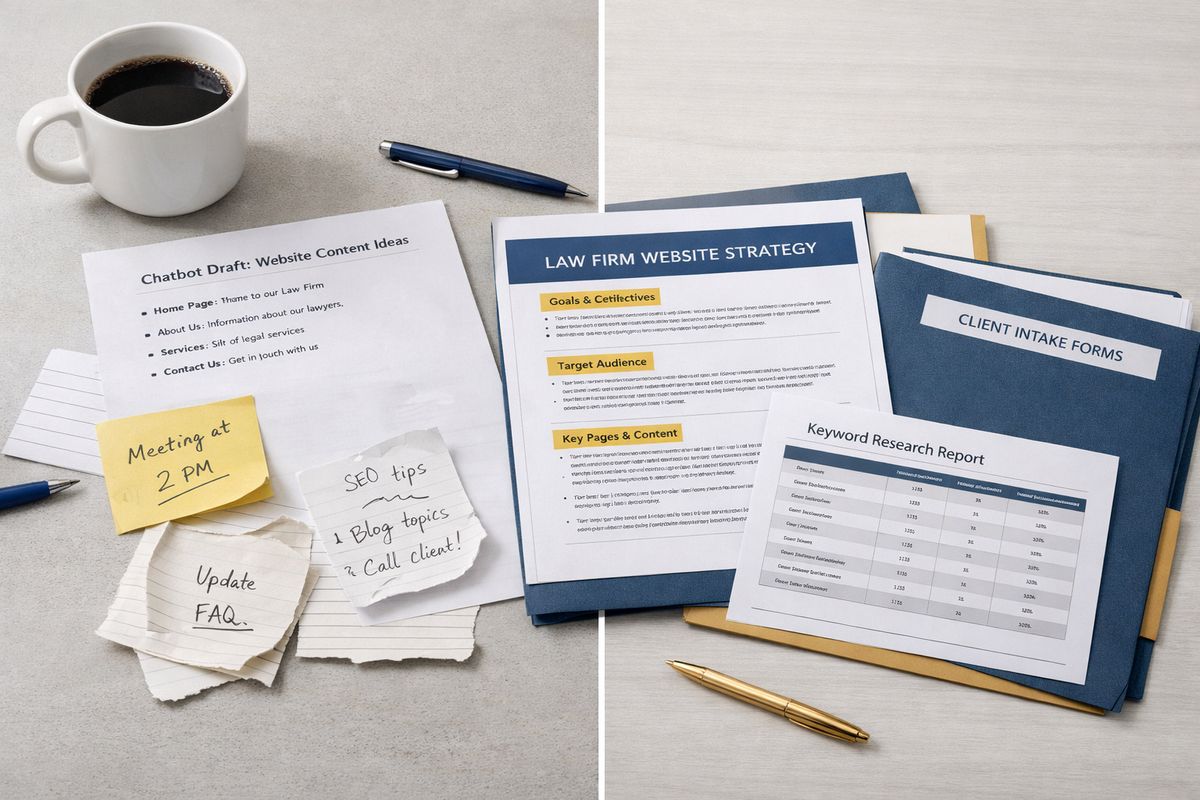
Speed and efficiency
ChatGPT is extremely good at removing startup friction. If your firm needs ten FAQ questions for a car accident page, a meta description for a criminal defense page, or an outline for “what to do after a slip and fall,” the tool gets you there fast.
That matters because SEO has a lot of repetitive work inside it. Drafting title tags, organizing subtopics, rewriting paragraphs in plainer English, and repurposing one page into three related assets all take time. ChatGPT can shrink those tasks dramatically.
But speed has a catch. Fast output is not the same as useful output.
Human-led SEO takes longer because the work usually starts with actual research. What are people in your city searching? Which practice area terms bring consultations instead of low-intent clicks? Which competitors dominate the map pack? Which pages already rank on page two and deserve focused improvement? None of that comes from a quick prompt.
Rushing also creates thin content, which is content that says a lot without answering much. Legal pages written too quickly often sound polished while repeating generic advice. Google has gotten better at spotting that kind of page, and potential clients can feel it too. If someone is searching at 11:40 p.m. after an arrest or right after a crash, vague copy is not reassuring.
So yes, ChatGPT makes production faster. But speed only helps when your direction is already right.
Content quality and legal accuracy
This is where many firms get burned.
ChatGPT can write clean, confident prose about almost any legal topic. The problem is that confidence is not accuracy. Legal content needs nuance: state-specific rules, procedural differences, deadlines, exceptions, and careful wording around outcomes. A paragraph can sound excellent and still be wrong in a way that creates risk.
That risk is higher for practice areas where trust is fragile and consequences are serious. Personal injury, criminal defense, immigration, family law, employment law, and estate disputes all carry emotional and legal weight. If a page overstates rights, misstates timelines, or blurs jurisdictional differences, it stops being a marketing shortcut and becomes a liability.
Human-led SEO usually includes attorney review, editorial revision, and intent matching. That means the content is not just readable. It is more likely to be aligned with what someone actually needs to know before calling your office. A good page answers the search, reflects your jurisdiction, and avoids the puffed-up language that makes legal marketing feel fake.
The best approach is simple: let ChatGPT help shape the first draft, then make sure your firm, or your agency with legal content experience, turns it into something accurate and specific.
Search strategy and keyword targeting
ChatGPT is useful for idea generation. Ask for blog topics around truck accidents or custody disputes and you will get a long list in seconds. Ask for related questions, semantic terms, or heading ideas and you will probably get a decent starting point.
That is not the same as keyword strategy.
Real keyword targeting means understanding what potential clients type when intent is high, what phrasing varies by market, and what pages deserve standalone treatment. “Car accident lawyer,” “rear-end collision attorney,” and “what is my whiplash claim worth” are connected, but they do not belong to the same stage of the search journey.
A strategy-first SEO campaign maps those differences. It decides what should be a core practice area page, what should be a location page, what should be a supporting article, and what should not be created at all. It also avoids the common AI habit of producing five overlapping pages that compete with each other.
That is especially relevant if your firm wants visibility in AI-driven answers as well as classic Google results. Understanding where law firms should focus between traditional search and AI discovery keeps your content plan from drifting into busywork.
ChatGPT can suggest targets. It cannot reliably choose the right battles.
Local SEO for law firms
Local SEO is where the gap gets obvious.
ChatGPT can help draft city page content, suggest responses to reviews, or create FAQ ideas for a Google Business Profile. Those are useful support tasks. But local SEO success comes from execution that extends far beyond writing.
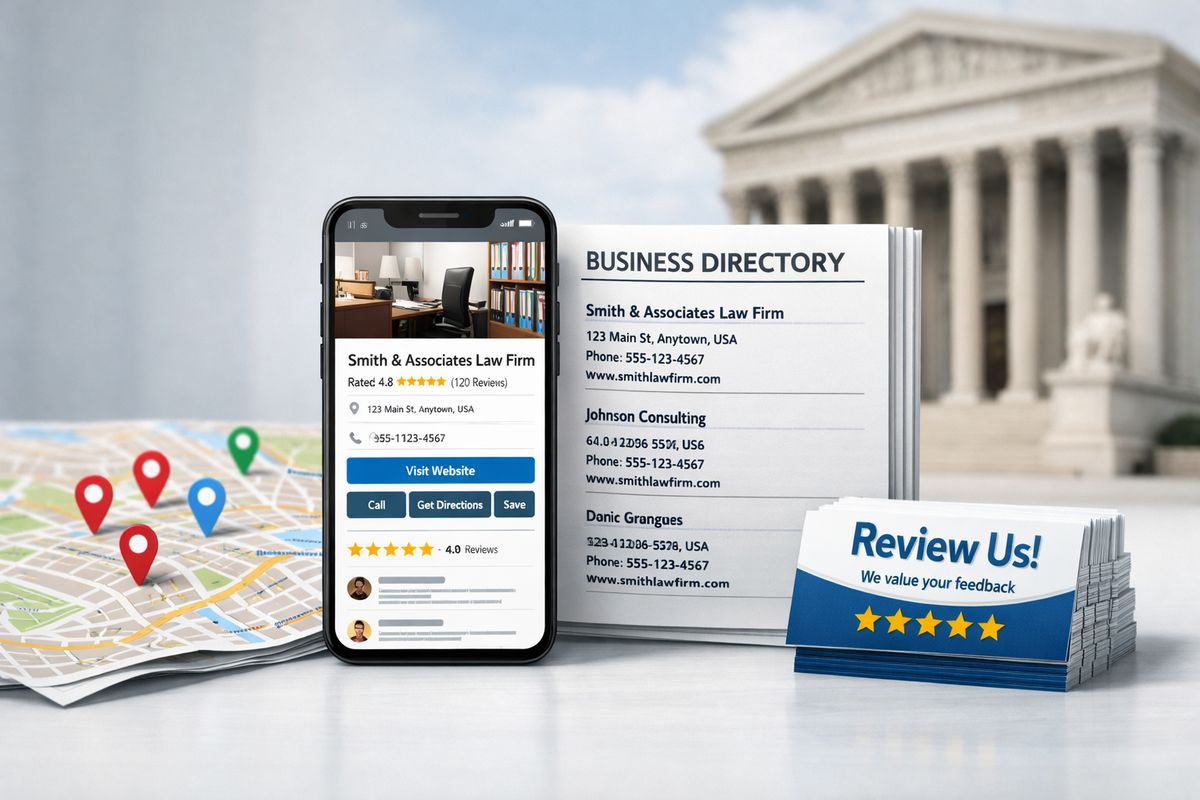
Your firm’s local visibility depends on Google Business Profile optimization, review quality and cadence, consistent business data across directories, local backlinks, map pack competitiveness, service-area relevance, location page quality, and proximity signals. If your office is in Phoenix, Dallas, or downtown Chicago, you are not competing against the internet in general. You are competing against firms across town that are actively investing in local search.
AI cannot claim and optimize listings, earn local press mentions, clean citation issues, or diagnose why one office ranks in the map pack while another disappears two miles away. It also cannot tell you, on its own, which city pages are worth building and which will look like thin doorway pages.
That is why firms that care about local visibility need a real local plan. For a closer look at the pieces that matter, this guide on improving local visibility for AI-era legal search is worth reading.
EEAT, trust, and reputation signals
In legal SEO, trust is not decoration. It is the product.
Google pays close attention to credibility in categories that affect money, health, safety, and legal decisions. Law falls squarely in that group. That means your pages need more than clean formatting and enough words. They need evidence that your firm is a reliable source.
ChatGPT can organize information well. It can suggest author boxes, FAQ blocks, and cleaner subheads. But it cannot manufacture real-world trust signals. Those come from attorney bios, bar admissions, years in practice, published speaking or media mentions, case experience, reviews, citations, and transparent authorship.
Attorney pages matter more than many firms realize. A well-built bio connects legal content to a real, qualified person, which helps both search engines and potential clients feel more confident. If your bio pages are thin, outdated, or generic, fixing that is not busywork. It is part of the ranking and conversion picture. This piece on why strong lawyer profile pages influence AI visibility explains the logic well.
The same goes for reviews. Positive, detailed client feedback helps with local SEO, conversions, and AI-driven trust patterns. Not every review changes rankings by itself, but the overall reputation signal matters. More on that appears in this article about how client feedback influences AI recommendations.
Originality and differentiation
Here is the problem with AI-heavy legal content: it often sounds like every other law firm page on the internet.
The structure is clean. The grammar is fine. The advice is broad. And after three paragraphs, your page could belong to any firm in any city. That is a bad outcome because legal SEO is crowded enough already.
Differentiation comes from details only your firm can provide. The kinds of cases you actually take. The counties or courts you work in most often. The intake questions your staff hears every week. The objections potential clients raise before hiring you. The local concerns that change the answer. Even one grounded detail can separate your page from generic sludge. A line about a confusing freeway interchange in Atlanta, a courthouse filing rhythm in Orange County, or the real timeline after a workplace injury in your state does more than ten vague paragraphs.
ChatGPT can help shape that material, but it cannot invent authenticity without drifting into fiction. If your content sounds interchangeable, it will blend in with the dozen other firms saying “you may be entitled to compensation” in slightly different words.
Risk, ethics, and compliance
This section alone is enough to keep ChatGPT in a supporting role.
AI models hallucinate, which means they sometimes present false information as fact. In legal marketing, that can lead to inaccurate statements about deadlines, liability standards, criminal penalties, immigration options, or courtroom procedure. It can also produce sweeping claims about results or expertise that trigger advertising-rule issues.
Then there is confidentiality. If your team casually pastes sensitive case notes, intake details, or internal strategy into a public AI tool, that creates a separate problem entirely. Even when no privileged material is shared, careless prompting can create drafts that imply guarantees or overpromise outcomes.
Experienced legal SEO support adds guardrails. Drafts get reviewed. Claims get tightened. Jurisdictional details get checked. Practice area language gets aligned with ethics rules and your firm’s actual positioning. That review process is slower, yes, but slower is better than publishing something that needs a quiet cleanup a week later.
If your firm is trying to understand how AI platforms decide what to surface, it helps to know more about what sources these systems tend to rely on. Visibility and risk are tied together.
Conversion potential: traffic vs signed cases
A lot of content gets traffic and does almost nothing else.
That usually happens when a page is written for surface-level SEO goals instead of client action. It ranks for informational terms, answers a few questions, and then leaves the visitor with no strong reason to contact your firm. Nice graph in Analytics. Weak intake pipeline.
Agency-led SEO tends to perform better here because it connects content with conversion structure. That includes page layout, trust placement, call-to-action timing, form design, internal linking, mobile usability, and alignment between search intent and the next step. Someone searching “Do I need a lawyer after a truck accident in Tampa?” should not land on a generic article with a vague footer button. That page should guide the person toward a consultation in a natural, low-friction way.
ChatGPT does not think like an intake manager. It does not know which offers reduce hesitation, which questions signal buying intent, or which page format produces more calls in a high-stakes practice area. It can help draft the words, but converting traffic into signed cases takes deeper planning.

Pricing and resource cost
On paper, ChatGPT looks dramatically cheaper. A monthly subscription costs far less than a legal SEO agency retainer. That part is true.
But low tool cost and low total cost are not the same thing.
If your team uses ChatGPT internally, somebody still has to prompt it well, check the facts, edit the language, add local specificity, review for ethics issues, publish the content, optimize the page, monitor performance, and decide what to do next. If that somebody is an attorney or office manager, the hidden cost gets expensive fast. Time spent fixing weak drafts is still cost.
Agency SEO costs more because it includes more: strategy, technical work, local SEO, content planning, editing, on-page optimization, reporting, and competitive adjustment. If your market is crowded or your site has structural problems, those pieces matter more than raw word production.
The cheaper option is only cheaper when the output is good enough to perform. Often, it is not.
Best use cases for ChatGPT in a law firm SEO workflow
This is where ChatGPT earns its keep.
It works well for brainstorming blog topics, drafting FAQ sections, summarizing attorney interviews, creating schema markup ideas, improving headings, rewriting dense paragraphs into plainer language, and repurposing one strong piece into supporting content. It can also help your firm build momentum when the hardest part is simply getting started.
It is especially useful after you already have a strategy. Once your priority pages, target markets, and practice area plan are clear, AI can speed up production around that plan without deciding the plan itself.
ChatGPT is also helpful for content maintenance. If an older article needs a cleaner intro, stronger subheads, or a more conversational tone, the tool can get you a faster first pass. The same goes for turning attorney notes into usable drafts that save writing time.
The trick is to use it like a smart assistant, not like a substitute for judgment.
When to use ChatGPT and when to hire a law firm SEO agency
Use ChatGPT when the task is lightweight, internal, and easy to verify. Drafting FAQs, refreshing copy, generating topic ideas, organizing research notes, and repackaging existing material all fit that category.
Hire a law firm SEO agency when the stakes are higher than the draft itself. That includes entering a competitive metro, expanding into new practice areas, fixing a site that is underperforming, managing multiple locations, building a content architecture, improving local rankings, or trying to increase qualified consultations rather than just traffic.
The dividing line is simple. If the job is “help produce content faster,” ChatGPT can help. If the job is “help the firm get found, trusted, and chosen,” an agency is the better tool.
If your firm is still sorting out the bigger question, this overview of what it really means to optimize for AI-driven legal discovery adds useful context without the hype.
Verdict: what actually works
For law firms, the winner is not ChatGPT alone and it is not old-school SEO done in a vacuum. What actually works is a hybrid model with a clear hierarchy.
Use ChatGPT for speed, idea generation, first drafts, and content support. Use experienced legal SEO strategy to handle keyword targeting, local competition, technical fixes, trust signals, compliance review, conversion planning, and the bigger decisions that affect signed cases.
That hierarchy matters. AI should make your SEO workflow faster. It should not be the thing making judgment calls about your market, your messaging, or your legal claims.
Once you understand that, the whole topic gets less confusing. ChatGPT is a useful tool. It is not your law firm’s marketing strategy.
Frequently Asked Questions
Can ChatGPT write law firm content that ranks on Google?
Yes, but only as a starting point. Rankings usually come from a mix of search intent matching, local relevance, strong site structure, trust signals, and careful editing. AI-written drafts can help, but unreviewed content is rarely enough on its own.
Is ChatGPT SEO safe for legal marketing?
It is safe only with review and guardrails. Legal content can include inaccurate statements, outdated law, or claims that create ethics issues. Any AI-assisted draft should be checked for jurisdiction, accuracy, and compliance before publication.
Should your firm use ChatGPT instead of hiring an SEO agency?
Not if growth is the goal. ChatGPT is good for faster drafting and brainstorming. An agency is better for strategy, local SEO, technical improvements, competition analysis, and conversion work that turns traffic into consultations.
Does ChatGPT help with local SEO for lawyers?
Only in a limited way. It can help draft city-page copy, FAQs, and review responses, but it cannot manage Google Business Profile strategy, citations, local links, map pack performance, or competitive local positioning.
How much should your firm rely on ChatGPT for SEO?
Use it for support tasks, not final decisions. A good rule is this: if the task can be checked quickly and carries low risk, AI can help. If the task affects legal accuracy, rankings, reputation, or conversions, human review should lead.
Can ChatGPT improve your visibility in AI search results too?
Sometimes, indirectly. Better-structured content, clear answers, strong entity signals, and real credibility can help your firm appear more often in AI-driven discovery. But that still depends on the same foundation as strong SEO, not on AI-generated copy alone.
If your firm wants clearer answers about what will actually move visibility, leads, and signed cases, schedule a call with Attorney Visibility ai for more information.