

If your phone rings, consultations get booked, and signed cases still feel disconnected from your marketing, you already know why use call tracking is such a practical question for law firms. Call tracking is one of the fastest ways to stop guessing which ads, pages, and campaigns are actually producing real intake.
Why law firms use call tracking in the first place
A lot of law firm marketing looks productive from a distance. Traffic goes up. Forms trickle in. The phone rings throughout the day. But when you sit down to decide where to keep spending, the picture gets fuzzy fast. Did that personal injury call come from Google Ads, your Google Business Profile, a directory listing, or a page someone visited three times before finally calling?
That gap is expensive.
Without call tracking, your phone line works like a front desk with no visitor log. People arrive, but you cannot clearly tell which door they used. For a law firm, that means budget decisions get made on partial information, and partial information usually sends money to the wrong place. If your agency says a campaign is working, call tracking gives you a way to see it in plain numbers instead of taking it on faith.
What call tracking is
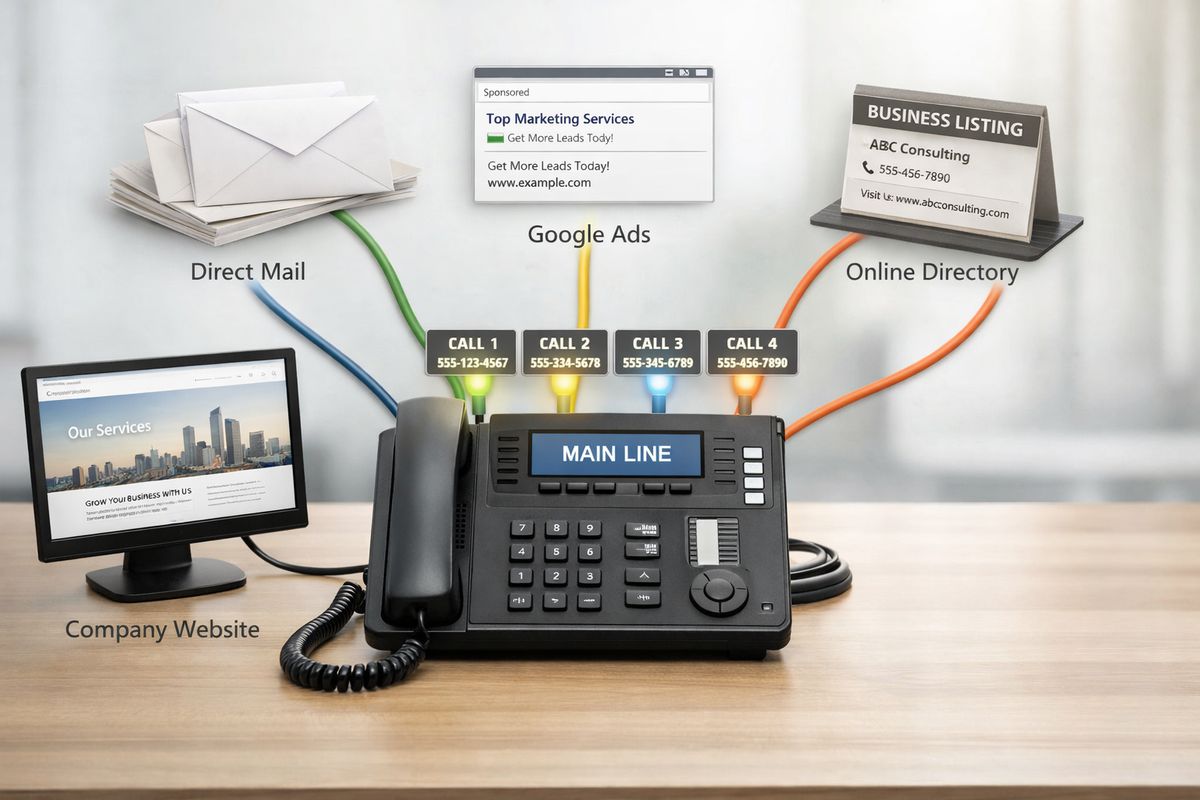
Call tracking is the use of unique phone numbers and reporting tools to show where incoming calls come from. The point is attribution, which just means connecting a phone call to the source that caused it, such as an ad, a landing page, a Google Business Profile listing, or a specific keyword search.
In simple terms, call tracking answers a basic question: what made this person call your firm?
That sounds small, but it changes a lot. Once calls are tied to sources, you can compare channels based on real outcomes instead of surface activity. You stop treating all calls as equal, and you start seeing which marketing efforts actually bring consult-worthy prospects.
How it works without changing how your firm answers calls
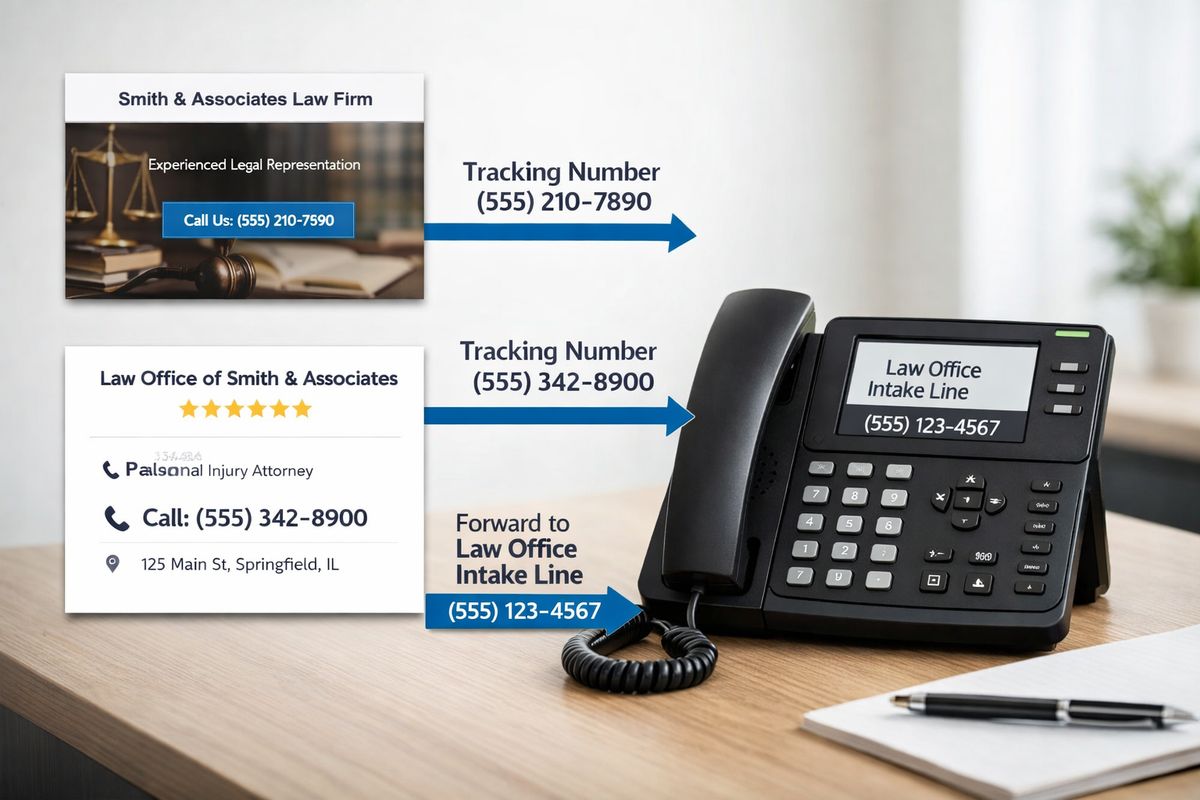
The setup is usually simpler than people expect. A tracking number sits in the middle, then forwards the call to your normal office line or intake team. The caller dials a number, your phone rings like usual, and the conversation starts the same way it always has.
The only difference is that the number dialed helps identify the source.
If someone finds your firm through a paid search ad, that person may see one tracking number. If another person comes through a local landing page, that person may see a different one. Inside the reporting dashboard, those differences show up as useful data, not as extra work for your staff. Your receptionist does not need to learn a new ritual. Your attorneys do not need to answer differently. The system quietly logs where the lead came from while your intake process keeps moving.
Dynamic vs. static call tracking numbers
Dynamic call tracking is usually used on your website. A visitor arrives from a certain source, and the site swaps in a unique number tied to that visit. This is often called dynamic number insertion. It works well when you want to know whether a call came from organic search, Google Ads, a social campaign, or another digital source.
Static numbers are different. Those stay fixed in specific places, like your Google Business Profile, a billboard, a direct mail piece, or a directory listing. If you want to measure calls from one channel or placement without relying on website behavior, static numbers make more sense.
For law firms, both matter. Dynamic numbers help with website attribution. Static numbers help with local listings, offline ads, and source-specific campaigns. If you want a fuller picture of how this setup works in legal marketing specifically, that distinction matters a lot.
Why call tracking matters more for law firms than for many other businesses
Legal matters are urgent, personal, and expensive. That alone changes the value of a phone call.
Someone searching for a criminal defense lawyer at 11:40 p.m. or a car accident attorney at 8:17 a.m. from a mobile phone is usually not browsing for fun. That person often wants reassurance, speed, and a real answer right now. If you miss the source behind that call, you miss context that can help both marketing and intake. Worse, you may keep funding channels that bring weak leads while underfunding the ones that produce actual retained matters.
For many businesses, a call is just one conversion option among many. For law firms, the phone is still a major turning point in the client journey.
Many legal leads still prefer to call before filling out a form
In practice areas like personal injury, criminal defense, family law, and immigration, phone calls are often the first serious step. A prospect may not want to explain a DUI arrest, a custody dispute, or an injury claim through a cold web form. Calling feels faster, more private, and more human.
That matters because if your reporting focuses mostly on form fills, you are only seeing part of the market. Some of your best opportunities may never touch a form at all. A lot of legal intake starts with a nervous voice on the line asking, “Can someone help me today?”
One signed case can justify the setup
For many firms, one good case can pay for call tracking many times over. That is not hype. It is just math.
If better attribution helps you spot one campaign that brings signed cases instead of tire-kickers, the setup often pays for itself quickly. The real win is not just cleaner reporting. It is better budget allocation. Once you know which channels produce strong leads, you can spend with more confidence and cut what only looks busy on paper. That connects directly to figuring out what counts as a strong prospect in the first place.
What call tracking helps you learn about your marketing
Call tracking gives you more than a call count. It shows patterns that are hard to see otherwise, especially when multiple channels overlap.
That matters when you are hiring or evaluating an agency. Anyone can point to clicks and impressions. The useful question is simpler: which efforts are producing calls worth answering?
Which channels actually drive qualified calls
A healthy law firm marketing mix may include organic search, Google Ads, Local Services Ads, Google Business Profile, legal directories, social ads, email campaigns, and even offline sources. Call tracking helps separate activity from outcomes.
Maybe Google Ads drives the most phone calls, but your Google Business Profile produces the highest consult rate. Maybe one directory sends a lot of short calls that go nowhere. Maybe Local Services Ads are generating strong leads in one practice area but weak ones in another. That is the kind of clarity you need before deciding where to push harder. If you are comparing channels, it helps to understand how Google’s call-based legal ads differ from standard paid search.
Which keywords and landing pages pull their weight
Not all high-intent searches behave the same way. A person searching “car accident lawyer” may call differently from someone searching “personal injury attorney near me” or “slip and fall lawyer downtown Phoenix.” Call tracking can connect calls to the keywords, ads, and landing pages behind those searches.
That gives you useful detail. Maybe one page gets fewer calls but better ones. Maybe a broad keyword generates volume, while a local intent term produces longer calls and more booked consultations. If your agency is building pages tailored to specific local searches, call data can show which ones are actually doing their job.
What days and hours create intake pressure
Peak call-hour reporting is one of the most practical benefits, and it often gets overlooked. Once you can see when calls cluster, you can staff around reality instead of habit.
Maybe Mondays from 8:00 to 10:30 a.m. are overloaded. Maybe lunch coverage is weak and calls are getting missed between 12:15 and 1:00. Maybe after-hours criminal defense calls need a faster route than your current voicemail setup allows. These are not reporting trivia points. They directly affect lead capture speed, which affects signed cases.
How call tracking improves law firm intake, not just reporting
Here is where it gets interesting: call tracking stops being just a marketing tool the moment it helps you answer faster, route smarter, and spot intake problems.
That shift matters because bad intake can waste good marketing. You can pay for excellent traffic and still lose the lead after the phone rings.
Call routing gets the right calls to the right person
Routing lets you send calls based on source, location, practice area, or time of day. That means the path can fit the lead instead of forcing every caller through the same bottleneck.
A Spanish-language immigration inquiry can go to the right intake path. An after-hours DUI call can be forwarded to the best available response option. A mass tort campaign can route to a separate screening line. Small changes like that reduce delay and confusion, which is a big deal when the caller is stressed and ready to move fast.
Call recordings and transcripts show what happens after the lead comes in
If you only count calls, you still miss half the story. Recordings, transcripts, and summaries help you hear what happened after the lead arrived. Was the phone answered promptly? Was the caller screened well? Did the conversation end with a consultation, a handoff, or silence?
Some platforms call this conversation intelligence, which is a fancy term for software that helps spot patterns inside calls. In plain English, it helps you notice where intake breaks down. You may hear that staff sound rushed, that promising leads are being turned away too quickly, or that certain questions keep going unanswered. When tied into the system that stores and tracks your intake pipeline, this gets even more useful.
Missed-call alerts help you fix leaks fast
Missed-call alerts are one of those features that sound basic until you realize how much money can leak through one unanswered line. If a paid campaign drives calls and nobody picks up, you are paying for traffic that never gets a fair shot.
That is like paying for a full waiting room and locking the front door.
Alerts, voicemail workflows, and follow-up triggers help catch those misses quickly. If your current setup already struggles with delayed responses, pairing call tracking with faster intake handling tools can help close that gap before it turns into a monthly habit.

The biggest business benefits of call tracking for your firm
The business case for call tracking comes down to three things: better ROI visibility, a clearer view of the client journey, and more confidence in where to spend next.
Those are not abstract marketing wins. They affect revenue decisions.
Better ROI reporting for your agency and your firm
Good reporting should tell you what is working, what is wasting budget, and what deserves another look. Call tracking helps your agency connect spend to actual conversations, and eventually to retained matters if the setup is done well.
That means fewer arguments over vanity metrics. A channel that drives lots of clicks but weak calls gets exposed. A quieter campaign that consistently produces signed cases gets the credit it deserves. If you are comparing providers, this is part of what separates a decent vendor from an agency that can actually connect marketing to results.
A clearer view of the client journey
People rarely move in a straight line from search to signed case. A prospect may find your Google Business Profile, visit your site, leave, come back from a branded search, then call two days later. Without tracking, that path is easy to miss.
Call tracking helps fill in that journey. Combined with forms, CRM notes, and intake outcomes, it gives you a better view of how prospects actually move from first click to consultation. That is especially useful if your team is trying to improve how legal leads are tracked from first contact through follow-up.
More confidence when deciding where to spend next
Incomplete attribution creates bad instincts. You end up overvaluing channels that are easy to measure and undervaluing the ones that quietly bring strong cases.
Call tracking fixes that. Once you can see which campaigns produce quality calls, you can scale with less guesswork. You can test new markets more safely. You can cut channels that look busy but do not produce real business. Confidence is the real product here, not just data.
Common concerns law firms have about call tracking
Most objections to call tracking are reasonable. The good news is that the common problems are usually setup problems, not concept problems.
“Will this hurt local SEO or confuse Google?”
This concern usually comes back to NAP consistency, which means your name, address, and phone number appearing consistently across the web. Law firms worry that adding tracking numbers will confuse Google or weaken local rankings.
The concern is fair, but call tracking can be set up correctly. The usual approach is to keep core business listings consistent, especially in the places that matter most, and use the right type of tracking in the right locations. Website tracking and source-based tracking do not have to wreck local visibility. If you want the deeper version, this breakdown of tracking and local search concerns covers the issue directly.
“Is call tracking ethical and compliant for lawyers?”
It can be, but it has to be handled carefully. Call recording, consent, privacy, confidentiality, and state-specific recording laws all matter. So do legal advertising rules and your own intake policies.
The practical rule is simple: any setup should respect disclosure requirements, protect sensitive information, and follow the rules in your jurisdiction. If recordings are used, the process should be intentional, not casual. This is an area for clean policies, not shortcuts.
“Will clients notice or trust the number less?”
Usually, no. Most callers experience it as a normal phone number that reaches your office. If you use local numbers and the routing is clean, the process feels seamless.
There are cases where a toll-free number fits, especially for broader campaigns, but local numbers often feel more familiar for location-based legal searches. What matters most is that the line works smoothly and the person on the other end reaches help without friction.
What to look for if you want call tracking through a legal marketing agency
If an agency offers call tracking, the useful question is not “Do you have it?” The better question is “Can you make it mean something for my firm?”
Plenty of platforms can count calls. Fewer setups turn call data into budget decisions and intake improvements.
Must-have features for law firm campaigns
For legal campaigns, you want dynamic number insertion for websites, source tracking for specific channels, keyword-level attribution where available, CRM and intake integration, call recording controls, reporting by practice area, and spam filtering.
Those features are not nice extras. They are what turn a pile of call logs into something you can actually use. If you are trying to evaluate spend before setup, it also helps to understand what firms usually pay for this kind of tracking.
Questions worth asking before setup
Ask how calls will be tied to signed cases. Ask how local SEO will be protected. Ask who reviews recordings, how missed calls are handled, and what counts as a qualified lead.
Those questions cut through fluff fast.
A good agency should answer them plainly, without hiding behind dashboards or jargon. If the answers stay vague, the reporting probably will too.
Signs the reporting is actually useful
Useful reporting is easy to act on. You should be able to see the source, campaign, landing page, call outcome, and quality trend without digging through a mess of raw logs.
The best reports help you decide something. Keep spending here. Fix intake there. Pause this campaign. Add lunch coverage. Review calls from this keyword. If the report cannot lead to a clear action, it is probably just noise.
Simple best practices so call tracking gives you clean data
Call tracking works best when the setup is tidy and the review process is consistent. Sloppy implementation creates confusion fast.
Use unique numbers with a clear purpose
Each tracked number should map to a real source, campaign, location, or use case. If numbers get reused carelessly or assigned without a plan, the reporting becomes muddy.
Clean structure matters more than fancy features. A smaller, well-labeled setup beats a sprawling one that nobody trusts.
Test the setup regularly
Forwarding, forms, recordings, routing paths, and attribution rules should all be tested before launch and after changes. One broken routing rule can quietly waste a month of leads.
That is the catch with phone tracking. When something fails, it often fails silently. A quick test call on a Tuesday afternoon is a lot cheaper than discovering missed leads at the end of the quarter.
Review calls, not just call counts
High call volume can look exciting and still be low value. Wrong numbers, spam, vendors, and bad-fit leads can inflate totals without helping your firm.
The better measure is call quality and outcome. A shorter list of strong consultation calls matters more than a long report full of noise. Once you start listening for patterns, you stop treating every ring like a win.
The simplest next step if you want clearer marketing answers
If you want a straightforward place to start, audit one practice area first. Look at which phone numbers are live, how missed calls are handled, and whether you can clearly tie calls back to campaigns. That one review often exposes a very expensive blind spot.
Call tracking is not flashy. It is just useful. And for a law firm spending real money to make the phone ring, useful wins.
If you want help sorting out attribution, intake leaks, and the right setup for your campaigns, schedule a call with Attorney Visibility ai for more information.
Frequently Asked Questions
Is call tracking only useful for firms running Google Ads?
No. It helps with organic search, Google Business Profile, Local Services Ads, directories, offline campaigns, and other sources too. Any channel that can generate phone calls becomes easier to measure.
Can call tracking show which leads become signed cases?
Yes, if the setup connects call data to your intake process or CRM. That is where call tracking becomes much more valuable, because you can judge sources by retained matters instead of call volume alone.
Does call tracking replace form tracking?
No. It fills a gap that form tracking misses. Law firms need both, because many high-intent prospects call instead of filling out a form.
How long does it take to set up call tracking for a law firm?
A basic setup can happen quickly, often in days rather than weeks, but a useful setup takes planning. Routing, source mapping, recording controls, and CRM connections should be configured carefully so the data means something.
Will call tracking help if your intake team is missing calls?
Yes. In fact, that is one of the fastest wins. Call tracking can surface missed calls, peak call times, weak routing, and slow follow-up so you can fix the leak instead of guessing where leads are disappearing.
What is the biggest mistake firms make with call tracking?
The biggest mistake is tracking calls without reviewing quality or outcomes. If you only count how many calls came in, you still do not know which sources are bringing real potential clients.

Leonardo BartelleEdit Profile