Google Business Profile guidance has long allowed call tracking, but only in a narrow way: your main local number stays primary, and tracking supports measurement without replacing your business identity. That distinction sits at the center of call tracking local SEO for law firms. If your setup preserves one canonical number across listings and uses website-only swapping for attribution, your local visibility usually stays intact while your intake reporting gets much clearer.
What you need before you set up call tracking for local SEO
Before changing any phone number, gather control over the systems that publish, swap, or report calls. That means access to your website CMS, Google Business Profile, Google Analytics 4, Google Tag Manager, your call tracking platform, and the primary number your firm intends to keep permanently. For law firms, one more requirement matters: intake reliability. A missed call, misrouted consultation, or unlogged referral source affects revenue and case selection, not just reporting.
Dynamic number insertion matters because it lets your site show different tracking numbers to different visitors without changing the underlying public identity of the firm. That is the technical line between useful attribution and local SEO confusion. If you also depend on directories such as Avvo, Justia, FindLaw, Yelp, and chamber listings, published consistency matters even more because local search systems use repeated business data to match entities.
Finding: Call tracking is least risky when you control one canonical number and the systems that publish or swap it.
Step 1: Confirm whether call tracking can affect local SEO in your market
Google Business Profile documentation indicates that the preferred approach is to use your primary phone number as the main number and place a tracking number as an additional number when needed (Google Business Profile Help). Google’s local ranking documentation also points to prominence and business information consistency as part of local visibility (Google Search Central). In practice, that means call tracking can affect rankings if tracking numbers replace your main number across citations, but not simply because tracking software exists.
Review what Google and local SEO sources actually say
Google’s published guidance is direct on one point: use a local number as primary. Practitioner sources such as Sterling Sky and BrightLocal interpret that guidance to mean call tracking is acceptable when the primary number remains stable and tracking numbers do not fragment citations (Sterling Sky, BrightLocal). The evidence is mixed in type. Google’s documentation is primary-source guidance. Agency testing and case studies are field evidence, which is useful but not controlled.
Separate citation risk from website risk
Structured listings create the larger risk because local algorithms compare repeated name, address, and phone data across sources. A tracking number published in directories can look like a different business signal. By contrast, JavaScript-based website swapping usually changes what a visitor sees, not the stable business data you keep in schema, source code, and directory records. If your broader local visibility is already unstable, reviewing the factors behind map visibility helps clarify why citation discipline matters.
Note the limitation in the evidence base
A limitation remains: local SEO testing rarely uses randomized experiments across identical businesses. Most available evidence comes from platform guidance, practitioner audits, and observed ranking changes. That supports a cautious conclusion, not absolute certainty in every market.
Finding: Call tracking risk is primarily a citation consistency issue, not an inherent penalty for using tracking technology.
Step 2: Choose one canonical phone number for your law firm
A 2023 BrightLocal local consumer survey and citation guidance continued to emphasize consistency as a trust and discovery factor across local platforms (BrightLocal). For your firm, the practical takeaway is simple: choose one number that remains permanent everywhere public.
Audit every phone number already associated with your firm
- Search your website, footer, contact page, attorney bio pages, PDFs, and landing pages for every published number.
- Review Google Business Profile, Avvo, Justia, FindLaw, Yelp, Apple Business Connect, Bing Places, and chamber or bar directory listings.
- Flag legacy tracking numbers, direct attorney lines, intake vendor numbers, and formatting variants such as
(555) 555-1212versus555-555-1212.
At this point, success looks like a single inventory showing every number attached to your brand.
Select the number that should remain permanent
- Choose the number with the strongest historical citation footprint and the fewest operational risks.
- Prefer a number that already appears on major profiles and receives reliable intake calls.
- If needed, port that number into your tracking platform instead of creating a new public-facing number.
Porting often preserves continuity better than introducing a fresh main line. If your firm is still deciding why source-level phone reporting matters, this is where the business case becomes concrete.
Document the canonical format and ownership
- Record the number in one standard display format.
- Note who owns the line, who can port it, and which vendor controls routing.
- Confirm that the line can receive calls reliably and supports any needed forwarding or SMS features.
Finding: A single canonical number is the foundation that lets you measure calls without weakening local identity signals.

Step 3: Set up your call tracking platform around the canonical number
Call tracking platforms differ in features, but the safe architecture is consistent: your canonical number anchors public identity, while channel-specific numbers handle attribution and routing. For law firms, that setup should also preserve intake quality, call logs, and lead qualification.
Port or assign the canonical number correctly
- Decide whether to port your main number into the platform or route it through tracking infrastructure without changing public display.
- Test call forwarding, voicemail, business hours routing, and failover rules before making changes live.
- Confirm that no caller experiences dead air, looped forwarding, or dropped calls during cutover.
A useful checkpoint is a successful live call from mobile and desktop click-to-call links, plus a manual dial test.
Create source-level tracking numbers without publishing them as primary citations
- Create separate numbers for channels such as Google Ads, Local Services Ads, direct mail, billboards, or radio.
- Keep those numbers out of Google Business Profile primary fields, local citations, and legal directories.
- Use those numbers only in paid campaigns, controlled landing pages, and tracking logic.
This is especially relevant if you compare LSAs and paid search lead paths and need channel-level call attribution without weakening local signals.
Configure call flows, whisper messages, and intake labels
- Route calls by office, practice area, or time of day.
- Add whisper messages so intake staff know the source before answering.
- Tag outcomes such as qualified consultation, wrong number, existing client, or opposing counsel.
- Enable recording only after checking consent rules in your jurisdiction.
- Sync disposition data into your CRM if available.
Finding: The safest configuration uses tracking infrastructure for attribution and routing, while preserving one public canonical number.
Step 4: Implement dynamic number insertion on your website only
Google can process JavaScript in many cases, but structured business identity signals still matter more for local entity matching than visible phone swaps on a page. That is why website-only dynamic number insertion, or DNI, has become the standard call tracking local SEO method.
Install the script through Google Tag Manager or your CMS
- Add the vendor script through Google Tag Manager or directly in your CMS header.
- Scope the script to the pages and traffic sources you want to measure.
- Test load timing so the correct number appears quickly and does not flicker.
If the script loads late, visitors may copy the wrong number or see inconsistent displays. Keep the deployment as simple as possible.
Exclude schema, footer source code, and crawlable business data from swaps
- Keep the canonical number in LocalBusiness schema and contact structured data.
- Avoid swapping hardcoded source elements that search engines use for business understanding.
- Limit swaps to visible page elements intended for human visitors.
If your location pages already need cleanup, review better local page structure for law firms before layering tracking onto them.
Verify number replacement by source and device
- Visit your site from organic, paid, referral, and direct sessions.
- Test on mobile and desktop.
- Confirm that click-to-call links use the displayed tracking number when appropriate.
- Disable JavaScript once to confirm the fallback number is still your canonical line.
Finding: Dynamic number insertion is generally SEO-safe when the swap is limited to website visitors and your canonical number remains in structured business data.

Step 5: Configure Google Business Profile and citations without creating NAP inconsistency
Google Business Profile remains a high-impact source of calls for many firms, especially in map results. That makes number handling here more sensitive than on the website alone.
Use your primary local number in the main Google Business Profile field
- Keep your canonical local number as the primary phone number in Google Business Profile.
- Use an additional number only if your setup follows current platform guidance and does not replace the primary local line.
- Recheck the profile after edits to confirm no field overwrote the main number.
If your listing management is already inconsistent, fixing ongoing profile governance for growing firms should come before advanced tracking changes.
Standardize numbers across legal directories and local citations
- Update major legal directories and local listings to match the canonical number exactly.
- Give each office its own stable local number if you run multiple locations.
- Keep formatting consistent where possible, even though formatting alone is usually less serious than a different number.
Prevent tracking numbers from leaking into the web
- Remove tracking numbers from indexable PDFs, press releases, and downloadable brochures.
- Keep paid landing pages with tracking numbers out of the index when appropriate.
- Review staff bios, widgets, and syndication feeds for copied numbers.
Finding: Local SEO problems usually begin when tracking numbers escape into citations, not when they remain confined to controlled tracking use.
Step 6: Track organic calls, Google Business Profile calls, and form leads separately
For law firms, rankings are not the end metric. Intake quality is. Your attribution model should separate website-originated organic calls, Google Business Profile driven sessions, and non-call conversions so channel performance is interpretable.
Track website organic calls through DNI and GA4 events
- Send call events into GA4 with source, medium, landing page, and call duration parameters.
- Set thresholds that distinguish all calls from likely qualified calls.
- Align event names with the rest of your conversion reporting.
If your firm is still defining which inquiries count as real opportunities, this step prevents high call volume from masking low intake quality.
Track Google Business Profile traffic with UTM parameters
- Add UTM parameters to your Google Business Profile website link and appointment link.
- Separate GBP-driven sessions from generic organic search in GA4 reports.
- Remember that GBP call clicks and website visits are different actions and should not be merged blindly.
Track form submissions and chat leads in the same attribution model
- Fire GTM events for form submissions and chat starts.
- Pass source data into your CRM or lead management system.
- Compare call outcomes against forms and chat rather than treating phone calls as the only meaningful conversion.
Finding: The most useful attribution separates website organic calls, GBP-driven sessions, and other lead types instead of treating all local traffic as one channel.
Step 7: Audit your setup for SEO-safe implementation after launch
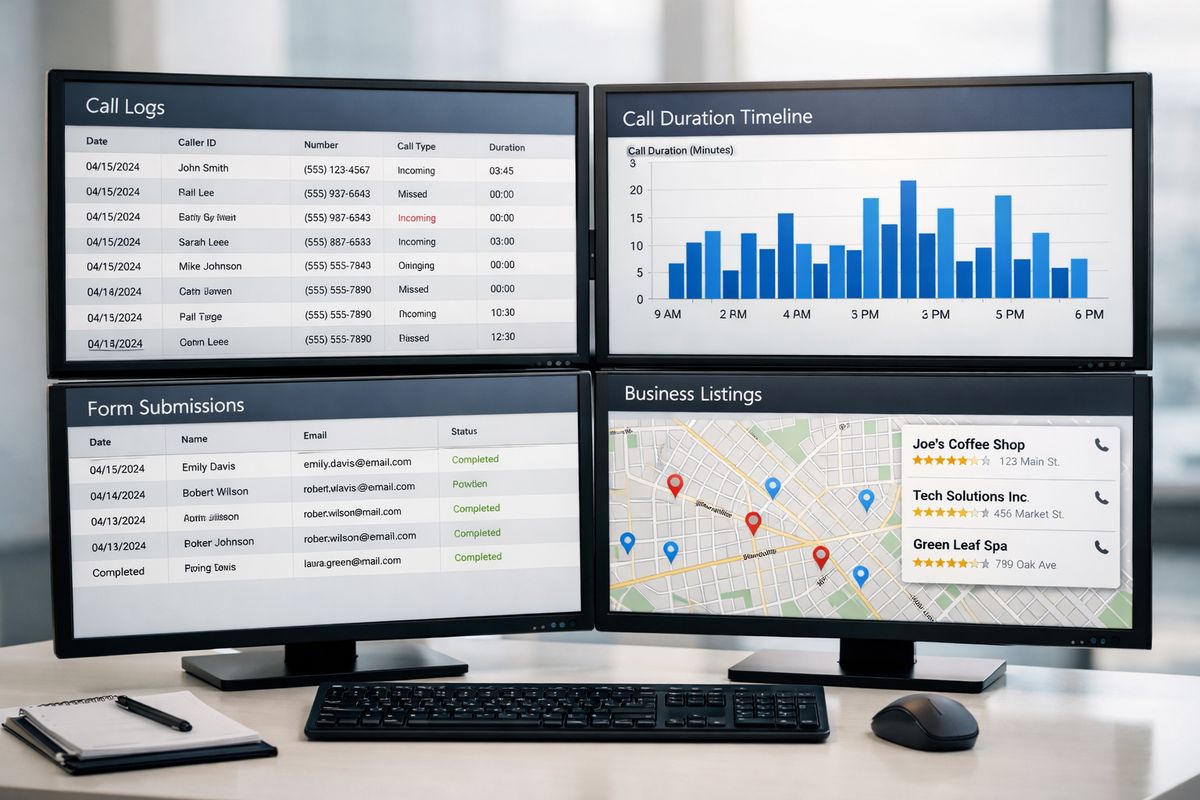
An audit matters because many call tracking problems appear after launch, not at launch. Scraped pages, staff edits, vendor imports, and directory syncs can introduce number drift weeks later.
Crawl your site and search indexed pages for stray tracking numbers
- Run a site crawl and search your source code for all tracking numbers.
- Use search operators to find indexed pages, PDFs, or archived content containing those numbers.
- Replace leaked numbers with the canonical number or remove the page from indexation if needed.
Check citations and legal directories for duplication
- Search the web for each tracking number in quotes.
- Review whether any number now appears as a separate business listing signal.
- Correct duplicates in major legal directories first, then general local sources.
Compare rankings, call volume, and lead quality before and after launch
- Compare local pack visibility, organic sessions, call counts, answered-call rate, and qualified consultation rate.
- Look for attribution improvement even if rankings remain flat.
- Note algorithm update timing before attributing every ranking change to phone number adjustments.
If your maps visibility drops during this period, review why a firm can disappear from local results before assuming tracking caused the issue.
Finding: An audit confirms whether your implementation preserved local signals while improving measurement quality.
Step 8: Decide when call tracking is worth the tradeoff for your firm
Call tracking adds value when attribution changes decisions. If it does not affect budget allocation, staffing, routing, or intake review, the setup burden may outweigh the benefit.
Use call tracking when channel attribution changes budget decisions
- Use it when you run multiple ad channels, offices, or practice-area campaigns.
- Use it when phone calls drive a meaningful share of consultations.
- Use it when routing by office or matter type affects response time and close rate.
Avoid complex setups when your local footprint is fragile
- Keep the setup simpler if your office is new, citations are unresolved, or internal monitoring is limited.
- Delay advanced pooling if you cannot routinely audit leakage.
- Recognize the limitation: better measurement can outpace your ability to maintain clean local data.
Compare simple and advanced implementation paths
A conservative path keeps one public number everywhere and uses limited website DNI. A standard path adds channel-specific tracking for paid and organic website sessions. A more advanced path layers CRM integration, qualified call scoring, and office-level routing. If deeper reporting is the goal, connecting call data to your intake system usually matters more than adding extra tracking numbers.
Finding: Call tracking is most useful when attribution changes decisions and your firm can maintain citation discipline over time.
Troubleshooting common call tracking local SEO issues
Most breakdowns come from implementation mistakes, not from the concept of call tracking itself. The fix depends on where the number changed, where it leaked, and how attribution is being counted.
Rankings declined after number changes
Check Google Business Profile, major citations, schema, and location pages for unintended number replacement. Also review timing against confirmed Google updates. A ranking decline after a phone edit suggests a possible connection, but does not prove causation.
Tracking numbers appear in Google index or third-party directories
Look for indexed landing pages, PDFs, scraped attorney profiles, ad collateral, and embeddable widgets. Replace leaked numbers, request removals where possible, and stop the source of recirculation before cleaning duplicates.
Calls are missing, duplicated, or attributed to the wrong source
Review DNI script conflicts, forwarding rules, session windows, call extension overlap, and CRM deduplication. Reconcile totals between the tracking platform, GA4, and intake logs. Mismatches often come from counting methodology, not lost calls.
Multi-location or multi-attorney pages show the wrong number
Use location-specific logic, office-level canonical numbers, and page-level exclusions where needed. A global swap rule often breaks multi-office implementations because every page inherits the same behavior.
Finding: Most call tracking SEO issues come from implementation errors and data leakage, not from call tracking itself.
What outcome you should expect and what to do next
A correct setup should produce cleaner attribution, more reliable routing, and stable local identity signals. It should not be expected to raise rankings by itself.
Expected outcome after a correct setup
You should gain source-level visibility into calls, better intake tagging, and clearer comparisons between organic, GBP, paid, and referral leads. Rankings may stay the same. That is not failure if attribution accuracy improves.
Your next audit cycle and reporting cadence
Review citations and indexed number leakage monthly at first, then quarterly once stable. Review call quality, answered-call rate, and qualified consultation trends every month. Revisit routing rules and number pools whenever offices, vendors, or campaign mix changes.
Questions to ask a digital marketing agency before implementation
Ask how the agency defines your canonical number policy, how website swaps are isolated from schema, how Google Business Profile numbers are handled, how citation leakage is monitored, and how qualified calls are reported against forms and chat. If agency selection is still open, compare that process with how to evaluate a marketing partner for law firms.
Finding: The right outcome is not more data alone, but cleaner local signals and attribution you can verify month over month.
Frequently Asked Questions
Can call tracking hurt local SEO if used only on a website?
Usually no, if dynamic number insertion is limited to visible website elements and your canonical number remains consistent in Google Business Profile, citations, and structured business data.
Should your law firm put a tracking number in Google Business Profile?
Your safest default is to keep your canonical local number as the primary field. An additional number may be acceptable if it follows current Google guidance and does not replace the main number.
Is NAP consistency still relevant for law firms?
Yes. Local search systems still use repeated business identity signals across directories and profiles. Phone inconsistency creates more risk than formatting variation.
What is the biggest mistake in call tracking local SEO setups?
The most common mistake is allowing tracking numbers to spread into citations, legal directories, PDFs, or indexed landing pages. That creates duplicate business signals over time.
How can you tell if call tracking is working correctly?
Check that calls route properly, GA4 events match platform logs, your canonical number remains in public listings and schema, and tracking numbers are not appearing in indexed pages or third-party directories.
Does call tracking prove which marketing channel produces clients?
Not by itself. It improves attribution for calls, but client acquisition analysis still depends on intake quality, CRM status, signed-case outcomes, and consistent source tagging.
If your firm needs help setting up a call tracking system without weakening local SEO, schedule a call with Attorney Visibility ai for more information.