
Trying to figure out call tracking cost can feel weirdly harder than pricing a copier lease or a case management tool. You ask for a number, and instead of a straight answer, you get “plans start at” language that tells you almost nothing. The real price depends on how many calls your firm gets, how many numbers you need, which features you actually use, and whether somebody is managing the whole setup for you.
Why call tracking pricing feels hard to pin down
Call tracking looks simple from the outside. Swap in a few phone numbers, see what made the phone ring, done. But pricing gets slippery because vendors charge for different things, and agencies often package the software together with setup, reporting, and ongoing management.
That means two quotes that both say “call tracking” may be describing very different setups. One might include three tracking numbers, 500 minutes, and basic source reporting. Another might include dynamic website number swapping, call recordings, spam filtering, CRM syncing, and monthly reporting by campaign and office. On paper, the second quote looks more expensive. In practice, it may be the only one that actually tells you which marketing is producing signed cases.
Here’s the thing: if you are comparing prices without knowing what is included, you are not really comparing prices. You are comparing labels.
What call tracking actually is in plain English
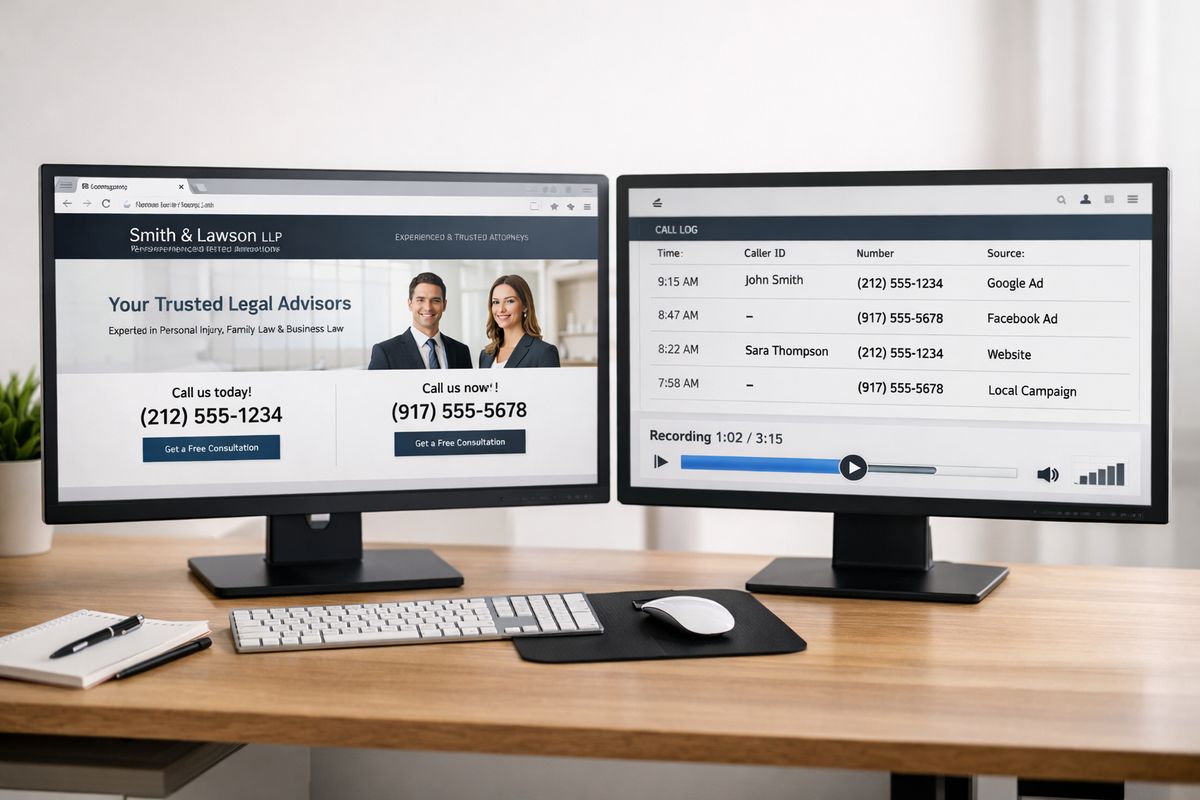
Call tracking is just a way to connect inbound phone calls to the marketing source that caused them. Instead of using one phone number everywhere, your firm uses different tracking numbers so you can tell whether a call came from Google Ads, organic search, Local Services Ads, a billboard, a referral page, or a specific landing page.
Sometimes that is done with static numbers, meaning one number per channel or campaign. Sometimes it is done with dynamic number insertion, which sounds technical but is simple enough: your website swaps the displayed phone number based on how somebody arrived there. A visitor from Google Ads sees one number. A visitor from organic search sees another. When that person calls, the system logs the source.
Most platforms also include call recordings, attribution reports, and basic analytics. Some go further with keyword-level tracking, text message tracking, intake tagging, AI summaries, and CRM connections. If you want the fuller picture of how phone leads tie back to marketing, that is where the category starts to get more valuable, and more expensive.
What law firms usually pay for call tracking
Most law firms land somewhere between about $50 and $500 per month for software alone, and from roughly $300 to $1,500 or more per month when call tracking is bundled into agency management. That is a wide range, but it reflects how different one setup can be from another.
A solo practice with one office, a modest website, and a couple of channels to track can keep costs pretty lean. A growing firm running SEO, Google Ads, and LSAs across multiple practice areas will usually need more numbers, more minutes, and stronger reporting. A larger firm with several locations and heavy intake volume can climb well beyond that, especially once integrations and managed reporting enter the picture.
Typical monthly price ranges
At the low end, basic standalone tools often start around $30 to $100 per month. That usually gets you a limited number of tracking lines, a small bucket of call minutes, and simple source-level reporting.
A more realistic range for an actively marketing law firm is about $100 to $300 per month. That tier often fits a firm running a few channels at once and wanting call recordings, decent attribution, and enough volume to avoid constant overages.
Higher-end setups often start around $300 to $800 per month and move up from there. That range is common when you need multiple office locations, more advanced routing, better filtering, deeper reporting, or somebody actively managing the system.
One-time setup costs you may see
Monthly price is only part of the story. Some providers charge onboarding fees, website installation fees, CRM integration fees, or one-time call flow configuration costs.
Those setup costs might be small, maybe $50 to $250, or they can be several hundred dollars if your routing is complicated. If your firm needs multiple office trees, after-hours handling, tracked forms, and intake software syncing, the setup work can become real labor. Somebody has to configure it, test it, and fix what breaks.
Per-minute, per-number, and per-user charges
This is where cheap plans often stop looking cheap.
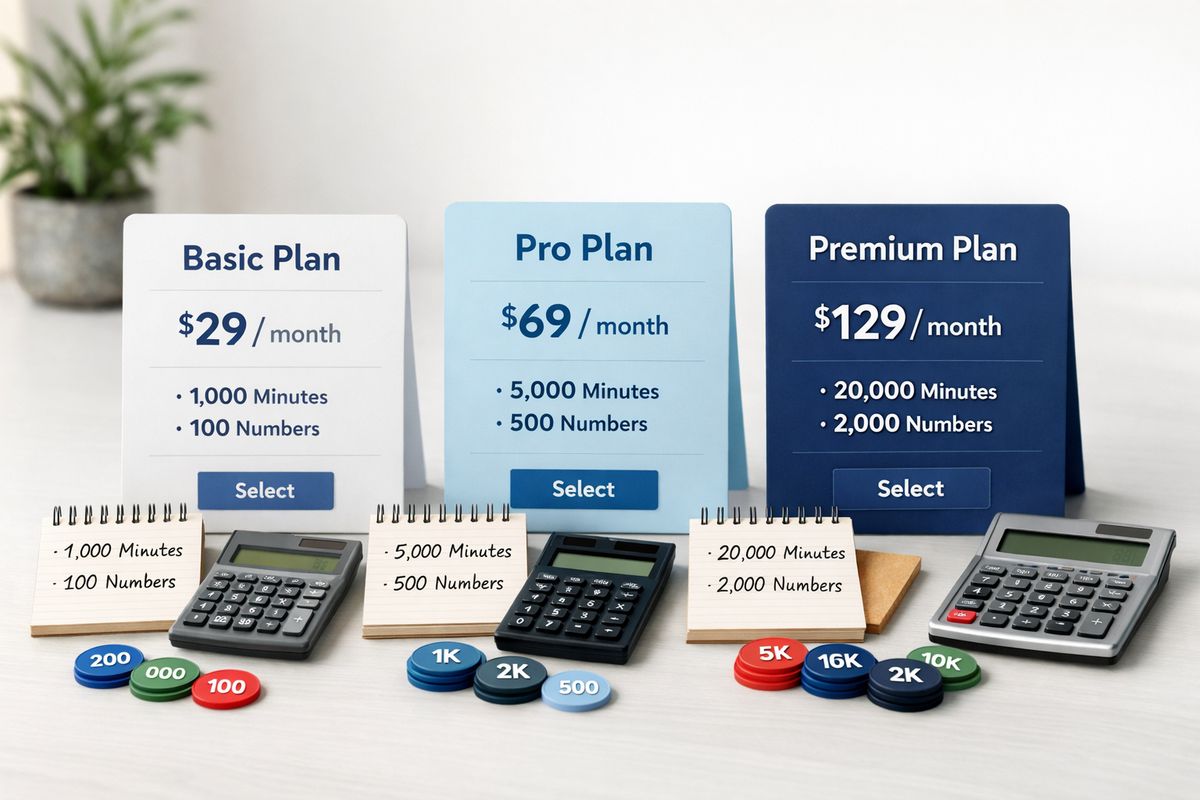
Some vendors charge primarily by number. Others include a few numbers, then add fees for each additional line. Some charge by minutes used. Some bundle a block of minutes and bill overages once you pass the cap. A few add costs for extra users, longer call recording storage, or premium reporting features.
A $75 plan with 300 included minutes can cost more than a $150 plan if your intake team answers every call and your campaigns are busy. The same goes for numbers. A plan that looks fine for one office may get expensive fast once you break out family law, criminal defense, personal injury, branded campaigns, and location-specific tracking.
The biggest factors that change your price
If you want to tell whether a quote is fair, focus on the variables that actually move the bill. Phone numbers matter, sure, but features and complexity usually matter more.
Number of tracking lines
Every distinct source or campaign you want to measure may require its own number, or its own pool of numbers. If your firm only wants to separate Google Ads from everything else, you may need very little. If you want to split out SEO, LSAs, branded search, non-branded search, referral partners, direct mail, billboards, and practice-area landing pages, the count rises quickly.
That does not mean you should track everything. It means you should track what changes decisions. If a separate number helps you decide where to spend the next $5,000 in ad budget, it earns its keep.
Monthly call volume
More calls usually means more minute usage, more recording storage, and sometimes a higher platform tier. High-volume practice areas can make this obvious fast. Personal injury, mass tort intake, and heavy PPC campaigns can burn through included minutes much faster than estate planning or business law.
That is why one quiet office and one busy office can pay very different amounts for the same platform. Volume changes cost more than most firms expect.
Number of office locations
Multiple offices add complexity even when your total call volume is manageable. You may need separate numbers by location, office-specific routing, local reporting, and cleaner attribution so your Dallas calls are not mixed into your Phoenix reporting.
That matters even more if local visibility is a major lead source. If your firm depends on map pack calls, showing up in local search consistently and tracking those calls by office becomes much more useful than one blended report for the whole firm.
Features beyond basic attribution
This is where the bill usually climbs.
Basic attribution tells you the source. Better setups also record calls, flag spam, summarize conversations, track forms, trace keywords, sync to a CRM, route texts, and connect calls to signed cases or consultations. Those upgrades can be worth the money, but only if you actually use them.
The trick is to separate “nice demo features” from “features that change decisions.” For most law firms, source tracking, call recording, reporting cleanliness, and intake visibility matter more than flashy dashboards.
Agency management vs self-serve software
Self-serve software is cheaper because you are paying for the tool, not the labor around it. Agency-managed call tracking costs more because somebody is installing the tracking code, setting up number pools, testing call routing, cleaning reports, and turning the data into marketing decisions.
That extra layer matters more than it sounds. A call tracking platform that nobody owns can drift out of sync with your campaigns surprisingly fast. New landing pages go live, numbers get reused incorrectly, forms are not tagged, routing breaks after hours. If your agency handles all of that, part of your price is really operations insurance.
Common pricing models you’ll run into
Pricing pages feel slippery because call tracking is sold in a few different ways. Once you know the models, quotes become easier to decode.
Flat monthly subscription
This is the easiest model to understand. You pay a fixed monthly fee for a set package of numbers, minutes, and features. It works well if your call volume is pretty stable and your needs are not changing every month.
The catch is that “flat” does not always mean all-inclusive. Many flat plans still have minute caps, extra number fees, or add-on costs for things like integrations and advanced attribution.
Usage-based pricing
Usage-based pricing charges for what you consume, usually minutes, numbers, texts, or tracked events. If your volume is predictable, this can be reasonable. If your volume swings, it can get annoying fast.
A strong campaign month should feel good, not like a billing trap. That is why usage-based plans deserve extra scrutiny, especially if your intake volume jumps after a good PPC run or a seasonal spike in search demand. If you are comparing channels, it also helps to understand how LSAs and Google Ads behave differently for law firms, because volume patterns can shift your costs.
Custom enterprise or agency pricing
Larger firms and agency-managed accounts often get custom pricing. Instead of itemizing every number and feature, the provider or agency may bundle software, setup, routing, reporting, and optimization into one monthly fee.
This can actually make sense. If your setup is complex, bundled pricing may be cleaner than chasing a dozen separate charges. But you still want the quote broken down enough to see what you are paying for. A package should simplify billing, not hide it.
What features are worth paying for in a law firm setup
Not every feature deserves your money. But some absolutely do, because one qualified call can be worth thousands in fees.
Call recording and intake review
Call recording is worth paying for in most law firm setups. It helps you hear what is really happening on the phone instead of guessing.
That matters for two reasons. First, you can spot missed opportunities. Second, you can separate lead quality problems from intake problems. Sometimes the ads are fine and the intake process is the issue. Recorded calls make that obvious in about five minutes. If your team is trying to improve how leads move from first contact to actual consultation, recorded calls are one of the fastest reality checks you can get.
Source and campaign attribution
Counting total calls is not enough. You want to know which source, campaign, landing page, or ad generated the call.
A call from organic search is not the same as a call from an LSA profile, and neither is the same as a branded PPC call. Attribution lets you stop treating all phone leads like one pile. That is especially useful if you are already investing across channels such as Google screened listings and traditional search ads.
CRM and case management integrations
If your firm signs enough cases that raw call counts stop being useful, integrations become worth the extra spend. Pushing calls into your CRM or intake system helps you connect marketing source to consultation, qualification, and eventual retention.
Without that connection, your reporting can look healthy while your actual case quality is mediocre. If your process depends on tracking outcomes across multiple touchpoints, connecting intake and marketing data in one place starts to pay for itself.
Spam and wrong-number filtering
Spam filtering sounds minor until you look at a report full of junk. Wrong numbers, robocalls, vendor spam, and irrelevant inquiries can distort performance fast, especially if your call volume is not huge.
Cleaner reports help you judge campaigns more accurately. They also keep your team from reacting to noise. If ten of your forty “leads” were junk calls, that matters.
How much call tracking should cost based on your firm size
A useful budget depends less on revenue and more on complexity. Firm size is just a shortcut for that.
Solo attorney or small firm
If you have one office, a few campaigns, and moderate call volume, a lean setup is usually enough. Expect something like $50 to $150 per month for software, or a higher bundled amount if an agency manages it.
Avoid overbuying. You probably do not need elaborate AI summaries, a maze of routing rules, or enterprise analytics. A handful of numbers, clear source tracking, call recordings, and simple reporting usually does the job.
Growing firm with active digital marketing
This is the sweet spot for a better setup. If you are running SEO, PPC, LSAs, and practice-area landing pages at the same time, expect roughly $150 to $400 per month for software, with managed solutions often landing higher.
At this stage, call tracking stops being a nice extra and starts becoming part of your decision-making. It supports campaign budgeting, intake review, and the push toward getting better prospects instead of just more names.
Multi-location or high-volume firm
If your firm has several offices, heavy intake, or multiple practice areas with separate campaigns, costs often move into the $300 to $800 plus range, and sometimes well beyond that with agency support.
That is usually justified by complexity, not bloat. You are paying for location-level visibility, cleaner routing, better reporting, and fewer blind spots.
The hidden costs that catch law firms off guard
The cheapest quoted plan often becomes the most expensive one by month three. Not because anybody lied, but because the real usage shows up after launch.
Extra numbers for practice areas or campaigns
At first, one or two numbers can look fine. Then your firm wants separate tracking for personal injury, family law, criminal defense, office locations, branded campaigns, and maybe a referral landing page. Suddenly the number count doubles.
Each added number may look inexpensive on its own, but the total can creep up quietly.
Overage fees and minute caps
Minute caps are where surprises happen. A busy Monday morning in Phoenix after a strong ad push should be a good thing. If your plan charges steep overages, it turns into an accounting annoyance.
Read overage terms carefully. A plan with realistic included usage is often better than a lower base price with aggressive caps.
Installation, routing fixes, and reporting cleanup
Software does not install itself correctly by magic. Numbers need to be mapped properly. Dynamic insertion needs to be tested. Routing needs to reach the right person at the right time. Reports need to reflect reality.
If nobody is responsible for this, your reporting will drift. That is one reason some firms prefer fewer vendors and clearer ownership. In some cases, combining moving parts under one accountable partner reduces hidden labor costs more than it raises software fees.
Compliance and data handling concerns
Law firms also have to think about recording disclosures, retention rules, and access controls. If multiple staff members handle intake, permissions matter. If calls are recorded, storage and compliance settings matter.
You do not need to turn call tracking into a compliance seminar. But you do need to know where recordings live, who can access them, and how long they are kept.
Cheap vs expensive call tracking: what actually changes
A cheap setup usually gives you basic numbers and basic reports. An expensive setup usually gives you cleaner attribution, more flexibility, better integrations, smarter filtering, stronger reporting, and actual management.
That does not mean expensive is always better. It means price should match the value of the decisions you need to make.
Here is the direct truth: the cheapest option is often the most expensive if attribution is wrong. If you cut a productive channel because your tracking was sloppy, or keep funding a weak one because every call was dumped into “Google,” you can waste far more than the software saved.
Common mistakes when comparing call tracking quotes
Most bad buying decisions happen because a firm compares sticker prices instead of real use.
Comparing price without checking included minutes
Base price means almost nothing by itself. Included minutes, overage rates, and call recording storage change the real total quickly.
Always turn the quote into a likely monthly bill based on your actual call volume.
Paying for features nobody will use
Fancy AI summaries, advanced dashboards, and deep integrations are not automatically bad. But if your intake process is still simple, those extras may sit untouched.
Buy for your current decisions, with a little room to grow. Not for the best product demo.
Ignoring how calls turn into signed cases
Lead count is incomplete. You care about qualified consultations and retained matters, not just ringing phones. If a source produces a lot of bad-fit calls, call tracking should help you notice that.
That is why understanding what a real qualified lead looks like in legal marketing matters so much before you judge the numbers.
Forgetting who will manage the system
Somebody needs to own the setup. If nobody checks routing, numbers, tags, and reports, the system gets messy fast.
Software without ownership is like a case file nobody updates. It still exists, but it stops helping.

Questions to ask before you buy call tracking
The fastest way to get a straight answer is to ask better questions.
What is included in the monthly fee?
Ask exactly how many numbers, minutes, users, recordings, reports, integrations, and support hours are included. “Unlimited reporting” sounds nice, but it does not tell you much.
What triggers extra charges?
Ask about overages, additional numbers, onboarding, number porting, integration fees, retention upgrades, and feature add-ons. If there is a charge, you want to see it before launch.
How will calls be attributed and reported?
Find out whether attribution stops at “Google” or drills down to channel, campaign, landing page, keyword group, or location. The deeper your marketing mix, the more this matters.
Who handles setup, testing, and ongoing fixes?
Get clarity on ownership. If routing breaks on a Friday afternoon, who notices? If a new landing page launches next Tuesday, who adds tracking? Vague responsibility is where leads disappear.
A simple budget range to start with
A bare-bones setup often lands around $50 to $100 per month. A solid law firm setup usually lands around $150 to $400 per month. A more managed, more advanced setup often starts around $400 and climbs from there depending on offices, call volume, and integrations.
That range is enough to start budgeting without getting lost in pricing theater. The smarter move is to price one real-world setup based on your channels, office count, and likely monthly call volume. Not the lowest sticker price, the setup that gives you usable answers.
Try this one thing: map out every place your phone number appears today, then estimate how many separate sources you actually want to measure. That simple exercise makes call tracking quotes a lot easier to read.
Frequently Asked Questions
How much does call tracking cost per month for a law firm?
Most law firms pay anywhere from about $50 to $500 per month for the software itself, depending on numbers, minutes, features, and reporting depth. If setup and ongoing management are included through an agency, the monthly total can be higher.
Is call tracking worth it for a small law firm?
Yes, if phone calls matter to your intake process. Even a simple setup can show which channels are producing calls, help review intake quality, and keep you from spending blindly on marketing that is not working.
Why do call tracking quotes vary so much?
Quotes vary because vendors package pricing differently. One plan may include very few minutes or numbers, while another includes recordings, integrations, and more detailed attribution. Agency support can also change the price a lot.
Can call tracking get expensive after setup?
Yes. The most common reasons are extra tracking numbers, minute overages, add-on features, and labor for setup fixes or reporting cleanup. That is why included usage matters more than the headline price.
Do you need call recording, or is basic attribution enough?
Basic attribution is enough if you only want to know which channel generated the call. Call recording becomes worth paying for when you want to review intake quality, train staff, and spot missed opportunities that simple reports cannot show.
Can call tracking hurt your local SEO?
It can if it is set up badly, especially if number consistency across local listings gets messy. Done properly, it should not be a problem. If that concern is on your radar, it helps to understand how tracking numbers and local visibility can work together.
If you want a clearer sense of what call tracking should cost for your firm, schedule a call with Attorney Visibility ai for more information.